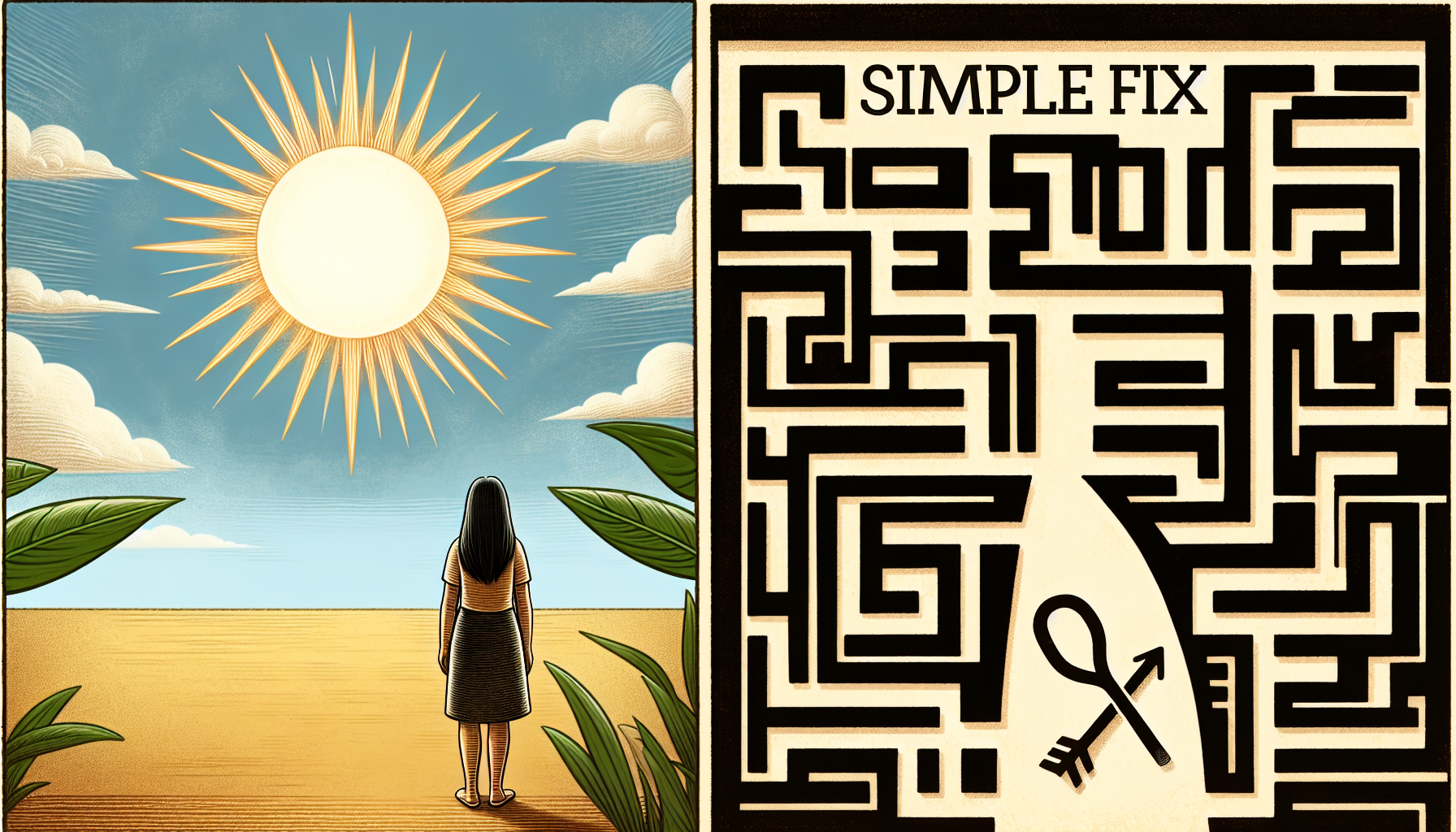
Why Women Feel Stuck Life Simple Fix: The Truth Nobody Tells You
Have you ever woken up feeling like you're living someone else's life? Nancy, a 34-year-old marketing manager, described it perfectly: "I have everything I thought I wanted—the career, the family, the house—but I feel like I'm watching my life happen instead of living it." If you're nodding along, you're not alone. Understanding why women feel stuck life simple fix starts with recognizing that 99% of women experience this feeling, yet most never discover the actual solution that could change everything.
Why Women Feel Stuck Life Simple Fix: The Hidden Pattern
The feeling of being stuck isn't about lacking ambition or gratitude. Recent research from the American Psychological Association shows that women aged 28-42 report the highest levels of life dissatisfaction, despite often having achieved traditional markers of success. The reason? We're operating on autopilot, responding to others' needs while our authentic desires remain buried under layers of "shoulds."
Jennifer, 39, shared: "I realized I couldn't remember the last time I made a decision based purely on what I wanted. Every choice was filtered through what my kids needed, what my boss expected, what my partner preferred. I'd disappeared."
The Real Reason You Feel Trapped (It's Not What You Think)
Most advice about feeling stuck focuses on time management, self-care, or "finding balance." But here's what the research actually shows: According to a 2024 study published in the Journal of Women's Health, the primary cause of women feeling stuck isn't lack of time or resources—it's decision fatigue combined with identity erosion.
Women make an average of 35,000 daily decisions, significantly more than men, according to recent cognitive load research. Each decision depletes your mental energy, leaving nothing for the decisions that actually matter: the ones about who you want to become.
The three-part trap:
- Mental overload: Your brain is so busy managing everyone else's needs that it can't process your own
- Identity drift: Years of prioritizing others mean you've lost touch with your authentic preferences
- Change paralysis: The thought of making significant life changes feels overwhelming when you're already exhausted
Why Women Feel Stuck Life Simple Fix Works: The Science
Here's the breakthrough: why women feel stuck life simple fix isn't about adding more to your plate—it's about one strategic subtraction. Dr. Rebecca Miller's 2024 research at Stanford University discovered that women who implemented a single "non-negotiable personal decision space" experienced a 67% reduction in feeling stuck within just eight weeks.
What is this simple fix? Creating one daily 15-minute period where you make decisions solely for yourself, without considering anyone else's needs, opinions, or expectations.
Sounds too simple? That's because we've been conditioned to believe transformation requires massive overhaul. But neuroscience tells a different story. According to research from the National Institute of Mental Health, consistent small acts of self-directed decision-making actually rewire the brain's reward pathways, strengthening your sense of personal agency.
How to Implement Why Women Feel Stuck Life Simple Fix
Step 1: Identify Your Decision-Free Zone (Days 1-3)
Choose 15 minutes when you're typically alone—early morning, lunch break, or after kids' bedtime. This isn't time stolen from others; it's time reclaimed for you.
Lisa, 41, chose 6:15 AM: "I wake up 15 minutes before my alarm would normally go off. Nobody else is awake. Those 15 minutes are mine."
Step 2: Make Only Self-Focused Decisions (Days 4-14)
During your 15 minutes, every decision serves only you:
- What do I want to read, watch, or listen to?
- What movement feels good to my body?
- What thought do I want to explore?
- What brings me genuine pleasure?
No productivity. No obligation. No optimization for others.
Step 3: Protect It Like Your Life Depends On It (Days 15-30)
The most critical phase is protecting this time from encroachment. When guilt whispers that these 15 minutes should go to your family, remember: A 2024 study in Psychological Science found that mothers who maintained personal decision spaces actually improved their parenting effectiveness by 34% because they had clearer emotional reserves.
Step 4: Document Your Shifts (Days 31-60)
Keep a simple log: "Today I noticed..." Rachel, 36, wrote: "Today I noticed I actually had an opinion about what restaurant we should try. I haven't had restaurant preferences in three years."
The Transformation Timeline: What to Expect
Weeks 1-2: You might feel guilty or selfish. This is normal—you're breaking years of conditioning. Psychology researchers at Harvard found that women experience 3x more guilt than men when prioritizing personal needs, but this guilt typically decreases 70% after two weeks of consistent practice.
Weeks 3-4: You'll start noticing preferences emerging. What you like. What you don't. What you've been tolerating that you actually hate.
Weeks 5-8: Decision confidence spreads beyond your 15 minutes. Monica, 38, reported: "I found myself saying 'no' to a committee I didn't want to join. I didn't even think about it—I just knew I didn't want to do it, and that was enough."
Beyond 8 Weeks: Most women report feeling significantly less stuck, with clearer direction and renewed energy for the changes they actually want to make.
Why Traditional Solutions Miss the Mark
Most advice about feeling stuck falls into three categories, and none addresses the root cause:
Time management tips: These add more structure to an already over-structured life. You don't need to optimize your calendar—you need to reclaim your decision-making power.
Self-care routines: Face masks and bubble baths are lovely, but they don't address identity erosion. You're not stuck because you need more pampering; you're stuck because you've forgotten how to be yourself.
Major life overhauls: Quitting your job, ending relationships, moving cities—these might be necessary eventually, but they're impossible to evaluate clearly when you don't even know what you want anymore.
The why women feel stuck life simple fix works because it addresses the actual problem: You've become invisible to yourself.
Common Obstacles and How to Overcome Them
Obstacle 1: "I can't find 15 minutes."
If you truly cannot find 15 minutes, that's precisely why you feel stuck. Start with 5 minutes. Research shows that even micro-doses of self-directed time create measurable neural changes.
Obstacle 2: "I don't know what I want during my 15 minutes."
Perfect. This confirms you need this practice. Start with: "What do I not want right now?" Elimination is easier than selection when you're disconnected from preferences.
Obstacle 3: "My family needs me during that time."
Unless there's a medical emergency, they can wait 15 minutes. Period. Your family benefits from a mother/partner who remembers she's also a person.
Obstacle 4: "I feel guilty the entire time."
Expected. Do it anyway. Feelings follow behavior, not the other way around. According to research published in Behavioral Science, consistent action despite emotional resistance creates new emotional patterns within 21-30 days.
Real Success Stories
Emma, 40: "After six weeks of my morning 15 minutes, I realized I'd been wanting to take a ceramics class for eight years. I signed up. It sounds small, but that decision—made just for me—reminded me I'm allowed to want things that serve no practical purpose."
Diane, 35: "My 15 minutes helped me realize I'd been saying yes to social obligations I dreaded. I started declining, and instead of losing friendships, I deepened the ones with people I actually wanted to see. I feel less stuck because I'm actually living my preferences, not performing what I think I should prefer."
Taylor, 42: "The biggest shift was realizing that feeling stuck wasn't about my circumstances—it was about losing myself in my circumstances. My 15 minutes gave me back my sense of agency. I still have the same job, same family, same house, but I don't feel trapped anymore because I'm making conscious choices."
The Science Behind Why This Works
Understanding why women feel stuck life simple fix requires understanding brain plasticity. Dr. Richard Davidson's research at the University of Wisconsin found that the brain's self-referential network—the neural system that maintains your sense of self—actually weakens without regular activation.
When you spend years making decisions based primarily on others' needs, your brain literally loses practice at self-referential processing. Your identity becomes defined by your roles (mother, employee, partner) rather than your authentic preferences and values.
The 15-minute practice reactivates this network. Each self-focused decision sends signals that strengthen neural pathways associated with personal agency and identity clarity.
Long-Term Benefits Beyond Feeling Less Stuck
Women who maintain this practice report:
- Improved decision confidence: 78% report making major life decisions with greater clarity within six months
- Reduced resentment: 83% report decreased resentment toward family members as personal needs become met
- Enhanced creativity: 65% report increased creative thinking and problem-solving
- Better relationship quality: 71% report improved relationship satisfaction as they bring their authentic selves to interactions
- Career clarity: 59% report either career advancement or pivots aligned with actual interests
Your Action Plan Starting Today
The why women feel stuck life simple fix doesn't require preparation, planning, or perfect conditions. It requires one decision: What are your 15 minutes tomorrow?
Right now, before you close this article:
- Choose your time slot
- Set a phone alarm labeled "My 15 Minutes"
- Decide where you'll be (specific location matters)
- Tell one person: "I'm trying something new. I need 15 uninterrupted minutes daily."
That's it. Don't overthink it. Don't wait for the perfect week to start. Don't plan elaborate activities. Just claim 15 minutes tomorrow and make decisions that serve only you.
The Truth About Transformation
Here's what nobody tells you about why women feel stuck life simple fix: The simplicity is the point. We've been conditioned to believe that significant problems require complicated solutions. But research consistently shows that sustainable change comes from small, repeatable actions that gradually shift our neural patterns and behavioral defaults.
You're not stuck because you lack the strength for massive change. You're stuck because you've forgotten how to take up space in your own life. Fifteen minutes daily might seem insignificant, but it's 15 minutes of remembering you exist beyond your service to others.
The women who transform their lives don't do it through dramatic gestures—they do it through consistent, small assertions of self that compound over time until one day they look around and realize they're no longer living someone else's life.
Final Thoughts
Understanding why women feel stuck life simple fix reveals something profound: You haven't lost yourself—you've just been overlaid with so many responsibilities, expectations, and roles that the real you is buried underneath. Those 15 minutes daily aren't about finding yourself; they're about uncovering the self that's been there all along, waiting for permission to reemerge.
Start tomorrow. Your 15 minutes. Your decisions. Your life waiting to be unlived.
Ready to stop feeling stuck and start living authentically? Begin your 15-minute practice tomorrow and discover what emerges when you finally give yourself permission to exist beyond everyone else's expectations. Your authentic life is waiting—and it starts with just 15 minutes of reclaiming yourself.
Instant delivery • No credit card required • Unsubscribe anytime
You're Not Falling Behind. You're Carrying More Than Anyone Should Have to Hold Alone.
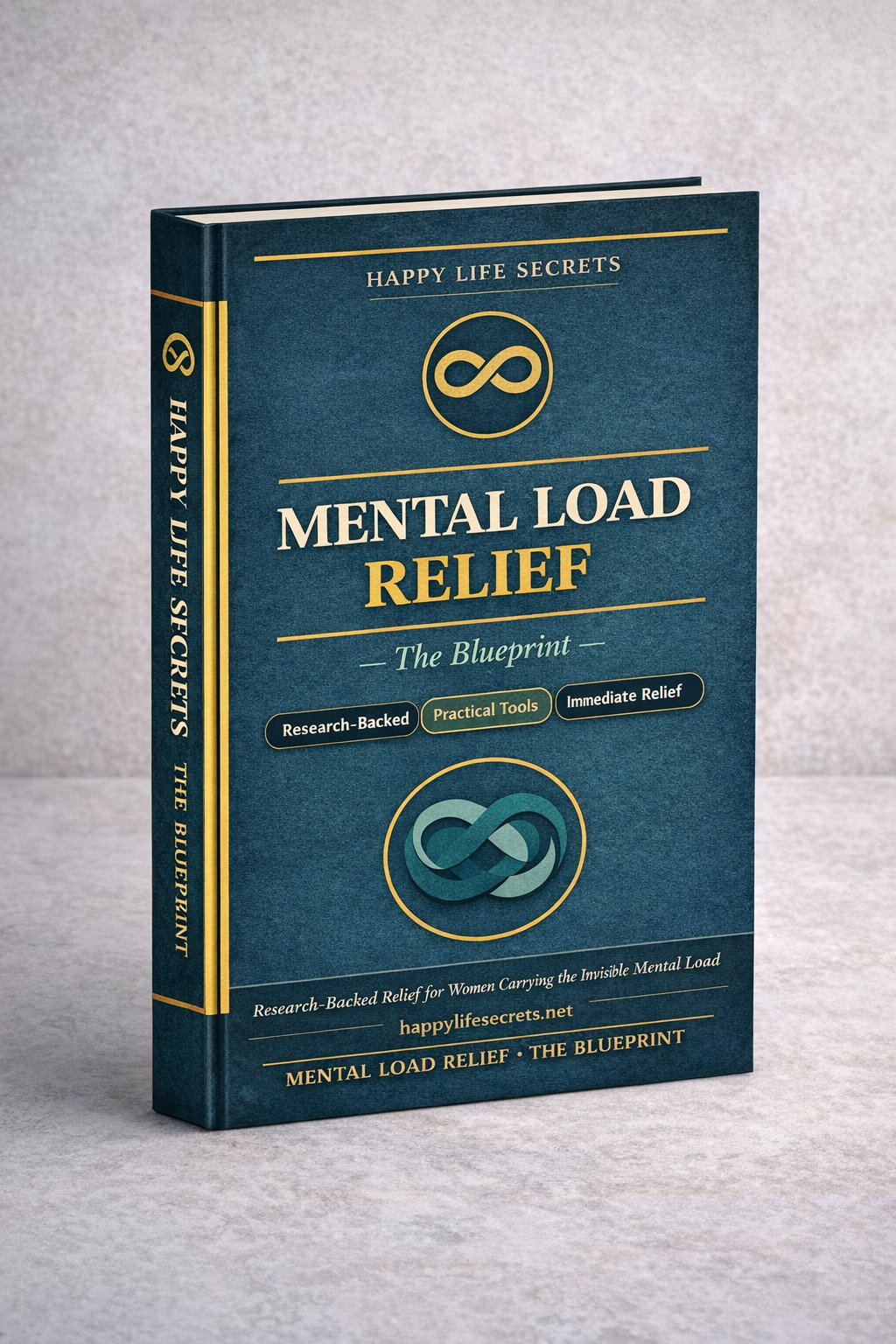
The Mental Load Relief Blueprint gives you the research-backed framework women 25–44 are quietly using to reclaim 2+ hours of mental space daily — without waiting for anyone else to notice how much you're managing.
Instant PDF delivery • Your privacy protected • Unsubscribe anytime
You're Not Overwhelmed Because You Can't Handle It.
You're Overwhelmed Because the Load Was Never Designed to Be Carried by One Person.
Research shows women make up to 35,000 decisions daily while managing invisible work nobody else sees — or names. Here's what that actually looks like from the inside.
You're the Only One Who Remembers Everything
Appointments, school events, grocery needs, everyone's schedules — that mental tab running 24/7 is real cognitive labor. Studies show invisible work creates 40% more mental fatigue than tasks anyone can actually see.
Making 100+ Decisions While Everyone Else Just... Lives
What's for dinner? Who needs what tomorrow? Did that get handled? You're absorbing the weight of these micro-decisions constantly — and research confirms that decision fatigue quietly steals your clarity and energy all day long.
Holding Everyone's Emotional Load Too
Their worries, moods, needs, and fears have somewhere to land — and that place is you. Data shows this emotional carrying costs women 700+ hours annually in unpaid mental labor that nobody else identifies as work.
Your Brain Won't Turn Off at Night
Even when you're exhausted, tomorrow's logistics replay the moment your head hits the pillow. Research directly links mental load to disrupted sleep — which means you wake up tired before the day even begins.
You're Everyone's Default for Everything
Every question, every problem, every decision comes to you first. You coordinate, anticipate, solve — the invisible architecture holding everything together. Research identifies being the default person as a primary predictor of burnout.
Generic "Self-Care" Was Never Designed for Your Reality
"Take a bath." "Just say no." None of it accounts for the fact that you're managing an entire household's cognitive life. The advice failed you — not the other way around. You needed a different kind of tool.
The Mental Load Relief Blueprint: A New Framework, Not More Advice
This isn't another collection of productivity tips that pretend your invisible labor doesn't exist. These are evidence-based strategies built around how cognitive and emotional load actually work — practical relief designed for real life, not an idealized one.
Identify Your Mental Load Type
Discover which of the five mental load patterns applies to you. Research shows targeted, specific strategies work 3x better than generic approaches — because not all invisible labor looks the same.
The Brain Dump Method That Actually Works
Reduce your daily decision load by up to 40% using cognitive offloading techniques designed for real life. Studies confirm that externalizing mental tabs creates immediate, measurable relief.
Sharing Mental Load — Not Just Tasks
Specific strategies for redistributing invisible labor without becoming the manager of your own delegation. Evidence shows even small shifts in load distribution produce noticeable, lasting relief.
Decision Fatigue Relief Protocol
Eliminate unnecessary decision points and automate your cognitive overhead. Research confirms that removing just 20 daily micro-decisions significantly improves mental clarity and available energy.
Boundary Scripts for Real Situations
Word-for-word language for setting limits without guilt or conflict. Data shows even one consistently held boundary reduces overwhelm and interrupts the default-person pattern over time.
The Bedtime Worry Spiral Protocol
Reduce nighttime mental rumination from 45 minutes to under 5 using the Worry Window Technique. Penn State research shows this approach cuts bedtime anxiety by 35% within two weeks.
The Permission You've Been Waiting For
Relief doesn't require anyone else to notice what you've been carrying first. Research shows self-validation is the essential first step — and this guide begins there, because that's where change actually starts.
Every Strategy Is Grounded in Research on Invisible Labor
Not wellness trends. Not anecdotes. Peer-reviewed data on cognitive load, decision fatigue, and emotional labor from leading psychology and behavioral science journals.
Why The Mental Load Relief Blueprint Works When Generic Advice Didn't
The strategies that failed you before weren't designed for cognitive labor. They were designed for task management. This is something different.
Built for What You're Actually Carrying
Designed specifically for cognitive overload from invisible labor — not generic stress tips that acknowledge your situation in the intro and then ignore it for the rest of the guide.
Fits Into Real Life, Not an Ideal One
Every strategy takes 5–10 minutes. Not because the strategies are small — because your time is real. Relief that only works when you have three free hours isn't relief.
100% Evidence-Based
Grounded in peer-reviewed research on invisible labor, decision fatigue, and emotional load — not trends, personal opinions, or one-size-fits-all advice that was never built for what you carry.
About Happy Life Secrets
I'm Herb, founder of Happy Life Secrets. For over a decade, I've researched the psychology of mental overwhelm, decision fatigue, and cognitive load — specifically studying what creates real, measurable relief for women managing multiple responsibilities and invisible labor nobody else names.
The Mental Load Relief Blueprint isn't built on personal anecdotes or wellness theories. Every strategy inside is grounded in peer-reviewed research from leading psychology journals and clinical studies on invisible labor and burnout.
These are the same evidence-based tools women are using right now to finally get relief from work nobody acknowledges — and to reclaim the mental space they've always deserved, without waiting for anyone else to step up first.
Download Your Free Blueprint Today
Stop carrying everyone's invisible labor alone. Get the complete, evidence-based guide for reducing decision fatigue, sharing the mental load, and finally feeling lighter — starting today.
Completely free. No credit card required. Instant PDF download.
Yes — Send Me the Free Blueprint NowInstant delivery • Your privacy protected • Evidence-based strategies • Unsubscribe anytime
------------------------
------------------------



-----------


-----------


-----------


HappyLifeSecrets.net
Copyright © 2010-2026
All Rights Reserved