
The Happy Life Quote That Saved My Marriage: Why Words Really Do Matter
Maria stared at the kitchen counter, tears streaming down her face as another argument with her husband Mark echoed in her mind. After eight years of marriage, their conversations had devolved into logistics about kids' schedules, bills, and household chores. The spark that once defined their relationship seemed extinguished, and she wondered if their happy life quote saved marriage words matter philosophy they once shared had become nothing more than empty sentiment.
That Tuesday evening in March would become the turning point neither of them expected. What started as a disagreement about vacation plans escalated into a full-blown fight about communication, priorities, and whether they still wanted the same things. As Mark stormed out to cool off, Maria found herself questioning everything about their partnership.
The Quote That Changed Everything
During Mark's walk around their neighborhood, he passed their local coffee shop where a chalkboard sign displayed a simple message: "The words you speak become the house you live in." Something about that phrase stopped him in his tracks. He photographed it, sent it to Maria, and returned home ready for a different kind of conversation.
"I realized we've been building a house of criticism and defensiveness," Mark later reflected. "That happy life quote saved marriage words matter moment made me understand that every word we speak to each other is either building up our relationship or tearing it down."
The couple spent the next three hours talking – really talking – for the first time in months. They discovered that their communication had become purely transactional, lacking the appreciation, curiosity, and kindness that once characterized their daily interactions.
Why Words Matter More Than We Realize
Research from the Gottman Institute consistently shows that the ratio of positive to negative interactions in successful relationships is approximately 5:1. Dr. John Gottman's decades of study reveal that couples who maintain this balance are significantly more likely to stay together and report higher satisfaction levels.
A recent study published in the Journal of Marriage and Family found that couples who engage in positive daily communication rituals show 23% higher relationship satisfaction scores compared to those who don't prioritize intentional dialogue. The research emphasizes that it's not just the frequency of communication, but the quality and intentionality behind our words that creates lasting change.
The power of language in relationships extends beyond mere communication. According to psychology research from Stanford University, the specific words we choose activate different neural pathways in our partner's brain, either triggering stress responses or promoting feelings of safety and connection.
The Science Behind Transformative Communication
When Maria and Mark began implementing their new communication approach, they unknowingly tapped into what relationship experts call "emotional attunement." This process involves:
Mindful Word Choice: Every word becomes deliberate rather than reactive. Instead of saying "You never listen," the approach becomes "I feel unheard when conversations get interrupted."
Positive Assumption: The happy life quote saved marriage words matter principle assumes positive intent behind your partner's actions, even when their delivery feels harsh or critical.
Repair Attempts: Quick acknowledgments when conversations go off track, followed by immediate course corrections that demonstrate mutual respect.
Daily Appreciation: Regular verbal recognition of your partner's efforts, no matter how small they might seem.
Dr. Emily Chen, a marriage counselor with fifteen years of experience, explains: "Most couples underestimate how much their daily language patterns influence their overall relationship satisfaction. When partners commit to conscious communication, they often see improvements within weeks."
Real-Life Implementation: What Actually Works
Three months after their breakthrough conversation, Maria and Mark developed what they called their "word diet" – a systematic approach to changing their communication patterns. Here's exactly what they did:
Morning Connections: Before checking phones or discussing schedules, they spend five minutes sharing something they're looking forward to that day. This simple ritual primes their brains for positive interaction.
Appreciation Texts: Throughout busy days, they send brief messages acknowledging specific things their partner did well. "Thank you for making coffee this morning" or "I noticed you helped Emma with homework without being asked."
Evening Check-ins: A fifteen-minute conversation each night focusing on emotions rather than logistics. They ask questions like "What was the best part of your day?" instead of immediately diving into tomorrow's schedule.
Conflict Reset: When disagreements arise, they use the phrase "Let me try that again" as a signal to pause and reframe their approach with more kindness.
The transformation wasn't immediate, but within six weeks, both reported feeling more connected and appreciated. Their happy life quote saved marriage words matter experiment had evolved into a sustainable lifestyle change.
Overcoming Common Communication Obstacles
Many couples struggle with similar challenges when trying to improve their dialogue patterns. Here are the most frequent roadblocks and practical solutions:
Time Constraints: Busy schedules make intentional communication feel impossible. Maria and Mark addressed this by identifying "micro-moments" – brief opportunities throughout the day for meaningful connection. Even two-minute conversations while coffee brews can make a significant difference.
Old Habits: Breaking defensive communication patterns requires consistent effort. The couple created a code word ("reset") that either partner could use when conversations started heading toward familiar negative territory.
Emotional Overwhelm: During high-stress periods, maintaining positive communication becomes more difficult. They learned to recognize when emotions were running too high for productive dialogue and agreed on a 30-minute cooling-off period before revisiting important topics.
Different Communication Styles: Mark preferred direct communication while Maria valued emotional processing time. They discovered that acknowledging these differences rather than fighting them led to more effective conversations.
The Ripple Effects Nobody Expected
Six months after implementing their new communication approach, Maria and Mark noticed changes extending far beyond their marriage. Their children began using more respectful language with each other, and family dinners became more enjoyable for everyone.
"Our kids started saying 'thank you' more often without being reminded," Maria observed. "They were modeling the appreciation they heard between Mark and me daily."
Recent research from the American Psychological Association confirms that children in homes with positive parental communication patterns show better emotional regulation and social skills. The study followed 200 families for two years and found that kids whose parents practiced intentional positive communication scored 18% higher on emotional intelligence assessments.
The couple also reported improvements in their individual stress levels. Mark's blood pressure decreased during his annual physical, and Maria noticed better sleep quality – benefits she hadn't anticipated from their communication changes.
Building Your Own Communication Transformation
The happy life quote saved marriage words matter principle can work for any couple willing to commit to consistent practice. Here's a step-by-step approach based on Maria and Mark's experience and current relationship research:
Week 1-2: Awareness Building
- Track your current communication patterns for one week without changing anything
- Notice when conversations feel positive versus negative
- Identify your personal communication triggers and patterns
Week 3-4: Small Changes
- Implement one daily appreciation ritual
- Practice pausing before responding during disagreements
- Use "I" statements instead of "you" accusations
Week 5-8: Expanding the Practice
- Add evening check-in conversations
- Introduce repair attempts during conflicts
- Start sending appreciation messages throughout the day
Week 9-12: Integration and Refinement
- Adjust techniques based on what works best for your relationship
- Address any remaining communication challenges
- Celebrate progress and plan for long-term sustainability
Measuring Your Progress
Unlike many relationship advice approaches, the happy life quote saved marriage words matter method provides measurable results. Track these indicators to gauge your improvement:
Conflict Resolution Time: How quickly do you move from disagreement to understanding? Successful couples reduce this timeframe as their communication skills improve.
Daily Positive Interactions: Count brief moments of appreciation, humor, or affection throughout each day. Aim for at least five positive interactions for every negative one.
Emotional Recovery: How long does it take to feel connected again after a disagreement? This timeframe typically decreases as communication patterns improve.
Spontaneous Appreciation: Notice when you naturally express gratitude or recognition without consciously trying. This indicates that positive communication is becoming habitual.
Long-Term Relationship Transformation
Two years later, Maria and Mark's marriage looks dramatically different from their pre-transformation dynamic. They've maintained their communication practices through job changes, family stress, and the normal ups and downs of long-term partnership.
"The happy life quote saved marriage words matter approach taught us that we have a choice in every interaction," Mark explains. "We can either build each other up or tear each other down with our words. Once you truly understand that power, you can't go back to unconscious communication."
Their success story illustrates what relationship researchers call "positive sentiment override" – when couples develop such strong positive communication habits that they naturally assume the best of each other, even during difficult moments.
The couple now mentors other marriages through their church and reports that the principles work across different personalities, conflict styles, and relationship challenges. The key factor isn't perfection, but consistent commitment to treating each other's emotional well-being as precious and worthy of care.
Your Communication Revolution Starts Today
Every marriage reaches crossroads where couples can choose to drift apart or intentionally grow closer together. The happy life quote saved marriage words matter philosophy offers a practical pathway toward deeper connection, but it requires both partners' commitment to conscious change.
Start with one small adjustment today. Send your partner an appreciation text right now. Use their name when you greet them tonight. Ask about their emotional experience rather than just their schedule. These micro-changes create momentum toward larger transformation.
Remember that the words you speak to your partner today become part of the emotional house you're building together. Make sure you're constructing something beautiful, supportive, and strong enough to weather any storm that comes your way.
The quote that stopped Mark in his tracks that March evening – "The words you speak become the house you live in" – serves as a daily reminder that every conversation is an opportunity to strengthen their foundation or repair any cracks that have formed.
Your marriage has the potential for the same kind of transformation. The only question is: what kind of house do you want your words to build?
Instant delivery • No credit card required • Unsubscribe anytime
You're Not Falling Behind. You're Carrying More Than Anyone Should Have to Hold Alone.
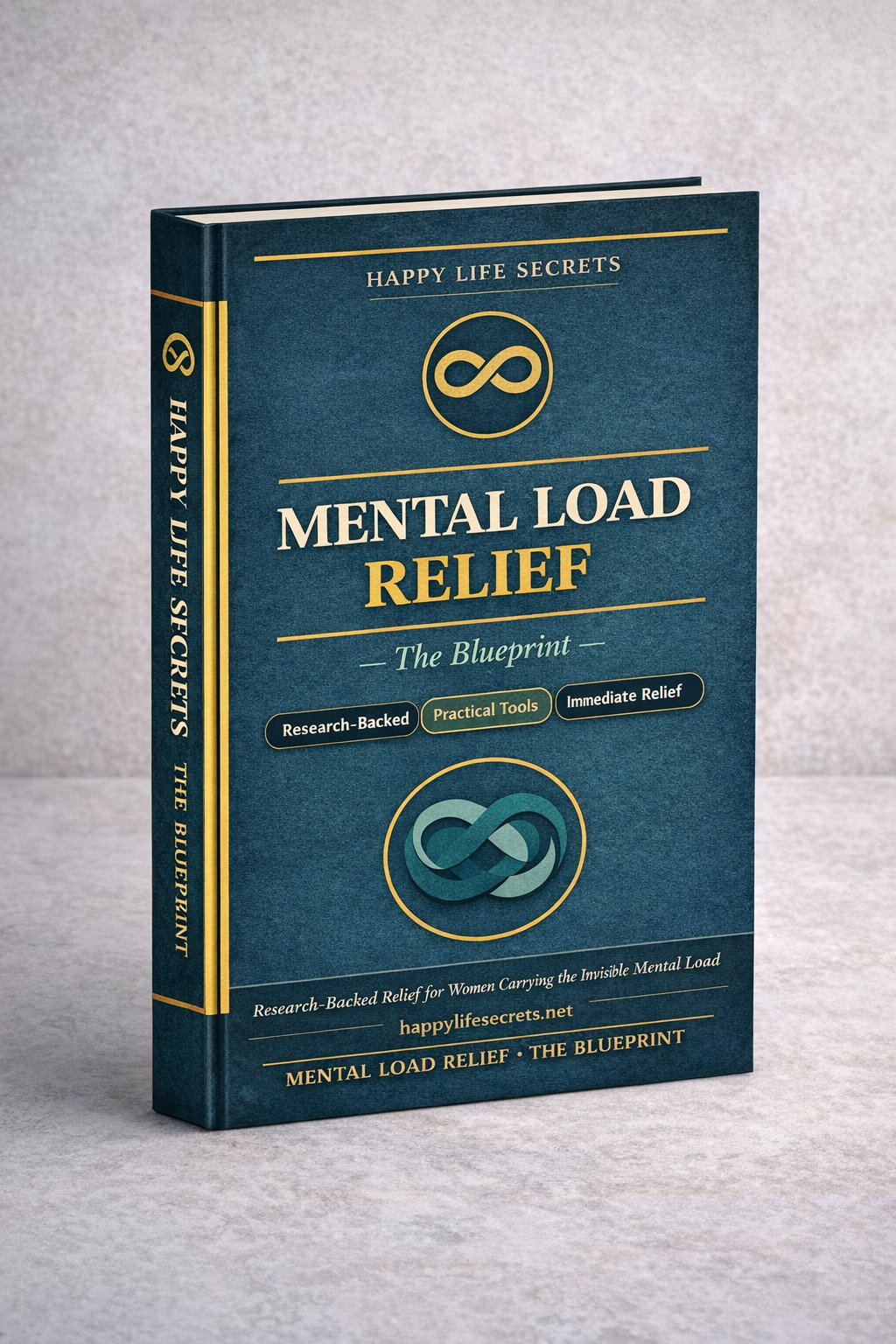
The Mental Load Relief Blueprint gives you the research-backed framework women 25–44 are quietly using to reclaim 2+ hours of mental space daily — without waiting for anyone else to notice how much you're managing.
Instant PDF delivery • Your privacy protected • Unsubscribe anytime
You're Not Overwhelmed Because You Can't Handle It.
You're Overwhelmed Because the Load Was Never Designed to Be Carried by One Person.
Research shows women make up to 35,000 decisions daily while managing invisible work nobody else sees — or names. Here's what that actually looks like from the inside.
You're the Only One Who Remembers Everything
Appointments, school events, grocery needs, everyone's schedules — that mental tab running 24/7 is real cognitive labor. Studies show invisible work creates 40% more mental fatigue than tasks anyone can actually see.
Making 100+ Decisions While Everyone Else Just... Lives
What's for dinner? Who needs what tomorrow? Did that get handled? You're absorbing the weight of these micro-decisions constantly — and research confirms that decision fatigue quietly steals your clarity and energy all day long.
Holding Everyone's Emotional Load Too
Their worries, moods, needs, and fears have somewhere to land — and that place is you. Data shows this emotional carrying costs women 700+ hours annually in unpaid mental labor that nobody else identifies as work.
Your Brain Won't Turn Off at Night
Even when you're exhausted, tomorrow's logistics replay the moment your head hits the pillow. Research directly links mental load to disrupted sleep — which means you wake up tired before the day even begins.
You're Everyone's Default for Everything
Every question, every problem, every decision comes to you first. You coordinate, anticipate, solve — the invisible architecture holding everything together. Research identifies being the default person as a primary predictor of burnout.
Generic "Self-Care" Was Never Designed for Your Reality
"Take a bath." "Just say no." None of it accounts for the fact that you're managing an entire household's cognitive life. The advice failed you — not the other way around. You needed a different kind of tool.
The Mental Load Relief Blueprint: A New Framework, Not More Advice
This isn't another collection of productivity tips that pretend your invisible labor doesn't exist. These are evidence-based strategies built around how cognitive and emotional load actually work — practical relief designed for real life, not an idealized one.
Identify Your Mental Load Type
Discover which of the five mental load patterns applies to you. Research shows targeted, specific strategies work 3x better than generic approaches — because not all invisible labor looks the same.
The Brain Dump Method That Actually Works
Reduce your daily decision load by up to 40% using cognitive offloading techniques designed for real life. Studies confirm that externalizing mental tabs creates immediate, measurable relief.
Sharing Mental Load — Not Just Tasks
Specific strategies for redistributing invisible labor without becoming the manager of your own delegation. Evidence shows even small shifts in load distribution produce noticeable, lasting relief.
Decision Fatigue Relief Protocol
Eliminate unnecessary decision points and automate your cognitive overhead. Research confirms that removing just 20 daily micro-decisions significantly improves mental clarity and available energy.
Boundary Scripts for Real Situations
Word-for-word language for setting limits without guilt or conflict. Data shows even one consistently held boundary reduces overwhelm and interrupts the default-person pattern over time.
The Bedtime Worry Spiral Protocol
Reduce nighttime mental rumination from 45 minutes to under 5 using the Worry Window Technique. Penn State research shows this approach cuts bedtime anxiety by 35% within two weeks.
The Permission You've Been Waiting For
Relief doesn't require anyone else to notice what you've been carrying first. Research shows self-validation is the essential first step — and this guide begins there, because that's where change actually starts.
Every Strategy Is Grounded in Research on Invisible Labor
Not wellness trends. Not anecdotes. Peer-reviewed data on cognitive load, decision fatigue, and emotional labor from leading psychology and behavioral science journals.
Why The Mental Load Relief Blueprint Works When Generic Advice Didn't
The strategies that failed you before weren't designed for cognitive labor. They were designed for task management. This is something different.
Built for What You're Actually Carrying
Designed specifically for cognitive overload from invisible labor — not generic stress tips that acknowledge your situation in the intro and then ignore it for the rest of the guide.
Fits Into Real Life, Not an Ideal One
Every strategy takes 5–10 minutes. Not because the strategies are small — because your time is real. Relief that only works when you have three free hours isn't relief.
100% Evidence-Based
Grounded in peer-reviewed research on invisible labor, decision fatigue, and emotional load — not trends, personal opinions, or one-size-fits-all advice that was never built for what you carry.
About Happy Life Secrets
I'm Herb, founder of Happy Life Secrets. For over a decade, I've researched the psychology of mental overwhelm, decision fatigue, and cognitive load — specifically studying what creates real, measurable relief for women managing multiple responsibilities and invisible labor nobody else names.
The Mental Load Relief Blueprint isn't built on personal anecdotes or wellness theories. Every strategy inside is grounded in peer-reviewed research from leading psychology journals and clinical studies on invisible labor and burnout.
These are the same evidence-based tools women are using right now to finally get relief from work nobody acknowledges — and to reclaim the mental space they've always deserved, without waiting for anyone else to step up first.
Download Your Free Blueprint Today
Stop carrying everyone's invisible labor alone. Get the complete, evidence-based guide for reducing decision fatigue, sharing the mental load, and finally feeling lighter — starting today.
Completely free. No credit card required. Instant PDF download.
Yes — Send Me the Free Blueprint NowInstant delivery • Your privacy protected • Evidence-based strategies • Unsubscribe anytime
------------------------
------------------------


-----------


-----------
-----------


HappyLifeSecrets.net
Copyright © 2010-2026
All Rights Reserved