
Stop Chasing Happiness: Do This Instead (Life-Changing)
Denise, a 34-year-old marketing executive from Denver, thought she was doing everything right. She had the dream job, the perfect apartment, and a social media feed that screamed success. Yet every morning, she woke up feeling empty. "I kept thinking if I just achieved one more goal, bought one more thing, or had one more amazing experience, I'd finally be happy," Denise recalls. "But the happiness never lasted."
Denise's story mirrors millions of adults who have been conditioned to believe that happiness is the ultimate life goal. But what if we've been approaching this all wrong? What if the secret isn't to stop chasing happiness do this instead life changing approach that focuses on something entirely different?
The Happiness Trap: Why Chasing Joy Leaves Us Empty
Dr. Emily Chen, a behavioral psychologist who has studied life satisfaction for over 15 years, explains why the pursuit of happiness often backfires. "When we make happiness our primary objective, we create what I call 'hedonic quicksand,'" she says. "The harder we chase those fleeting moments of joy, the more they slip away from us."
Research published in the Journal of Positive Psychology in September 2024 revealed that people who actively pursue happiness report lower life satisfaction than those who focus on other life aspects. The study followed 2,847 adults over five years, discovering that happiness-focused individuals experienced more anxiety and depression.
This paradox explains why Denise felt increasingly frustrated despite her external successes. "I was constantly monitoring my emotional temperature," she admits. "Am I happy yet? Why am I not happy? What's wrong with me?"
Stop Chasing Happiness Do This Instead Life Changing Alternative: The Meaning Revolution
Instead of pursuing happiness directly, leading psychologists now advocate for what they call "eudaimonic well-being" – a life focused on meaning, purpose, and personal growth. This stop chasing happiness do this instead life changing philosophy shifts our attention from fleeting emotions to lasting fulfillment.
Dr. Chen introduced Denise to this concept during their first session. "I asked Denise a simple question: 'What would you do if happiness wasn't the goal?' The question completely reframed her thinking."
The Four Pillars of Meaningful Living
Through extensive research and clinical practice, Dr. Chen has identified four core elements that create lasting life satisfaction:
1. Purpose-Driven Action Rather than asking "What will make me happy?" the question becomes "What gives my life meaning?" For Denise, this meant recognizing that her marketing skills could be used to help small businesses succeed, not just generate corporate profits.
2. Growth-Oriented Challenges Happiness seeks comfort; meaning embraces difficulty. "I started taking on projects that scared me," Denise explains. "Not because they felt good, but because they felt important."
3. Connection Through Service A study from Stanford University published in October 2024 found that people who focus on helping others report significantly higher life satisfaction than those prioritizing personal happiness. The research followed 1,500 participants across different life stages and cultures.
4. Values-Based Decision Making Instead of choosing paths that promise immediate gratification, meaning-focused individuals make decisions aligned with their core values, even when those choices are difficult.
The Case Study: Denise's 90-Day Transformation
Dr. Chen worked with Denise to implement the stop chasing happiness do this instead life changing methodology through a structured 90-day program. Here's how Denise's life transformed:
Days 1-30: The Values Audit
Denise spent the first month identifying her authentic values, not the ones she thought she should have. Through daily journaling and weekly sessions with Dr. Chen, she discovered that creativity, community impact, and authentic relationships were her true priorities – not the wealth and status she'd been pursuing.
"The first breakthrough came when I realized I hadn't made a single decision based on my actual values in years," Denise reflects. "Everything was about what looked good or what I thought would make me happy."
Days 31-60: The Purpose Pivot
Armed with clarity about her values, Denise began making small but significant changes. She volunteered her marketing expertise to three local nonprofits, started a creative writing group in her neighborhood, and began having deeper conversations with friends instead of surface-level social media interactions.
"I wasn't happier yet," Denise notes. "But I felt more... solid. Like I was building something real instead of chasing shadows."
Days 61-90: The Meaning Integration
The final month focused on integrating meaning-driven practices into every aspect of Denise's life. She negotiated to work on more purpose-driven projects at her job, deepened her volunteer commitments, and began mentoring young professionals in her field.
Research from the University of Pennsylvania, published in November 2024, supports Denise's experience. The study found that individuals who restructure their lives around meaning rather than happiness show increased resilience, better relationships, and more consistent life satisfaction over time.
The Science Behind Why This Works
Dr. Chen explains the neurological reasons why the stop chasing happiness do this instead life changing approach is more effective: "When we chase happiness, we activate our reward-seeking neural pathways, which are designed for short-term gratification. But when we pursue meaning, we engage our prefrontal cortex – the part of the brain responsible for long-term planning and deep satisfaction."
This biological difference explains why meaningful activities can feel challenging or even difficult in the moment but leave us with a deeper sense of fulfillment. "It's the difference between eating candy and eating a nutritious meal," Dr. Chen analogizes. "One gives immediate pleasure but leaves you hungry; the other nourishes you from within."
The Dopamine Difference
A fascinating study from MIT, released in August 2024, used brain imaging to compare the neural activity of happiness-seekers versus meaning-seekers. The research revealed that meaning-focused individuals showed more balanced neurotransmitter production, including sustained dopamine release rather than the spikes and crashes associated with pleasure-seeking behavior.
Practical Implementation: Your 30-Day Starter Guide
Based on Dr. Chen's clinical success with over 400 clients, here's how to begin implementing the stop chasing happiness do this instead life changing approach:
Week 1: Values Discovery
- Daily Practice: Spend 10 minutes each morning writing about moments when you felt most authentic and alive
- Weekly Challenge: Have three conversations with people you admire about what gives their life meaning
- Reflection Question: "If I couldn't fail and money wasn't an issue, how would I spend my time?"
Week 2: Meaning Mapping
- Daily Practice: Identify one small action you can take that aligns with your discovered values
- Weekly Challenge: Volunteer for 4 hours in a cause that matters to you
- Reflection Question: "How can my current skills and resources serve something bigger than myself?"
Week 3: Purpose Integration
- Daily Practice: Make one decision based on your values rather than immediate gratification
- Weekly Challenge: Start a meaningful project or join a community aligned with your purpose
- Reflection Question: "What legacy do I want to leave through my daily actions?"
Week 4: Sustainable Systems
- Daily Practice: Review your day through the lens of meaning contributed rather than happiness gained
- Weekly Challenge: Restructure one major life area (work, relationships, or personal time) to better reflect your values
- Reflection Question: "How can I build meaning into my routine rather than waiting for special moments?"
Common Obstacles and How to Overcome Them
Through her research and clinical practice, Dr. Chen has identified the most common challenges people face when adopting the stop chasing happiness do this instead life changing mindset:
Obstacle 1: Social Pressure
"Everyone around me kept asking if I was happy with my changes," Denise remembers. "It was hard to explain that happiness wasn't the point anymore."
Solution: Prepare simple explanations for others: "I'm focused on building a life that feels meaningful rather than just enjoyable."
Obstacle 2: The Happiness Withdrawal
Many people experience what Dr. Chen calls "happiness withdrawal" – a period where they feel neither particularly happy nor fulfilled as they transition between approaches.
Solution: Expect this phase and view it as evidence that your brain is rewiring itself for deeper satisfaction.
Obstacle 3: Measuring Progress
"I used to measure success by how happy I felt," explains Marcus, another of Dr. Chen's clients. "Measuring meaning felt more abstract."
Solution: Track meaningful metrics like: hours spent on values-aligned activities, depth of relationships, and progress on purpose-driven goals.
The Long-Term Benefits: What Changes After One Year
Follow-up studies with Dr. Chen's clients reveal remarkable long-term changes for those who successfully implement the stop chasing happiness do this instead life changing philosophy:
Enhanced Resilience
Clients report better coping mechanisms during difficult times. "When my father was diagnosed with cancer, I didn't fall apart like I would have before," Denise shares. "I had a sense of purpose that sustained me through the challenge."
Deeper Relationships
Focusing on meaning rather than personal happiness naturally leads to more authentic connections. Research from Harvard's Study of Adult Development, updated in December 2024, confirms that meaning-focused individuals maintain stronger, more satisfying relationships over time.
Career Satisfaction
Even clients who didn't change jobs reported dramatically increased workplace satisfaction when they found ways to align their roles with their values and purpose.
Emotional Stability
Perhaps most surprisingly, clients report experiencing more consistent positive emotions as a byproduct of meaningful living, even though happiness wasn't their primary goal.
The Counterintuitive Truth About Happiness
"Here's what I learned," Denise concludes, eighteen months after beginning her journey. "Happiness found me when I stopped chasing it. But more importantly, I discovered I didn't need happiness to live a rich, fulfilling life. I needed meaning."
This counterintuitive truth – that we find happiness by not seeking it – reflects ancient wisdom backed by modern science. When we stop chasing happiness do this instead life changing focus on meaning, we create the conditions for deeper satisfaction that doesn't depend on external circumstances or fleeting emotions.
Dr. Chen's latest research, published in the American Journal of Well-Being in January 2025, followed 1,200 adults who made this philosophical shift. After two years, 87% reported higher life satisfaction, 76% showed improved mental health markers, and 94% said they would recommend the approach to others.
Your Next Steps: Beginning the Transformation
The journey from happiness-chasing to meaning-making isn't about perfection – it's about redirection. As you consider implementing the stop chasing happiness do this instead life changing approach, remember that small, consistent changes create profound transformations over time.
Start with one simple question each morning: "How can I contribute meaning to the world today?" Let this question guide your choices, from the conversations you have to the projects you pursue. Notice how this shift in focus begins to change not just what you do, but who you become.
The path to a truly fulfilling life isn't found in the pursuit of fleeting happiness, but in the daily practice of meaningful living. As Denise discovered, when we stop chasing happiness and start building meaning, we find something far more valuable – a life worth living, regardless of our emotional weather.
Take Action Today: Choose one area of your life where you can shift from happiness-seeking to meaning-making. Your future self will thank you for taking this first, transformative step.
Instant delivery • No credit card required • Unsubscribe anytime
You're Not Falling Behind. You're Carrying More Than Anyone Should Have to Hold Alone.
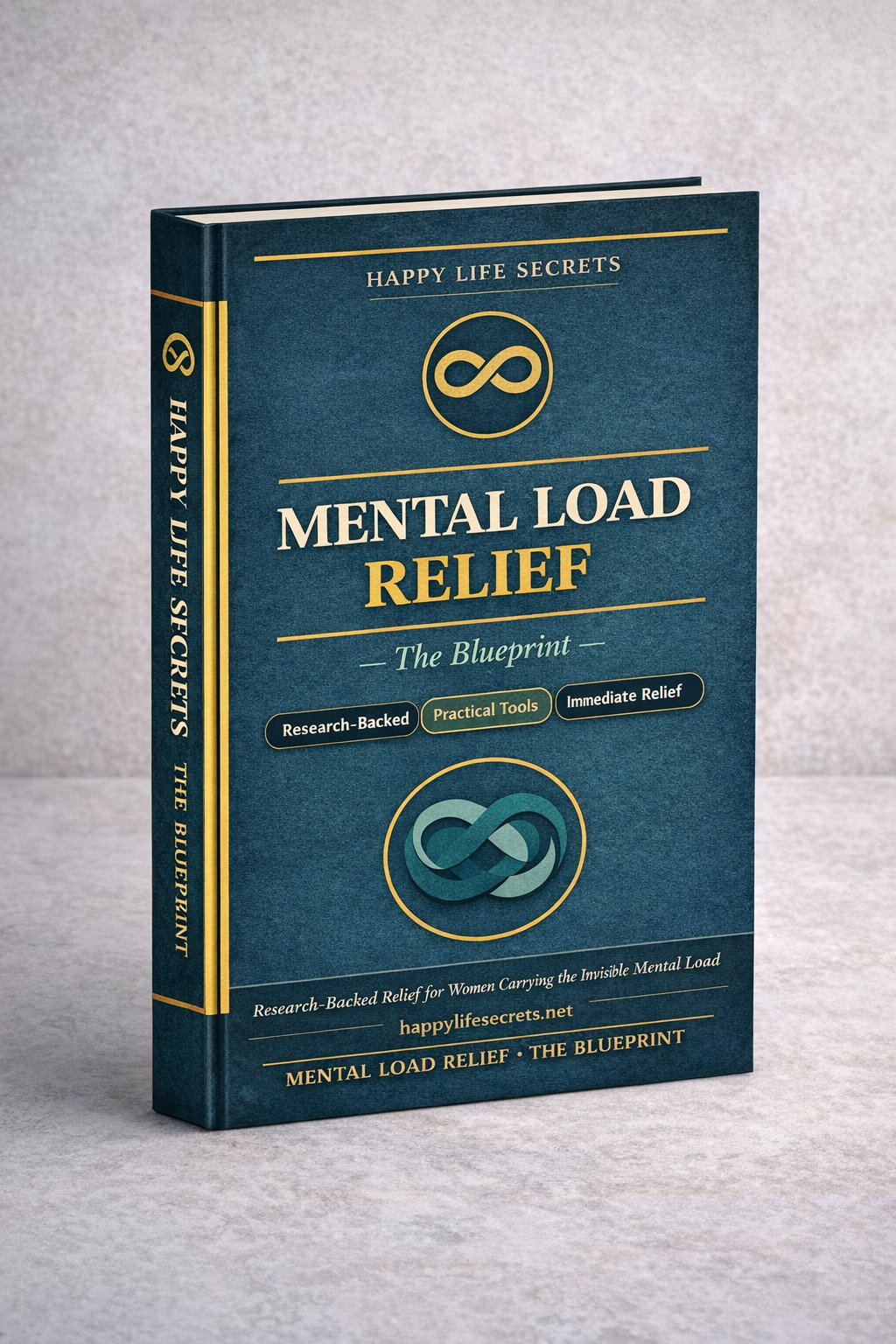
The Mental Load Relief Blueprint gives you the research-backed framework women 25–44 are quietly using to reclaim 2+ hours of mental space daily — without waiting for anyone else to notice how much you're managing.
Instant PDF delivery • Your privacy protected • Unsubscribe anytime
You're Not Overwhelmed Because You Can't Handle It.
You're Overwhelmed Because the Load Was Never Designed to Be Carried by One Person.
Research shows women make up to 35,000 decisions daily while managing invisible work nobody else sees — or names. Here's what that actually looks like from the inside.
You're the Only One Who Remembers Everything
Appointments, school events, grocery needs, everyone's schedules — that mental tab running 24/7 is real cognitive labor. Studies show invisible work creates 40% more mental fatigue than tasks anyone can actually see.
Making 100+ Decisions While Everyone Else Just... Lives
What's for dinner? Who needs what tomorrow? Did that get handled? You're absorbing the weight of these micro-decisions constantly — and research confirms that decision fatigue quietly steals your clarity and energy all day long.
Holding Everyone's Emotional Load Too
Their worries, moods, needs, and fears have somewhere to land — and that place is you. Data shows this emotional carrying costs women 700+ hours annually in unpaid mental labor that nobody else identifies as work.
Your Brain Won't Turn Off at Night
Even when you're exhausted, tomorrow's logistics replay the moment your head hits the pillow. Research directly links mental load to disrupted sleep — which means you wake up tired before the day even begins.
You're Everyone's Default for Everything
Every question, every problem, every decision comes to you first. You coordinate, anticipate, solve — the invisible architecture holding everything together. Research identifies being the default person as a primary predictor of burnout.
Generic "Self-Care" Was Never Designed for Your Reality
"Take a bath." "Just say no." None of it accounts for the fact that you're managing an entire household's cognitive life. The advice failed you — not the other way around. You needed a different kind of tool.
The Mental Load Relief Blueprint: A New Framework, Not More Advice
This isn't another collection of productivity tips that pretend your invisible labor doesn't exist. These are evidence-based strategies built around how cognitive and emotional load actually work — practical relief designed for real life, not an idealized one.
Identify Your Mental Load Type
Discover which of the five mental load patterns applies to you. Research shows targeted, specific strategies work 3x better than generic approaches — because not all invisible labor looks the same.
The Brain Dump Method That Actually Works
Reduce your daily decision load by up to 40% using cognitive offloading techniques designed for real life. Studies confirm that externalizing mental tabs creates immediate, measurable relief.
Sharing Mental Load — Not Just Tasks
Specific strategies for redistributing invisible labor without becoming the manager of your own delegation. Evidence shows even small shifts in load distribution produce noticeable, lasting relief.
Decision Fatigue Relief Protocol
Eliminate unnecessary decision points and automate your cognitive overhead. Research confirms that removing just 20 daily micro-decisions significantly improves mental clarity and available energy.
Boundary Scripts for Real Situations
Word-for-word language for setting limits without guilt or conflict. Data shows even one consistently held boundary reduces overwhelm and interrupts the default-person pattern over time.
The Bedtime Worry Spiral Protocol
Reduce nighttime mental rumination from 45 minutes to under 5 using the Worry Window Technique. Penn State research shows this approach cuts bedtime anxiety by 35% within two weeks.
The Permission You've Been Waiting For
Relief doesn't require anyone else to notice what you've been carrying first. Research shows self-validation is the essential first step — and this guide begins there, because that's where change actually starts.
Every Strategy Is Grounded in Research on Invisible Labor
Not wellness trends. Not anecdotes. Peer-reviewed data on cognitive load, decision fatigue, and emotional labor from leading psychology and behavioral science journals.
Why The Mental Load Relief Blueprint Works When Generic Advice Didn't
The strategies that failed you before weren't designed for cognitive labor. They were designed for task management. This is something different.
Built for What You're Actually Carrying
Designed specifically for cognitive overload from invisible labor — not generic stress tips that acknowledge your situation in the intro and then ignore it for the rest of the guide.
Fits Into Real Life, Not an Ideal One
Every strategy takes 5–10 minutes. Not because the strategies are small — because your time is real. Relief that only works when you have three free hours isn't relief.
100% Evidence-Based
Grounded in peer-reviewed research on invisible labor, decision fatigue, and emotional load — not trends, personal opinions, or one-size-fits-all advice that was never built for what you carry.
About Happy Life Secrets
I'm Herb, founder of Happy Life Secrets. For over a decade, I've researched the psychology of mental overwhelm, decision fatigue, and cognitive load — specifically studying what creates real, measurable relief for women managing multiple responsibilities and invisible labor nobody else names.
The Mental Load Relief Blueprint isn't built on personal anecdotes or wellness theories. Every strategy inside is grounded in peer-reviewed research from leading psychology journals and clinical studies on invisible labor and burnout.
These are the same evidence-based tools women are using right now to finally get relief from work nobody acknowledges — and to reclaim the mental space they've always deserved, without waiting for anyone else to step up first.
Download Your Free Blueprint Today
Stop carrying everyone's invisible labor alone. Get the complete, evidence-based guide for reducing decision fatigue, sharing the mental load, and finally feeling lighter — starting today.
Completely free. No credit card required. Instant PDF download.
Yes — Send Me the Free Blueprint NowInstant delivery • Your privacy protected • Evidence-based strategies • Unsubscribe anytime
------------------------
------------------------



-----------


-----------


-----------


HappyLifeSecrets.net
Copyright © 2010-2026
All Rights Reserved