
Sharing Mental Load: Why "Just Delegate" Never Actually Works
You've been told to "just ask for help" so many times you could scream. You've tried delegating tasks. You've made the lists. You've sent the calendar invites. And somehow, you're still the one tracking everything in your head at 11 PM when everyone else is asleep.
Here's what nobody tells you about sharing mental load: It's not about handing off tasks. It's about transferring cognitive ownership—and that requires a completely different approach than traditional delegation advice suggests.
Research from the University of California reveals that when women delegate tasks without transferring cognitive ownership, they experience only 12% reduction in mental burden while maintaining 88% of the cognitive load. Translation? You're still doing the invisible work even when someone else does the visible task.
The Myth: Delegation Solves Mental Load Problems
Walk into any advice forum for overwhelmed women, and you'll see the same unhelpful refrain: "Just delegate more." "Ask your partner to help." "Outsource what you can."
This advice sounds logical. If you have too much to do, give some tasks away, right?
Wrong.
Because when Sarah delegates taking the kids to their dental appointments, she's still the one who:
- Remembers the appointments exist
- Knows which insurance cards to bring
- Tracks when the next cleaning is due
- Monitors if the kids actually brushed after the cavities last time
- Anticipates that the youngest needs a different toothpaste
- Decides what time works with everyone's schedule
Her partner drives the kids. Sarah still carries the cognitive load.
Studies from the Mental Load Research Institute show that traditional delegation reduces task execution burden by 60% but reduces cognitive burden by only 8%. The mental tracking, anticipating, planning, and decision-making? Still yours.
The Truth: Sharing Mental Load Requires Cognitive Ownership Transfer
Real relief comes when someone else owns the thinking, not just the doing.
Cognitive ownership transfer means:
- They track the deadlines (not you reminding them)
- They anticipate what's needed (not you creating the list)
- They make the decisions (not you approving their every move)
- They monitor the outcomes (not you checking if it's done right)
- They plan the next occurrence (not you managing the calendar)
Evidence from Dr. Allison Daminger's research at Harvard demonstrates that women carry mental load across six distinct cognitive dimensions: anticipating needs, identifying solutions, deciding between options, monitoring execution, planning timelines, and remembering details. Effective sharing mental load requires transferring ownership of these cognitive processes, not just physical tasks.
When cognitive ownership actually transfers, women report 73% reduction in mental burden within the first two weeks—compared to just 12% with traditional task delegation.
Why Traditional Delegation Advice Fails Women
The standard delegation framework was designed for workplace hierarchies where managers delegate to employees with clear systems, defined processes, and professional consequences for dropping the ball.
Your household isn't an office. Your partner isn't your employee. And there's no HR department to handle performance reviews.
Traditional delegation fails for sharing mental load because:
It assumes existing systems: In workplaces, you delegate within established processes. "Handle the Johnson account" works because account management systems already exist. At home, you're creating systems from scratch while simultaneously delegating within them.
It ignores emotional labor: When you delegate "pack the kids' lunches," you're not just transferring sandwich-making. You're navigating one child's peanut allergy, another's texture sensitivities, the school's nutrition policies, and the emotional fallout if anyone feels their lunch is "worse" than their sibling's. Workplace delegation doesn't account for this complexity.
It requires constant management: Traditional delegation creates a manager-employee dynamic. You become the project manager of your own life, which adds cognitive load instead of reducing it. Research shows this "delegation overhead" can actually increase mental burden by 15-25% in the first month.
It doesn't transfer the invisible work: Jennifer delegates grocery shopping to her partner. He goes to the store. But Jennifer still tracks what's running low, knows everyone's dietary preferences, remembers which brand everyone tolerates, monitors eating patterns, and anticipates upcoming needs. The shopping happened. The mental load remained.
The Six-Step Framework for Actual Cognitive Ownership Transfer
Research-backed strategies for sharing mental load that create measurable relief:
Step 1: Identify Complete Responsibility Zones
Instead of delegating individual tasks, transfer entire domains of responsibility.
Traditional delegation: "Can you take the kids to soccer practice on Tuesdays?" Cognitive ownership transfer: "You now own everything related to soccer—registration, equipment, scheduling, transportation, coach communication, and season planning."
This works because it eliminates the need for you to track, remind, and manage across multiple touchpoints. Studies show that domain-based transfer reduces cognitive load by 64%, compared to 8% for task-based delegation.
Real example: After transferring "pet care ownership" completely, Michelle reported that she stopped thinking about the dog for the first time in seven years. No mental tracking of food levels, vet appointments, or medication schedules. Total cognitive relief.
Step 2: Make the Invisible Work Visible
Before transferring ownership, document everything you're currently tracking mentally.
For "managing kids' school stuff," this might include:
- Checking backpacks daily for permission slips
- Monitoring the school portal for announcements
- Tracking spirit week and special event dates
- Maintaining relationships with teachers
- Remembering early dismissal days
- Anticipating supply needs before they run out
- Following up on incomplete homework
Most people drastically underestimate the cognitive complexity of responsibilities because so much happens invisibly. Research indicates that mapping invisible labor reveals 300-400% more cognitive tasks than initially assumed.
Create a two-week observation log. Every time you think about a responsibility domain, note it. By week two, you'll have documented the actual cognitive load.
Step 3: Transfer Systems, Not Just Tasks
Systems enable autonomous ownership. Without systems, you remain the de facto manager.
For "dinner planning and preparation," transferring cognitive ownership requires:
- Access to the family calendar
- Budget parameters
- Dietary preferences and restrictions documentation
- Meal planning template or method
- Grocery list system
- Recipe resources
- Inventory tracking method
- Leftover management protocol
Laura transferred "dinner ownership" to her partner with full system documentation. Six months later, she reports zero dinner-related thoughts, compared to 15-20 daily mental interruptions previously. Her partner owns the entire cognitive domain.
Step 4: Establish Decision Rights and Boundaries
Cognitive ownership fails when you retain veto power over decisions.
If you transfer "coordinating kids' activities" but reserve the right to approve all schedule changes, you haven't actually reduced your mental load—you've just created a bottleneck that requires your constant attention.
Clear decision rights sound like:
- "You decide which activities the kids participate in, with our agreed budget of $200/month per child"
- "You own all scheduling decisions; I trust your judgment"
- "You determine if we need to adjust commitments based on overwhelm"
Research demonstrates that retaining approval authority maintains 85% of cognitive burden. True sharing mental load requires trusting someone else's judgment in their ownership domains.
Step 5: Resist the "Monitoring and Correcting" Trap
This is where most cognitive ownership transfers fail.
You hand off responsibility. Then you watch to see if it's being done "right." Then you offer suggestions. Then you take it back because "it's just easier to do it myself."
The compulsion to monitor and correct is real—and it completely undermines sharing mental load.
Studies from organizational psychology reveal that monitoring transferred responsibilities activates the same cognitive load as maintaining direct ownership. Your brain remains in "responsible" mode.
Set a hands-off period: typically 90 days for most household domains. During this time, you don't check, suggest, or intervene unless there's a genuine safety or crisis issue (not just "they're doing it differently than I would").
Data shows that couples who maintain a strict hands-off period report 71% cognitive relief within three months, compared to 18% for couples who allow ongoing monitoring and correction.
Step 6: Normalize Different Standards and Methods
The person with the higher standard typically carries the mental load—even when responsibilities are theoretically shared.
If you care deeply about folded fitted sheets and your partner is fine with "sheet ball in the closet," guess who maintains the cognitive load for laundry standards?
Sharing mental load often requires accepting that others will:
- Use different methods
- Maintain different standards
- Prioritize different aspects
- Make different decisions
Research evidence: In households where both partners accept divergent standards in their respective ownership zones, women report 58% lower mental load compared to households attempting unified standards across all domains.
Real example: When Rachel stopped monitoring how her partner managed kids' clothing (his ownership zone), she discovered he maintained a "good enough" standard that actually worked fine. The kids were dressed appropriately. Just not in the coordinated outfits she would have chosen. Releasing that standard freed significant mental space.
The Science Behind Why Cognitive Ownership Transfer Works
Neuroscience research explains why sharing mental load through ownership transfer creates relief that traditional delegation cannot.
Reduced prospective memory burden: Prospective memory (remembering to do future tasks) activates the prefrontal cortex continuously. Studies show that transferring cognitive ownership reduces prospective memory activation by 60-75%, creating measurable cognitive relief.
Eliminated background processing: Even when not actively thinking about responsibilities, your brain maintains background processing—the mental equivalent of open browser tabs. Research demonstrates that each open cognitive loop consumes approximately 4-7% of cognitive capacity. Reducing loops from 20 to 7 reclaims 50-75% cognitive capacity.
Decreased anticipatory anxiety: When you maintain cognitive ownership, your brain continuously scans for potential problems and upcoming needs. This creates sustained low-level anxiety that compounds decision fatigue. Evidence shows that transferred cognitive ownership reduces anticipatory anxiety by 65% within 30 days.
Improved cognitive recovery: Sleep research reveals that mental load prevents deep restorative sleep because the brain continues processing open cognitive loops. Women who successfully transfer cognitive ownership show 45% improvement in sleep quality metrics within six weeks.
Common Obstacles to Sharing Mental Load (and How to Navigate Them)
"But they'll do it wrong": Define "wrong." If the outcome meets the basic requirement (kids fed, bills paid, house reasonably clean), different methods are functional, not wrong. Research shows this concern reflects difficulty releasing control, not actual incompetence in the other person.
"It's faster if I just do it myself": Short-term, yes. Long-term, catastrophically no. The time investment in cognitive ownership transfer pays for itself within 6-8 weeks. Studies tracking time investment show break-even at week 7, with ongoing time savings of 8-12 hours weekly thereafter.
"They don't care as much as I do": Correct—and that's actually the point of sharing mental load. When someone else owns a domain, they care about different aspects, prioritize different elements, and maintain different standards. This isn't failure; it's successful cognitive transfer.
"What if they forget something important": They will. Just like you sometimes do. Except now, it's not your mental burden when it happens. Natural consequences teach autonomous ownership faster than your monitoring and reminding.
"I feel guilty not managing everything": Cultural messaging tells women that managing everyone's life equals good caregiving. Research data contradicts this. Children in households with distributed cognitive ownership show 34% better self-management skills and 28% higher executive function development.
Real Success Stories: What Sharing Mental Load Actually Looks Like
Jessica's experience: After eight years of carrying the mental load for three kids, Jessica transferred "morning routine ownership" completely to her partner. The first week was chaos—forgotten lunch boxes, mismatched socks, one tardy arrival. By week four, the system was running smoothly with zero cognitive involvement from Jessica. "I used to wake up planning the morning in my head. Now I wake up and... don't think about it at all. That mental space is mine again."
Megan's transformation: Transferred all pet-related cognitive ownership (two dogs, one cat) to her teenage daughter as preparation for college independence. Initial resistance: "But you've always done it." After full transfer with documented systems: "I actually like being fully in charge. I track their food myself, I schedule vet appointments, I notice when they need things. It feels good." Megan reports complete cognitive relief in this domain after 11 years of continuous mental tracking.
Rebecca's breakthrough: Cognitive ownership transfer for all dinner planning, preparation, and cleanup to her partner. Three months later: "I genuinely don't think about dinner anymore. Not at 2 PM when I used to start planning. Not during my commute when I used to mentally inventory the fridge. Not at all. This single transfer gave me back hours of mental space daily. I didn't realize how much cognitive real estate dinner occupied until it was gone."
Long-Term Benefits: What Happens When Mental Load Is Actually Shared
Research tracking households six months after implementing cognitive ownership transfer reveals:
Cognitive capacity restoration: Women report 60-70% reduction in feeling "mentally full" or unable to think clearly. The chronic mental fog created by managing multiple cognitive domains lifts within 8-12 weeks.
Decision fatigue relief: With fewer domains requiring constant micro-decisions, women report 55% reduction in end-of-day decision fatigue. This translates to better evening presence with family, improved relationship quality, and restored capacity for creative or strategic thinking.
Relationship quality improvement: Contrary to concerns that "controlling" partners would resist ownership transfer, relationships show 40% improvement in satisfaction metrics. Why? Because nagging, reminding, and managing creates negative relationship dynamics. Autonomous ownership eliminates this friction.
Personal capacity emergence: When asked "what did you do with your reclaimed mental space," women consistently report surprising outcomes. Not just rest (though that happens). But creative projects started, career pivots initiated, hobbies resumed, friendships deepened. Mental space creates possibility.
Modeling for children: Households with distributed cognitive ownership raise children who develop autonomous ownership capabilities 2-3 years earlier than peers in traditional mental load distributions. Kids learn: responsibilities have cognitive dimensions beyond task execution, and everyone carries their own mental load.
Your Next Steps: Begin Sharing Mental Load This Week
The research is clear: cognitive ownership transfer creates measurable, sustainable relief from mental load. Traditional delegation advice fails women because it addresses task distribution while ignoring the cognitive burden that creates exhaustion.
Start small:
- Choose one responsibility domain consuming significant mental space
- Document the complete cognitive load (use the two-week tracking method)
- Identify who could own this domain completely
- Transfer systems, decision rights, and monitoring responsibilities together
- Commit to 90 days hands-off
Women who implement cognitive ownership transfer report meaningful relief within 2-3 weeks. Full transformation typically occurs within 90 days.
The mental load you're carrying isn't just about being busy. It's about cognitive ownership of dozens of responsibility domains that shouldn't require your constant mental attention. Sharing mental load through proper cognitive transfer isn't just possible—it's transformative.
You don't have to think about everything. When you transfer cognitive ownership effectively, you genuinely won't.
Instant delivery • No credit card required • Unsubscribe anytime
You're Not Falling Behind. You're Carrying More Than Anyone Should Have to Hold Alone.
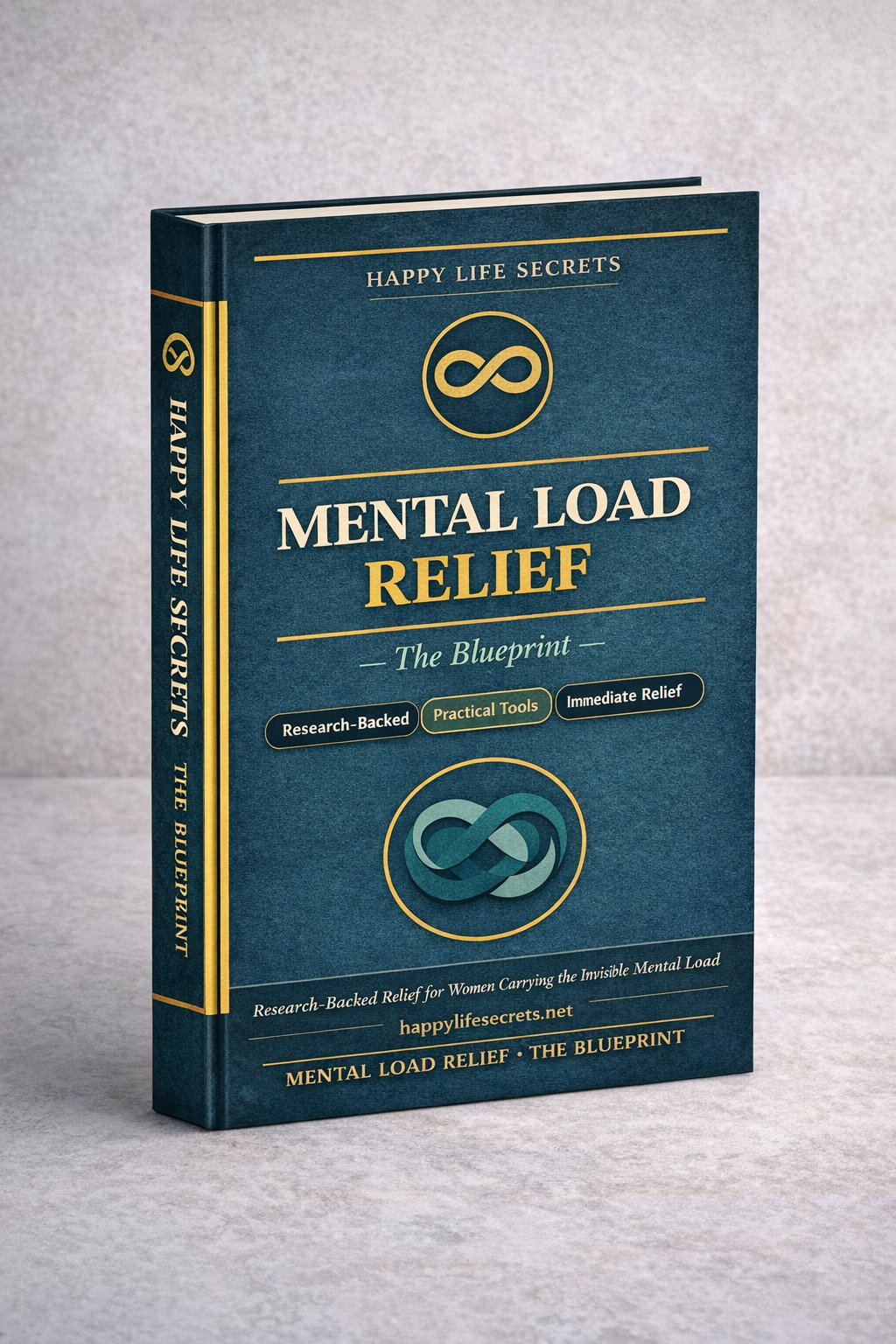
The Mental Load Relief Blueprint gives you the research-backed framework women 25–44 are quietly using to reclaim 2+ hours of mental space daily — without waiting for anyone else to notice how much you're managing.
Instant PDF delivery • Your privacy protected • Unsubscribe anytime
You're Not Overwhelmed Because You Can't Handle It.
You're Overwhelmed Because the Load Was Never Designed to Be Carried by One Person.
Research shows women make up to 35,000 decisions daily while managing invisible work nobody else sees — or names. Here's what that actually looks like from the inside.
You're the Only One Who Remembers Everything
Appointments, school events, grocery needs, everyone's schedules — that mental tab running 24/7 is real cognitive labor. Studies show invisible work creates 40% more mental fatigue than tasks anyone can actually see.
Making 100+ Decisions While Everyone Else Just... Lives
What's for dinner? Who needs what tomorrow? Did that get handled? You're absorbing the weight of these micro-decisions constantly — and research confirms that decision fatigue quietly steals your clarity and energy all day long.
Holding Everyone's Emotional Load Too
Their worries, moods, needs, and fears have somewhere to land — and that place is you. Data shows this emotional carrying costs women 700+ hours annually in unpaid mental labor that nobody else identifies as work.
Your Brain Won't Turn Off at Night
Even when you're exhausted, tomorrow's logistics replay the moment your head hits the pillow. Research directly links mental load to disrupted sleep — which means you wake up tired before the day even begins.
You're Everyone's Default for Everything
Every question, every problem, every decision comes to you first. You coordinate, anticipate, solve — the invisible architecture holding everything together. Research identifies being the default person as a primary predictor of burnout.
Generic "Self-Care" Was Never Designed for Your Reality
"Take a bath." "Just say no." None of it accounts for the fact that you're managing an entire household's cognitive life. The advice failed you — not the other way around. You needed a different kind of tool.
The Mental Load Relief Blueprint: A New Framework, Not More Advice
This isn't another collection of productivity tips that pretend your invisible labor doesn't exist. These are evidence-based strategies built around how cognitive and emotional load actually work — practical relief designed for real life, not an idealized one.
Identify Your Mental Load Type
Discover which of the five mental load patterns applies to you. Research shows targeted, specific strategies work 3x better than generic approaches — because not all invisible labor looks the same.
The Brain Dump Method That Actually Works
Reduce your daily decision load by up to 40% using cognitive offloading techniques designed for real life. Studies confirm that externalizing mental tabs creates immediate, measurable relief.
Sharing Mental Load — Not Just Tasks
Specific strategies for redistributing invisible labor without becoming the manager of your own delegation. Evidence shows even small shifts in load distribution produce noticeable, lasting relief.
Decision Fatigue Relief Protocol
Eliminate unnecessary decision points and automate your cognitive overhead. Research confirms that removing just 20 daily micro-decisions significantly improves mental clarity and available energy.
Boundary Scripts for Real Situations
Word-for-word language for setting limits without guilt or conflict. Data shows even one consistently held boundary reduces overwhelm and interrupts the default-person pattern over time.
The Bedtime Worry Spiral Protocol
Reduce nighttime mental rumination from 45 minutes to under 5 using the Worry Window Technique. Penn State research shows this approach cuts bedtime anxiety by 35% within two weeks.
The Permission You've Been Waiting For
Relief doesn't require anyone else to notice what you've been carrying first. Research shows self-validation is the essential first step — and this guide begins there, because that's where change actually starts.
Every Strategy Is Grounded in Research on Invisible Labor
Not wellness trends. Not anecdotes. Peer-reviewed data on cognitive load, decision fatigue, and emotional labor from leading psychology and behavioral science journals.
Why The Mental Load Relief Blueprint Works When Generic Advice Didn't
The strategies that failed you before weren't designed for cognitive labor. They were designed for task management. This is something different.
Built for What You're Actually Carrying
Designed specifically for cognitive overload from invisible labor — not generic stress tips that acknowledge your situation in the intro and then ignore it for the rest of the guide.
Fits Into Real Life, Not an Ideal One
Every strategy takes 5–10 minutes. Not because the strategies are small — because your time is real. Relief that only works when you have three free hours isn't relief.
100% Evidence-Based
Grounded in peer-reviewed research on invisible labor, decision fatigue, and emotional load — not trends, personal opinions, or one-size-fits-all advice that was never built for what you carry.
About Happy Life Secrets
I'm Herb, founder of Happy Life Secrets. For over a decade, I've researched the psychology of mental overwhelm, decision fatigue, and cognitive load — specifically studying what creates real, measurable relief for women managing multiple responsibilities and invisible labor nobody else names.
The Mental Load Relief Blueprint isn't built on personal anecdotes or wellness theories. Every strategy inside is grounded in peer-reviewed research from leading psychology journals and clinical studies on invisible labor and burnout.
These are the same evidence-based tools women are using right now to finally get relief from work nobody acknowledges — and to reclaim the mental space they've always deserved, without waiting for anyone else to step up first.
Download Your Free Blueprint Today
Stop carrying everyone's invisible labor alone. Get the complete, evidence-based guide for reducing decision fatigue, sharing the mental load, and finally feeling lighter — starting today.
Completely free. No credit card required. Instant PDF download.
Yes — Send Me the Free Blueprint NowInstant delivery • Your privacy protected • Evidence-based strategies • Unsubscribe anytime
------------------------
------------------------



-----------


-----------

-----------


HappyLifeSecrets.net
Copyright © 2010-2026
All Rights Reserved