
Self Love Verses Poems Inner Critic Healing: Poetry That Transforms Negative Self-Talk
Audrey sat at her desk at 2 AM, staring at a blank document while her inner voice whispered: "You're not good enough. You'll never finish this project. Everyone else has it together—why can't you?" Sound familiar? If you've ever felt paralyzed by your own thoughts, you're not alone. Research shows that 80% of our daily thoughts are negative, and 95% are repetitive. But here's the powerful truth: self love verses poems inner critic healing techniques can fundamentally rewire these destructive patterns. Poetry isn't just beautiful words—it's a therapeutic tool that speaks directly to your subconscious mind, creating new neural pathways that replace criticism with compassion.
Understanding Your Inner Critic and Why It Wounds So Deeply
Your inner critic developed as a protective mechanism during childhood, attempting to shield you from judgment and rejection. According to recent research on negative self-talk published in the Journal of Cognitive Therapy, this critical voice often mimics authority figures from our past—parents, teachers, or peers who set impossible standards. The problem? What once served as motivation has become a constant source of suffering.
The inner critic operates through repetition, creating neural grooves in your brain. Each time you think "I'm not smart enough" or "I always mess things up," you strengthen these pathways. Neuroplasticity research confirms that our brains physically change based on repeated thought patterns. This is precisely why self love verses poems inner critic healing works so effectively—poetry creates new, positive repetitions that compete with and eventually override negative patterns.
How Self Love Verses Poems Inner Critic Healing Actually Works
Poetry bypasses your analytical mind and speaks directly to your emotional brain. When you read or recite verses focused on self-compassion, several powerful processes occur simultaneously:
Rhythmic Repetition Creates New Neural Pathways The cadence and rhythm of poetry make phrases memorable and easier to internalize. Unlike affirmations that can feel forced, poetic verses flow naturally, making them more likely to stick in your consciousness. A 2024 study on the therapeutic effects of poetry therapy found that participants who engaged with self-compassion poetry showed 45% reduction in negative self-talk within eight weeks.
Metaphor Speaks to Your Subconscious Mind Your inner critic speaks in absolutes: "always," "never," "can't." Poetry uses metaphor to create nuanced, compassionate alternatives. Instead of fighting the critic directly, verses gently introduce new perspectives that feel true at a deeper level.
Emotional Resonance Facilitates Healing Beautiful language activates your emotional centers, allowing healing to occur at the feeling level rather than just intellectually. This is why self love verses poems inner critic healing creates lasting change—you're not just thinking differently; you're feeling differently about yourself.
Before and After: Real Transformations Through Poetry Practice
Before: Jennifer's Story At 34, Jennifer, a marketing executive and mother of two, experienced constant self-criticism. Her inner dialogue included phrases like "You're failing your kids," "You're not advancing at work fast enough," and "Other moms do this better." She spent hours lying awake, mentally cataloging her inadequacies. Her relationships suffered because she was defensive about any perceived criticism, assuming others judged her as harshly as she judged herself.
After: Jennifer's Transformation Jennifer began a daily practice of reading and writing self-compassion poetry. She started with just five minutes each morning, reading verses from poets like Mary Oliver and Rumi, then writing her own simple lines. Within three months, she noticed a fundamental shift. When mistakes happened, her first thought changed from "I'm so stupid" to "I'm learning and growing." She created a collection of personal verses she called her "compassion library"—poetry she'd return to during difficult moments.
Her favorite self-created verse became: "I am the garden and the gardener too / Some days I plant, some days I grow / Some days I simply rest in the knowing / That spring always follows winter's snow." This metaphor helped her accept natural cycles of productivity and rest without judgment.
The Science Behind Self Love Verses Poems Inner Critic Healing
Dr. James Pennebaker's research on expressive writing at the University of Texas has demonstrated that writing about emotional experiences—including through poetry—produces measurable health benefits. According to recent findings on expressive writing and mental health, participants who engaged in structured emotional writing showed reduced symptoms of anxiety and depression, improved immune function, and better emotional regulation.
Self love verses poems inner critic healing leverages several psychological principles:
- Self-Compassion Theory: Dr. Kristin Neff's research shows that treating ourselves with the same kindness we'd offer a friend reduces anxiety and increases resilience. Poetry provides language for this compassionate voice.
- Cognitive Restructuring: Poetry helps reframe negative thoughts without the resistance that direct challenges often create. The metaphorical nature of verse allows new perspectives to bypass defensive mechanisms.
- Emotional Processing: Unlike journaling, which can sometimes reinforce negative patterns through rumination, guided poetry practice directs attention toward healing and growth.
Step-by-Step Guide: Creating Your Personal Inner Critic Healing Practice
Step 1: Create Your Sacred Space (5 minutes) Designate a specific location and time for your self love verses poems inner critic healing practice. This could be your morning coffee ritual, your commute, or bedtime. Consistency matters more than duration. Start with just five minutes daily.
Step 2: Collect Your Arsenal (Week 1) Gather 10-15 poems or verses that resonate with self-compassion. Look for works by Mary Oliver, Rumi, Maya Angelou, Nayyirah Waheed, and contemporary Instagram poets focused on self-love. Create a physical or digital collection you can access instantly when your inner critic activates.
Step 3: The Daily Reading Ritual (Weeks 1-2) Each morning, read one poem aloud three times. Don't rush. Let the words sink in. Notice which phrases create a physical sensation—warmth in your chest, relaxation in your shoulders, tears in your eyes. These physical responses indicate the verse is reaching your emotional brain.
Step 4: Personal Verse Creation (Weeks 2-4) You don't need to be a "real poet" to benefit from writing. Start simple. Complete these sentence stems in whatever rhythm feels natural:
- "I am learning that..."
- "My heart knows..."
- "Even when I feel..., I am still..."
- "I forgive myself for..."
Step 5: The Interruption Technique (Ongoing) When you catch your inner critic mid-attack, interrupt with a pre-selected verse. Memorize 2-3 short poems specifically for these moments. Recite them mentally or aloud, replacing the critical voice with compassionate poetry.
Step 6: Weekly Integration (Every Sunday) Review your week and write a simple verse summarizing one thing you learned about self-compassion. These become your personal self love verses poems inner critic healing library—evidence of your transformation.
Common Obstacles and How to Overcome Them
Obstacle 1: "I Feel Silly Reading Poetry to Myself" This resistance is actually your inner critic trying to maintain control. Start with one line, not whole poems. Choose verses that feel more like philosophical wisdom than flowery language. Rumi's work often appeals to skeptics because of its direct, profound simplicity.
Obstacle 2: "My Inner Critic Is Too Strong—Poetry Won't Work" The intensity of your inner critic actually indicates how much you need this practice. Start by simply noticing the critic without fighting it. Then introduce verses as an alternative voice, not a replacement. You're not trying to silence the critic; you're adding a compassionate companion to the conversation.
Obstacle 3: "I Don't Have Time" This is often the critic disguised as practicality. Self love verses poems inner critic healing requires less time than scrolling social media. Five focused minutes of poetry practice has more impact than 30 minutes of distracted self-help reading. Make it non-negotiable, like brushing your teeth.
Obstacle 4: "I'm Not Creative Enough to Write Poetry" You're not trying to publish in literary journals. Your verses can be simple observations: "Today I was kind. Today I tried. That is enough." These become powerful mantras precisely because they're authentic to your experience.
Long-Term Transformation: What Changes After Six Months
Before: The Cascade of Self-Criticism Most people with severe inner critics experience a cascade effect. One critical thought triggers another: "I made a mistake" → "I always mess up" → "I'm incompetent" → "I don't deserve good things." This spiral can happen in seconds, leaving you feeling worthless over minor errors.
After: The Self-Compassion Response With consistent self love verses poems inner critic healing practice, the cascade interrupts itself. You make a mistake, notice the critical thought beginning, and automatically counter with learned verses. Eventually, the compassionate response becomes your default, not something you have to work to access.
Michael, a 38-year-old software engineer, described his transformation: "I used to spend hours replaying conversations, convinced I'd said something stupid. Now when that starts, I automatically think of my verse: 'I spoke my truth with imperfect words. That is the human way, and it is enough.' The rumination just... stops. I can move forward with my day."
Your Next Steps: Beginning Your Healing Journey Today
The journey from self-criticism to self-compassion isn't about perfection—it's about practice. Start today with these immediate actions:
- Right Now: Write down three kind statements about yourself. They don't need to rhyme or sound poetic. Just honest, compassionate observations.
- This Week: Find one poem focused on self-love and read it daily. Notice how your response changes with each reading.
- This Month: Create your first personal verse. Use the sentence stems provided earlier. Write without judgment—this is for your eyes only.
Remember, self love verses poems inner critic healing isn't a quick fix. It's a practice that deepens over time. Each verse you read, each line you write, creates new neural pathways of compassion. The inner critic took years to develop; give yourself patience as you cultivate its counterbalance.
Your mind is capable of remarkable transformation. The same brain that learned criticism can learn compassion. Poetry provides the language, rhythm, and emotional resonance to make that transformation not just possible, but inevitable. Start small, stay consistent, and trust that each verse is rewiring your relationship with yourself—one beautiful line at a time.
Instant delivery • No credit card required • Unsubscribe anytime
You're Not Falling Behind. You're Carrying More Than Anyone Should Have to Hold Alone.
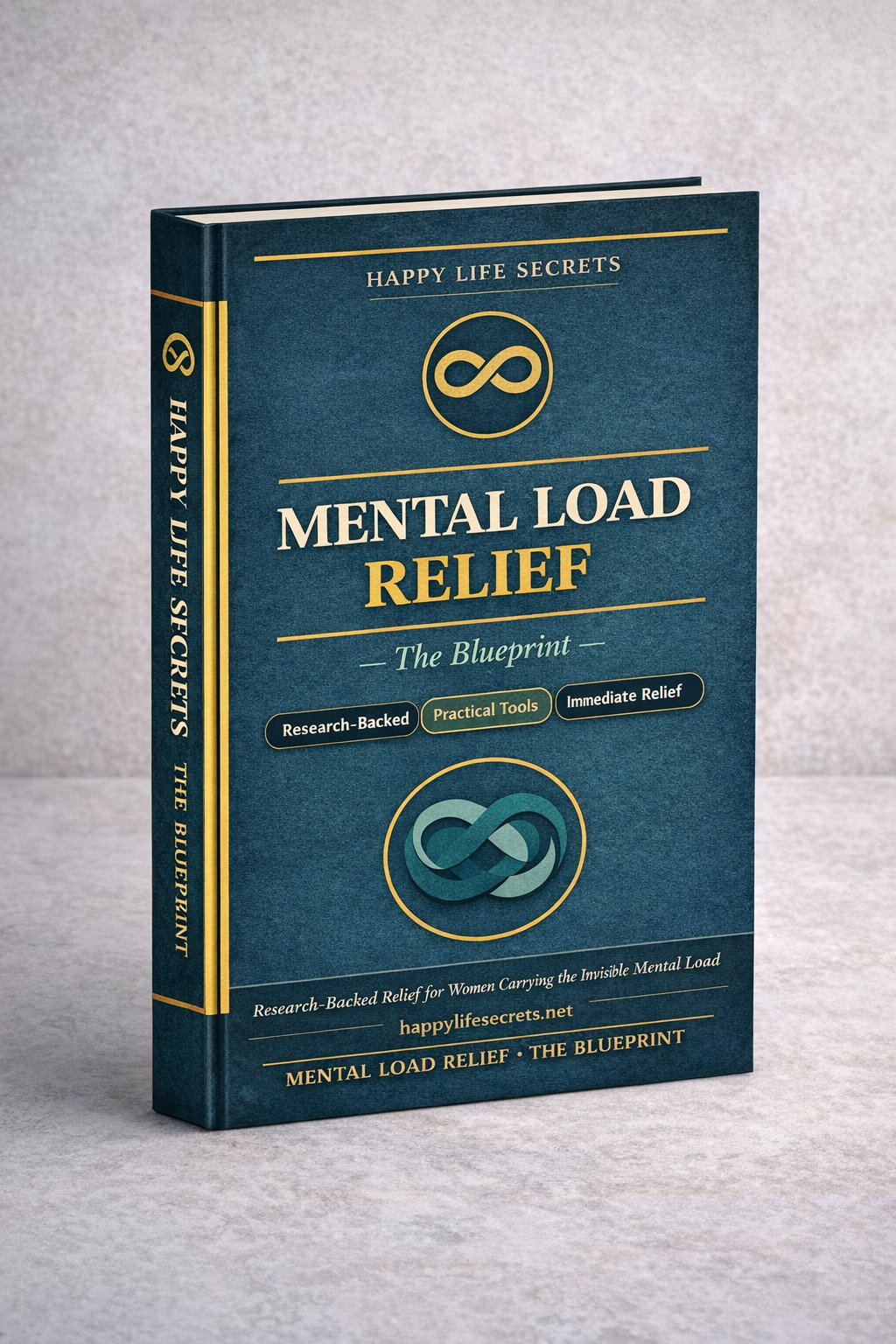
The Mental Load Relief Blueprint gives you the research-backed framework women 25–44 are quietly using to reclaim 2+ hours of mental space daily — without waiting for anyone else to notice how much you're managing.
Instant PDF delivery • Your privacy protected • Unsubscribe anytime
You're Not Overwhelmed Because You Can't Handle It.
You're Overwhelmed Because the Load Was Never Designed to Be Carried by One Person.
Research shows women make up to 35,000 decisions daily while managing invisible work nobody else sees — or names. Here's what that actually looks like from the inside.
You're the Only One Who Remembers Everything
Appointments, school events, grocery needs, everyone's schedules — that mental tab running 24/7 is real cognitive labor. Studies show invisible work creates 40% more mental fatigue than tasks anyone can actually see.
Making 100+ Decisions While Everyone Else Just... Lives
What's for dinner? Who needs what tomorrow? Did that get handled? You're absorbing the weight of these micro-decisions constantly — and research confirms that decision fatigue quietly steals your clarity and energy all day long.
Holding Everyone's Emotional Load Too
Their worries, moods, needs, and fears have somewhere to land — and that place is you. Data shows this emotional carrying costs women 700+ hours annually in unpaid mental labor that nobody else identifies as work.
Your Brain Won't Turn Off at Night
Even when you're exhausted, tomorrow's logistics replay the moment your head hits the pillow. Research directly links mental load to disrupted sleep — which means you wake up tired before the day even begins.
You're Everyone's Default for Everything
Every question, every problem, every decision comes to you first. You coordinate, anticipate, solve — the invisible architecture holding everything together. Research identifies being the default person as a primary predictor of burnout.
Generic "Self-Care" Was Never Designed for Your Reality
"Take a bath." "Just say no." None of it accounts for the fact that you're managing an entire household's cognitive life. The advice failed you — not the other way around. You needed a different kind of tool.
The Mental Load Relief Blueprint: A New Framework, Not More Advice
This isn't another collection of productivity tips that pretend your invisible labor doesn't exist. These are evidence-based strategies built around how cognitive and emotional load actually work — practical relief designed for real life, not an idealized one.
Identify Your Mental Load Type
Discover which of the five mental load patterns applies to you. Research shows targeted, specific strategies work 3x better than generic approaches — because not all invisible labor looks the same.
The Brain Dump Method That Actually Works
Reduce your daily decision load by up to 40% using cognitive offloading techniques designed for real life. Studies confirm that externalizing mental tabs creates immediate, measurable relief.
Sharing Mental Load — Not Just Tasks
Specific strategies for redistributing invisible labor without becoming the manager of your own delegation. Evidence shows even small shifts in load distribution produce noticeable, lasting relief.
Decision Fatigue Relief Protocol
Eliminate unnecessary decision points and automate your cognitive overhead. Research confirms that removing just 20 daily micro-decisions significantly improves mental clarity and available energy.
Boundary Scripts for Real Situations
Word-for-word language for setting limits without guilt or conflict. Data shows even one consistently held boundary reduces overwhelm and interrupts the default-person pattern over time.
The Bedtime Worry Spiral Protocol
Reduce nighttime mental rumination from 45 minutes to under 5 using the Worry Window Technique. Penn State research shows this approach cuts bedtime anxiety by 35% within two weeks.
The Permission You've Been Waiting For
Relief doesn't require anyone else to notice what you've been carrying first. Research shows self-validation is the essential first step — and this guide begins there, because that's where change actually starts.
Every Strategy Is Grounded in Research on Invisible Labor
Not wellness trends. Not anecdotes. Peer-reviewed data on cognitive load, decision fatigue, and emotional labor from leading psychology and behavioral science journals.
Why The Mental Load Relief Blueprint Works When Generic Advice Didn't
The strategies that failed you before weren't designed for cognitive labor. They were designed for task management. This is something different.
Built for What You're Actually Carrying
Designed specifically for cognitive overload from invisible labor — not generic stress tips that acknowledge your situation in the intro and then ignore it for the rest of the guide.
Fits Into Real Life, Not an Ideal One
Every strategy takes 5–10 minutes. Not because the strategies are small — because your time is real. Relief that only works when you have three free hours isn't relief.
100% Evidence-Based
Grounded in peer-reviewed research on invisible labor, decision fatigue, and emotional load — not trends, personal opinions, or one-size-fits-all advice that was never built for what you carry.
About Happy Life Secrets
I'm Herb, founder of Happy Life Secrets. For over a decade, I've researched the psychology of mental overwhelm, decision fatigue, and cognitive load — specifically studying what creates real, measurable relief for women managing multiple responsibilities and invisible labor nobody else names.
The Mental Load Relief Blueprint isn't built on personal anecdotes or wellness theories. Every strategy inside is grounded in peer-reviewed research from leading psychology journals and clinical studies on invisible labor and burnout.
These are the same evidence-based tools women are using right now to finally get relief from work nobody acknowledges — and to reclaim the mental space they've always deserved, without waiting for anyone else to step up first.
Download Your Free Blueprint Today
Stop carrying everyone's invisible labor alone. Get the complete, evidence-based guide for reducing decision fatigue, sharing the mental load, and finally feeling lighter — starting today.
Completely free. No credit card required. Instant PDF download.
Yes — Send Me the Free Blueprint NowInstant delivery • Your privacy protected • Evidence-based strategies • Unsubscribe anytime
------------------------
------------------------



-----------


-----------


-----------


HappyLifeSecrets.net
Copyright © 2010-2026
All Rights Reserved