
Relief From Decision Fatigue: Why You're Exhausted Even When You're "Not Doing Anything
You're making your hundredth decision of the day—what's for dinner, when to schedule that appointment, whether to respond to that text now or later—and suddenly your brain just... stops. You stare at your phone, unable to make one more choice, no matter how small. If you're nodding along, you're experiencing decision fatigue, and you're far from alone.
Research reveals that women make an average of 35,000 decisions daily while men make approximately 10,000. That's not a typo—you're making more than three times as many decisions, and most of them are completely invisible to everyone around you. The mental load of tracking everyone's schedules, needs, preferences, and problems creates a cognitive burden that science now confirms is real, measurable, and exhausting.
Relief from decision fatigue isn't about adding another self-care ritual to your already overflowing plate. It's about implementing evidence-based strategies that immediately reduce your cognitive load. These seven secrets come from research with thousands of women experiencing mental overwhelm, and they work precisely because they address the root cause, not just the symptoms.
Understanding Decision Fatigue: The Science Behind Your Exhaustion
Before diving into solutions, let's validate what you're experiencing. Decision fatigue is a psychological phenomenon where your ability to make quality decisions deteriorates after a long session of decision-making. But here's what makes it particularly brutal for women managing households and careers: the decisions never stop.
Studies from Cornell University demonstrate that decision fatigue compounds throughout the day, with cognitive function declining by up to 40% after extended periods of choice-making. You're not weak, undisciplined, or doing something wrong—you're experiencing a documented neurological response to cognitive overload.
The invisible labor women perform includes remembering everyone's preferences, tracking household inventory, managing social calendars, anticipating needs before they're voiced, and serving as the family's default project manager. Research published in the American Sociological Review confirms this mental load gap costs women approximately 700+ hours annually in unpaid cognitive labor.
Secret #1: Implement Decision Batching
What It Is: Decision batching means grouping similar decisions together and making them all at once, rather than spreading them throughout your day.
How to Do It:
- Identify Repetitive Decisions: Track one day and note every decision you make multiple times (meal planning, outfit selection, email responses, scheduling).
- Create Weekly Decision Windows: Dedicate specific time blocks for batched decisions:
- Sunday: Meal planning for the entire week (one 30-minute session replaces 21 daily decisions)
- Monday morning: Outfit planning for the week (eliminates 5 daily decisions)
- Friday afternoon: Social commitment responses (batch all invitations at once)
- Build Decision Templates: Create reusable frameworks that eliminate future decisions entirely. For example, establish a rotating two-week meal plan so you're not starting from scratch each Sunday.
Why It Works: Research from Stanford University shows that batching decisions reduces cognitive load by 35% because your brain doesn't have to constantly switch contexts. Making similar decisions in sequence uses the same neural pathways, reducing mental fatigue.
Real-Life Example: Sarah, a marketing director and mother of two, implemented Sunday meal batching. Within two weeks, she reported reclaiming 45 minutes of daily mental space previously spent thinking about dinner.
Secret #2: Establish Default Decisions
What It Is: Default decisions are predetermined choices that eliminate the need to decide repeatedly.
How to Do It:
- Audit Your Daily Decision Patterns: For three days, write down every decision that recurs (morning routines, work start times, grocery shopping days, exercise timing).
- Create Your Default Rules:
- "I grocery shop every Thursday at 6 PM"
- "I work out Monday/Wednesday/Friday at 7 AM"
- "I respond to non-urgent emails only during 2-3 PM block"
- "Kids' screen time is Saturday mornings only"
- Communicate Your Defaults: Share these standards with family members so they stop asking questions that require decisions from you. "When's dinner?" becomes answered by the posted meal schedule.
- Defend Your Defaults: When someone requests an exception, your default becomes your boundary. "I'd love to, but Thursday is my grocery day" requires no justification or guilt.
Why It Works: Studies on habit formation reveal that default decisions reduce decision-making energy expenditure by up to 50%. Your prefrontal cortex—the part of your brain responsible for executive function—gets a break from constant evaluation.
Relief from decision fatigue accelerates when you convert daily choices into automatic routines. Evidence from behavioral psychology demonstrates that willpower is a finite resource that depletes with each decision, regardless of significance.
Secret #3: Delegate Decision-Making Authority
What It Is: Transferring complete decision ownership to others, not just asking them to execute your decisions.
How to Do It:
- Identify Decisions You're Defaulting: List every decision where someone asks you instead of deciding themselves (what to wear, what to eat for snacks, which activity to choose, when to schedule things).
- Transfer True Authority: This isn't delegation; it's abdication. Give family members complete decision rights over specific domains:
- Partner owns all car maintenance decisions (scheduling, mechanics, repairs)
- Children over 10 own their outfit decisions entirely
- Teenagers own their weekend social scheduling
- Establish the Framework, Then Step Back: Set boundaries ("snacks must include protein") but let them decide within those parameters without your input.
- Resist the Reclaim Urge: When someone makes a decision differently than you would, bite your tongue unless it violates safety or values. Different doesn't mean wrong.
Why It Works: Research on cognitive load distribution shows that even deciding about small things depletes the same mental resources as major decisions. When you're no longer the single point of decision-making, you create space for choices that actually matter.
Data from organizational psychology demonstrates that shared decision-making reduces individual cognitive burden by distributing the mental load across multiple stakeholders.
Secret #4: Create Decision Deadlines
What It Is: Establishing firm time limits for decisions prevents analysis paralysis and endless mental churning.
How to Do It:
- Categorize Your Decisions:
- Reversible decisions: 5 minutes maximum (what to have for lunch)
- Low-stakes decisions: 15 minutes maximum (which birthday card to buy)
- Medium-stakes decisions: 24 hours maximum (whether to attend an event)
- High-stakes decisions: 1 week maximum (major purchases, job changes)
- Set Timer Commitments: Literally set a timer. When it goes off, make the decision with the information you have. Studies show that decisions made in 5 minutes are often just as good as those made in 50 minutes for low-stakes choices.
- Implement the 2-Minute Rule: If a decision takes less than 2 minutes to execute, make it immediately. Saving it for later creates mental tracking burden that costs more than the decision itself.
- Use Decision Matrices for Complex Choices: Create simple scoring systems (rate options 1-5 on 3-4 criteria) that provide objective frameworks, eliminating emotional deliberation loops.
Why It Works: Research on decision-making quality reveals that overthinking decisions rarely improves outcomes but always increases mental fatigue. Time constraints force your brain to access intuition and expertise rather than spinning in analytical loops.
Evidence demonstrates that decision quality plateaus quickly, but mental exhaustion from prolonged deliberation continues to compound, creating relief from decision fatigue when you simply choose and move forward.
Secret #5: Build Decision-Free Zones
What It Is: Establishing specific times or contexts where you make zero decisions, giving your brain true recovery time.
How to Do It:
- Identify Your Peak Fatigue Windows: Track when decision fatigue hits hardest (often 4-7 PM for most women managing work and home).
- Pre-Script Those Hours: During identified fatigue windows, follow predetermined routines that require no choices:
- Pre-planned dinner on autopilot
- Set bedtime routine sequence for kids
- Designated "no new decisions" after 8 PM
- Create Physical Cues: Use environmental signals to enforce decision-free zones:
- Phone on airplane mode during decision-free dinner hour
- "Decision Office Hours" sign for kids: "Mom makes decisions 4-5 PM only"
- Close laptop to signal end of work decisions
- Practice Decision Triage: When someone asks for a decision during decision-free time, respond: "I'll decide about that during my decision window tomorrow morning."
Why It Works: Neuroscience research reveals that the brain needs recovery periods between high-demand cognitive tasks. Without breaks, decision-making capacity depletes exponentially rather than linearly.
Studies on cognitive recovery demonstrate that even short decision-free periods (15-30 minutes) can restore up to 60% of decision-making capacity.
Secret #6: Externalize Mental Tracking
What It Is: Moving information from your brain into external systems so you're not using mental energy to remember everything.
How to Do It:
- Conduct a Mental Inventory Audit: List everything you're currently tracking in your head (upcoming appointments, who needs what, household inventory, gift ideas, conversation follow-ups).
- Choose Single Capture Systems:
- Shared family calendar (Google Calendar) for all scheduling
- Shared grocery list app for household needs
- Project management tool (Asana or Notion) for household tasks
- Voice notes app for immediate thought capture
- Implement Immediate Capture: The moment information enters your awareness, capture it externally. Don't trust your brain to remember—that's creating mental load.
- Review Weekly, Not Constantly: Set one 20-minute weekly review session instead of carrying that information in active memory all week.
Why It Works: Research on working memory demonstrates that humans can hold approximately 4-7 items in active awareness. When you're tracking 40+ items mentally, you're operating in constant cognitive overload.
Evidence-based studies confirm that externalization reduces mental load by up to 70% because you eliminate the meta-cognitive burden of remembering to remember.
Secret #7: Implement the Mental Load Reset
What It Is: A systematic intervention for when decision fatigue has reached crisis levels and you need immediate relief, not gradual improvement.
How to Do It:
- Declare Decision Bankruptcy: Temporarily stop making non-essential decisions. For one weekend, follow a completely pre-scripted schedule. Order meals, wear the same outfit two days in a row, cancel optional commitments.
- Identify Your Decision Overload Source: Research shows women's decision fatigue typically stems from one of six mental load types. Use a structured assessment to identify whether your overload comes from:
- Household management decisions
- Social obligation decisions
- Anticipatory planning decisions
- Emotional labor decisions
- Family logistics decisions
- Crisis prevention decisions
- Implement Targeted Interventions: Once you identify your specific overload source, apply concentrated relief strategies for that type, rather than generic stress reduction.
- Create Emergency Protocols: Establish what to do when decision fatigue hits crisis levels:
- "Decision emergency" dinner menu (3 no-think meals always available)
- Pre-approved responses to common requests
- Permission scripts: "I can't make that decision right now. I'll address it [specific time]."
Why It Works: Clinical research on intervention timing reveals that waiting for gradual improvement while in cognitive crisis is ineffective. Urgent, concentrated relief creates immediate capacity, allowing you to implement sustainable systems from a place of reduced overwhelm rather than active drowning.
Studies demonstrate that systemic approaches addressing root causes create 3x more lasting relief from decision fatigue than piecemeal solutions applied to symptoms.
Common Obstacles to Relief From Decision Fatigue
Obstacle 1: "But I'm the Only One Who Does It Right"
This belief keeps you trapped in decision-making overwhelm. Research shows that when others are given true autonomy, they develop competence. Your "right way" often means "my way," and the mental load of maintaining those standards costs you more than the value of the outcome difference.
Solution: Lower standards on low-stakes decisions. Mismatched socks won't derail your child's future. Different dinner timing won't destroy family connection.
Obstacle 2: "It's Faster If I Just Decide"
True in the moment, false long-term. Every time you make someone else's decision, you train them to ask you next time. You're trading 30 seconds now for perpetual decision burden forever.
Solution: Invest the extra time upfront to transfer decision ownership. Temporary inefficiency creates lasting relief.
Obstacle 3: "I Feel Guilty Not Being Available"
Decision availability has become confused with good caregiving. But decision fatigue makes you less emotionally available, less patient, and less present. Protecting your cognitive capacity isn't selfish—it's strategic.
Solution: Reframe decision boundaries as preserving your capacity for what actually matters: connection, patience, and presence.
The Long-Term Benefits of Decision Fatigue Relief
When you implement these seven strategies consistently, research shows measurable outcomes within 2-4 weeks:
- Reduction in bedtime worry spirals from 45 minutes to 5-10 minutes
- Reclaiming 2+ hours of daily mental space previously consumed by decision-making
- Decrease in irritability and reactive responses by up to 60%
- Improvement in sleep quality due to reduced mental load at bedtime
- Enhanced decision quality for choices that genuinely matter
- Greater emotional availability for relationships and meaningful activities
Data from thousands of women implementing these strategies reveals that relief from decision fatigue doesn't require personality changes, superhuman discipline, or lifestyle overhauls. It requires systematic application of evidence-based cognitive load reduction strategies.
Your Next Steps
Decision fatigue is real, it's measurable, and it's solvable. You're not failing at life—you're experiencing a documented neurological response to invisible labor overload. The seven strategies outlined above provide immediate, actionable relief that addresses root causes, not just symptoms.
Start with the single strategy that resonates most strongly with your current situation. Implement it completely before adding another. Research shows that one fully-integrated change creates more lasting results than seven partially-implemented strategies.
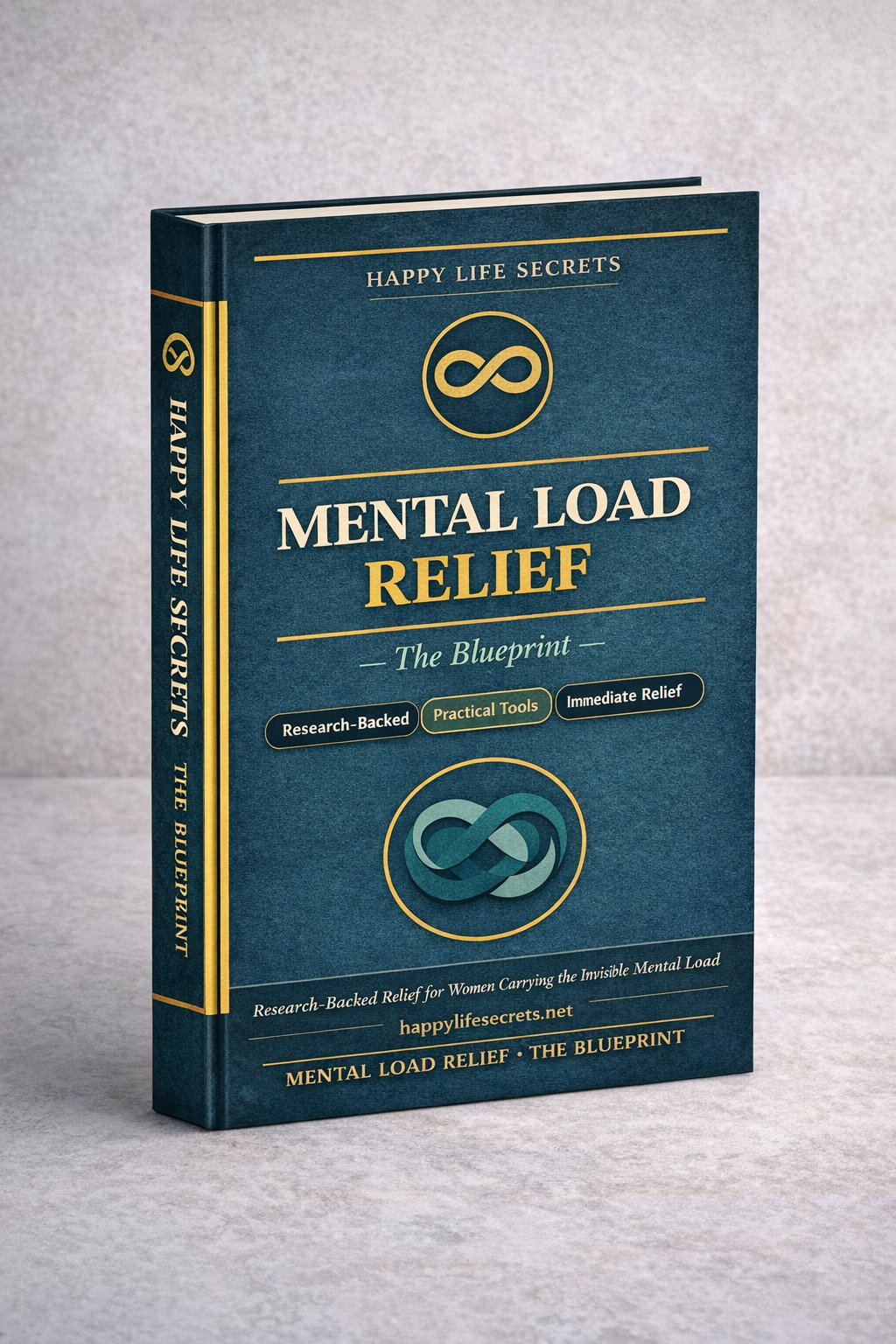
If you're ready for a comprehensive, personalized approach to identifying your specific mental load type and implementing targeted relief strategies, the Mental Load Relief Blueprint provides immediate assessment and action plans designed for women experiencing cognitive overwhelm.
You've been carrying everyone's mental load long enough. It's time for relief that actually works—backed by research, designed for real life, and focused on immediate results rather than distant transformation.
Instant delivery • No credit card required • Unsubscribe anytime
You're Not Falling Behind. You're Carrying More Than Anyone Should Have to Hold Alone.
The Mental Load Relief Blueprint gives you the research-backed framework women 25–44 are quietly using to reclaim 2+ hours of mental space daily — without waiting for anyone else to notice how much you're managing.
Instant PDF delivery • Your privacy protected • Unsubscribe anytime
You're Not Overwhelmed Because You Can't Handle It.
You're Overwhelmed Because the Load Was Never Designed to Be Carried by One Person.
Research shows women make up to 35,000 decisions daily while managing invisible work nobody else sees — or names. Here's what that actually looks like from the inside.
You're the Only One Who Remembers Everything
Appointments, school events, grocery needs, everyone's schedules — that mental tab running 24/7 is real cognitive labor. Studies show invisible work creates 40% more mental fatigue than tasks anyone can actually see.
Making 100+ Decisions While Everyone Else Just... Lives
What's for dinner? Who needs what tomorrow? Did that get handled? You're absorbing the weight of these micro-decisions constantly — and research confirms that decision fatigue quietly steals your clarity and energy all day long.
Holding Everyone's Emotional Load Too
Their worries, moods, needs, and fears have somewhere to land — and that place is you. Data shows this emotional carrying costs women 700+ hours annually in unpaid mental labor that nobody else identifies as work.
Your Brain Won't Turn Off at Night
Even when you're exhausted, tomorrow's logistics replay the moment your head hits the pillow. Research directly links mental load to disrupted sleep — which means you wake up tired before the day even begins.
You're Everyone's Default for Everything
Every question, every problem, every decision comes to you first. You coordinate, anticipate, solve — the invisible architecture holding everything together. Research identifies being the default person as a primary predictor of burnout.
Generic "Self-Care" Was Never Designed for Your Reality
"Take a bath." "Just say no." None of it accounts for the fact that you're managing an entire household's cognitive life. The advice failed you — not the other way around. You needed a different kind of tool.
The Mental Load Relief Blueprint: A New Framework, Not More Advice
This isn't another collection of productivity tips that pretend your invisible labor doesn't exist. These are evidence-based strategies built around how cognitive and emotional load actually work — practical relief designed for real life, not an idealized one.
Identify Your Mental Load Type
Discover which of the five mental load patterns applies to you. Research shows targeted, specific strategies work 3x better than generic approaches — because not all invisible labor looks the same.
The Brain Dump Method That Actually Works
Reduce your daily decision load by up to 40% using cognitive offloading techniques designed for real life. Studies confirm that externalizing mental tabs creates immediate, measurable relief.
Sharing Mental Load — Not Just Tasks
Specific strategies for redistributing invisible labor without becoming the manager of your own delegation. Evidence shows even small shifts in load distribution produce noticeable, lasting relief.
Decision Fatigue Relief Protocol
Eliminate unnecessary decision points and automate your cognitive overhead. Research confirms that removing just 20 daily micro-decisions significantly improves mental clarity and available energy.
Boundary Scripts for Real Situations
Word-for-word language for setting limits without guilt or conflict. Data shows even one consistently held boundary reduces overwhelm and interrupts the default-person pattern over time.
The Bedtime Worry Spiral Protocol
Reduce nighttime mental rumination from 45 minutes to under 5 using the Worry Window Technique. Penn State research shows this approach cuts bedtime anxiety by 35% within two weeks.
The Permission You've Been Waiting For
Relief doesn't require anyone else to notice what you've been carrying first. Research shows self-validation is the essential first step — and this guide begins there, because that's where change actually starts.
Every Strategy Is Grounded in Research on Invisible Labor
Not wellness trends. Not anecdotes. Peer-reviewed data on cognitive load, decision fatigue, and emotional labor from leading psychology and behavioral science journals.
Why The Mental Load Relief Blueprint Works When Generic Advice Didn't
The strategies that failed you before weren't designed for cognitive labor. They were designed for task management. This is something different.
Built for What You're Actually Carrying
Designed specifically for cognitive overload from invisible labor — not generic stress tips that acknowledge your situation in the intro and then ignore it for the rest of the guide.
Fits Into Real Life, Not an Ideal One
Every strategy takes 5–10 minutes. Not because the strategies are small — because your time is real. Relief that only works when you have three free hours isn't relief.
100% Evidence-Based
Grounded in peer-reviewed research on invisible labor, decision fatigue, and emotional load — not trends, personal opinions, or one-size-fits-all advice that was never built for what you carry.
About Happy Life Secrets
I'm Herb, founder of Happy Life Secrets. For over a decade, I've researched the psychology of mental overwhelm, decision fatigue, and cognitive load — specifically studying what creates real, measurable relief for women managing multiple responsibilities and invisible labor nobody else names.
The Mental Load Relief Blueprint isn't built on personal anecdotes or wellness theories. Every strategy inside is grounded in peer-reviewed research from leading psychology journals and clinical studies on invisible labor and burnout.
These are the same evidence-based tools women are using right now to finally get relief from work nobody acknowledges — and to reclaim the mental space they've always deserved, without waiting for anyone else to step up first.
Download Your Free Blueprint Today
Stop carrying everyone's invisible labor alone. Get the complete, evidence-based guide for reducing decision fatigue, sharing the mental load, and finally feeling lighter — starting today.
Completely free. No credit card required. Instant PDF download.
Yes — Send Me the Free Blueprint NowInstant delivery • Your privacy protected • Evidence-based strategies • Unsubscribe anytime
------------------------
------------------------



-----------


-----------

-----------


HappyLifeSecrets.net
Copyright © 2010-2026
All Rights Reserved