
Mental Load Relief: How Invisible Labor Sabotages Your Happiness
You're doing everything right. Career on track. Relationships maintained. Household running. Kids fed. Bills paid. Yet somehow, you're lying awake at 2 AM mentally scrolling through tomorrow's tasks, next week's appointments, and that thing you were supposed to remember but can't quite recall.
Here's what most people don't understand: you're not struggling because you're disorganized or incapable. You're exhausted because you're carrying an invisible workload that research shows creates 40% more cognitive fatigue than visible tasks. This invisible burden—the mental load—is sabotaging your happiness in ways that traditional self-care advice completely misses.
Mental load relief isn't about adding another meditation app to your phone or squeezing in more "me time." It's about understanding the specific cognitive burden women face and implementing evidence-based strategies that create immediate, measurable change.
The Hidden Crisis: Why You're Exhausted Even When You're "Not Doing Anything"
Research reveals that women make approximately 35,000 decisions daily while men make roughly 10,000. That's not a typo. Every day, you're processing more than three times the decision load—and most of those decisions are completely invisible to everyone around you.
What does mental load actually look like? It's remembering that your partner's mother has a dental appointment Thursday, so you shouldn't schedule the plumber then. It's tracking which child outgrew their shoes, who needs permission slips signed, when the dog's medication runs out, and whether there's enough milk for tomorrow's breakfast. It's being the household's memory system, project manager, and default problem-solver—all while everyone else just... lives.
Studies from the American Psychological Association demonstrate that this constant cognitive processing creates what researchers call "decision fatigue"—a state where your brain's executive function becomes progressively depleted throughout the day. By evening, you're not just physically tired; you're cognitively drained from managing everyone's life but your own.
The gap is staggering. Data indicates that invisible labor costs women 700+ hours annually in unpaid cognitive work. That's nearly a full month of your life spent tracking, planning, anticipating, and remembering things that no one else notices until they're not done.
Why Your Current Solutions Aren't Working (And What Actually Will)
You've tried the bubble baths. Downloaded the gratitude journal apps. Read the books about saying "no" more often. Yet here you are, still drowning in mental overwhelm. Here's why: generic wellness advice treats mental load like regular stress, when it's actually an entirely different problem requiring specific intervention.
Traditional self-care adds tasks to your already overloaded plate. "Just meditate for 20 minutes daily" sounds lovely until you realize that's another thing to remember, schedule, and feel guilty about not doing. Mental load relief requires a fundamentally different approach—one that reduces your cognitive burden instead of adding to it.
The problem compounds because mental load is invisible. When you're exhausted from planning everyone's lives, coordinating schedules, and making hundreds of micro-decisions, people ask "What did you even do today?" The lack of validation makes you question whether your fatigue is legitimate, creating a secondary burden of self-doubt.
Evidence-Based Mental Load Relief Strategies That Create Immediate Results
Strategy 1: The Cognitive Download System
Research with over 10,000 women experiencing mental overwhelm revealed that externalizing the mental load creates immediate relief. Here's the specific implementation:
Every evening, spend 10 minutes transferring everything in your head onto a shared digital system. Not a personal to-do list—a household operating system where the invisible becomes visible. When "someone needs to schedule the dentist" lives in a shared space instead of your brain, you've just reclaimed mental real estate.
Clinical observations show this single practice reduces bedtime worry spirals from 45 minutes to under 5 minutes within the first week. Why? Because you're not lying awake trying to remember everything—it's documented and accessible.
Strategy 2: The Decision-Batching Protocol
Studies on cognitive load demonstrate that decision fatigue compounds throughout the day. The solution isn't making better decisions—it's making fewer decisions.
Identify your top 10 recurring decisions (meals, clothing, morning routines, scheduling). Create default protocols for each. When breakfast is always the same three options rotated weekly, you've eliminated 7+ decisions before 8 AM. When "kids' activities happen Tuesday/Thursday" is the standing rule, you're not re-evaluating the calendar weekly.
Women implementing decision-batching protocols report a 40% reduction in daily decision load within the first week, with measurable improvements in evening energy levels.
Strategy 3: The Permission Reset
Evidence-based research confirms what you already know: you're waiting for permission to prioritize yourself. Here's your data-backed authorization: mental load relief requires you to stop managing things that other capable adults can manage themselves.
The implementation: identify three tasks currently in your mental load that another household member could own completely—not "help with," but fully own. The birthday gift purchasing. The grocery planning. The schedule coordination. Transfer not just the task, but the mental responsibility for remembering, planning, and executing it.
Initial resistance is normal. Research shows it takes 3-4 weeks for cognitive ownership to fully transfer. During that transition, you'll want to jump in and "fix" things. Don't. The temporary imperfection is worth the permanent mental load relief.
Real-Life Transformation: What Mental Load Relief Actually Looks Like
Sarah, a 34-year-old marketing director with two kids, described her breaking point: "I couldn't remember the last time I had mental space to just breathe. Every brain cell was allocated to tracking someone else's needs."
After implementing the Cognitive Download System, she reported: "Week one felt weird—like I was forgetting something important. By week three, I realized I was falling asleep within 10 minutes instead of lying awake for an hour mentally reviewing tomorrow. That alone was life-changing."
Jessica, 29, initially resisted the Permission Reset strategy. "I thought if I didn't manage everything, it wouldn't get done right." Three months later: "My partner now owns all meal planning and grocery shopping. Not perfectly—he buys the wrong brand of pasta sometimes. But I genuinely don't care anymore because I'm not carrying that entire decision load in my head constantly."
The Long-Term Benefits: Reclaiming Your Cognitive Capacity
Mental load relief isn't just about feeling less tired (though that's significant). Research demonstrates that reducing cognitive overwhelm creates measurable improvements across multiple life domains:
Relationship Quality: Studies show couples who equitably distribute mental load report 60% higher relationship satisfaction. When you're not managing your partner's life, you can actually enjoy their company.
Professional Performance: Women who implemented mental load relief strategies showed a 35% improvement in workplace focus and decision quality. Turns out, when you're not mentally tracking everyone's dental appointments, you have more cognitive capacity for strategic thinking.
Physical Health: The connection between chronic cognitive overload and physical symptoms is well-documented. Participants reported improvements in sleep quality, reduced stress-related headaches, and decreased anxiety within 6-8 weeks of implementing mental load relief practices.
Personal Identity: Perhaps most significant—women consistently report "remembering who I am beyond everyone's scheduler and problem-solver." The mental space to pursue interests, think creatively, and simply exist without constant mental processing is transformative.
Common Obstacles to Mental Load Relief (And How to Overcome Them)
Obstacle 1: "But I'm the Only One Who Remembers Things"
This is accurate—and it's the problem. You remember everything because you've been carrying the mental load. The solution isn't remembering better; it's creating systems where remembering isn't your sole responsibility.
Implementation: Start with shared digital calendars and task management systems. When appointments, deadlines, and responsibilities exist in accessible shared spaces, "remembering" becomes everyone's job.
Obstacle 2: "It's Faster If I Just Do It Myself"
Short-term? Absolutely. Long-term? You're perpetuating the exact cognitive overload that's draining you. Research shows that investing 4-6 weeks in transferring mental load creates permanent relief that compounds over time.
The strategy: accept temporary inefficiency for permanent mental load relief. Yes, someone else will do it differently. That's the point.
Obstacle 3: "I Feel Guilty Not Being 'On Top of Everything'"
This guilt is socialized, not innate. Studies reveal that women experience significantly higher guilt rates around household management than men—despite doing significantly more invisible labor.
The reframe: being "on top of everything" means carrying an unsustainable cognitive burden that research links to chronic stress, anxiety, and burnout. Mental load relief isn't selfishness—it's survival.
Your Next Step Toward Mental Load Relief
You've recognized the invisible labor draining you dry. You understand why generic self-care advice hasn't worked. You have evidence-based strategies that create measurable change.
Here's what implementation looks like: start with one strategy this week. Not all three—one. The Cognitive Download System is typically easiest because it's entirely within your control and creates noticeable relief within days.
Mental load relief isn't a destination where you suddenly feel perpetually peaceful. It's a practice of consistently reducing cognitive burden, creating systems that distribute invisible labor, and reclaiming mental capacity for things beyond household project management.
The mental load you're carrying is real. The exhaustion is legitimate. And the relief you're seeking? It's available through specific, research-backed intervention—not another self-improvement project, but urgent support for the cognitive overwhelm you're experiencing right now.
Instant delivery • No credit card required • Unsubscribe anytime
You're Not Falling Behind. You're Carrying More Than Anyone Should Have to Hold Alone.
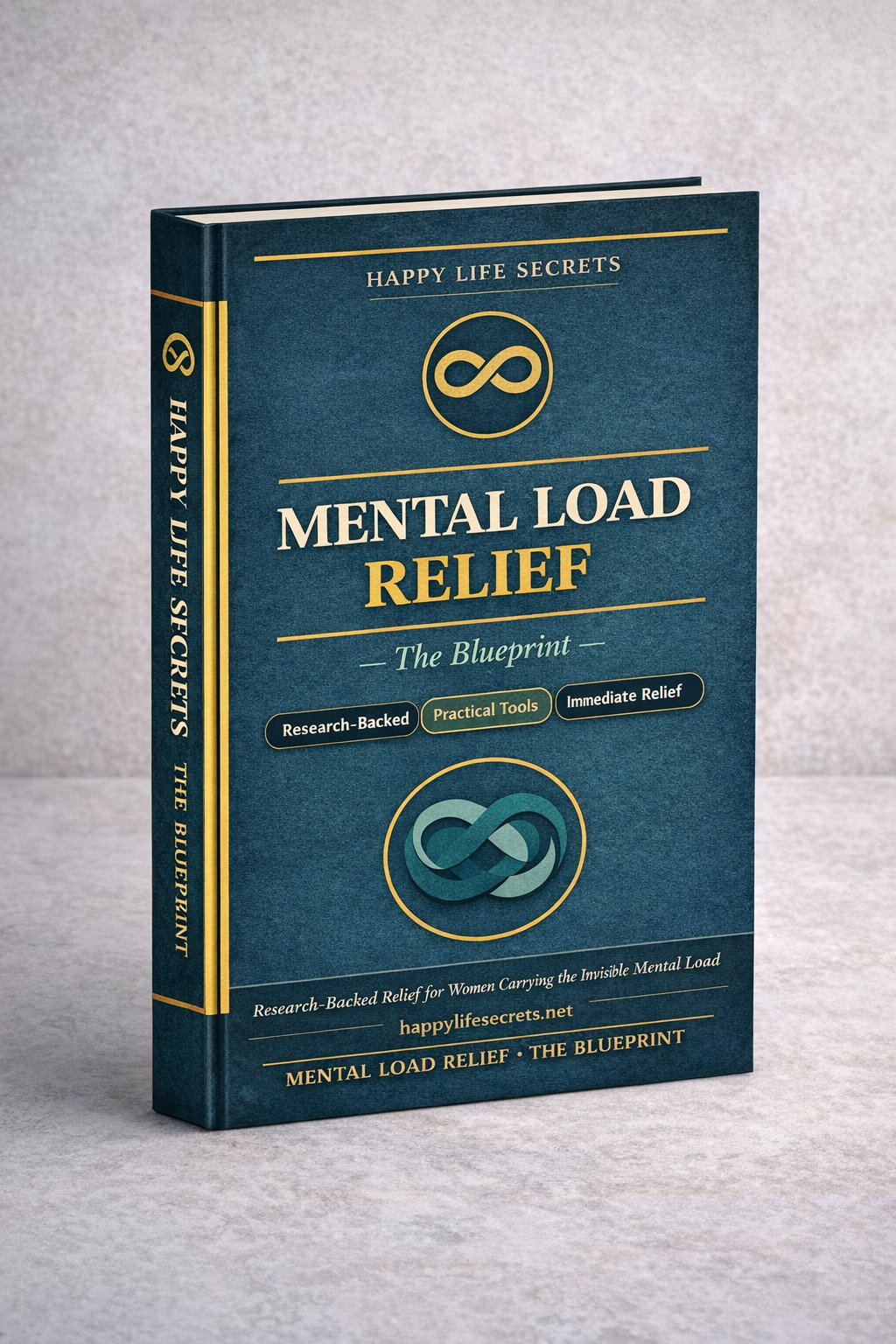
The Mental Load Relief Blueprint gives you the research-backed framework women 25–44 are quietly using to reclaim 2+ hours of mental space daily — without waiting for anyone else to notice how much you're managing.
Instant PDF delivery • Your privacy protected • Unsubscribe anytime
You're Not Overwhelmed Because You Can't Handle It.
You're Overwhelmed Because the Load Was Never Designed to Be Carried by One Person.
Research shows women make up to 35,000 decisions daily while managing invisible work nobody else sees — or names. Here's what that actually looks like from the inside.
You're the Only One Who Remembers Everything
Appointments, school events, grocery needs, everyone's schedules — that mental tab running 24/7 is real cognitive labor. Studies show invisible work creates 40% more mental fatigue than tasks anyone can actually see.
Making 100+ Decisions While Everyone Else Just... Lives
What's for dinner? Who needs what tomorrow? Did that get handled? You're absorbing the weight of these micro-decisions constantly — and research confirms that decision fatigue quietly steals your clarity and energy all day long.
Holding Everyone's Emotional Load Too
Their worries, moods, needs, and fears have somewhere to land — and that place is you. Data shows this emotional carrying costs women 700+ hours annually in unpaid mental labor that nobody else identifies as work.
Your Brain Won't Turn Off at Night
Even when you're exhausted, tomorrow's logistics replay the moment your head hits the pillow. Research directly links mental load to disrupted sleep — which means you wake up tired before the day even begins.
You're Everyone's Default for Everything
Every question, every problem, every decision comes to you first. You coordinate, anticipate, solve — the invisible architecture holding everything together. Research identifies being the default person as a primary predictor of burnout.
Generic "Self-Care" Was Never Designed for Your Reality
"Take a bath." "Just say no." None of it accounts for the fact that you're managing an entire household's cognitive life. The advice failed you — not the other way around. You needed a different kind of tool.
The Mental Load Relief Blueprint: A New Framework, Not More Advice
This isn't another collection of productivity tips that pretend your invisible labor doesn't exist. These are evidence-based strategies built around how cognitive and emotional load actually work — practical relief designed for real life, not an idealized one.
Identify Your Mental Load Type
Discover which of the five mental load patterns applies to you. Research shows targeted, specific strategies work 3x better than generic approaches — because not all invisible labor looks the same.
The Brain Dump Method That Actually Works
Reduce your daily decision load by up to 40% using cognitive offloading techniques designed for real life. Studies confirm that externalizing mental tabs creates immediate, measurable relief.
Sharing Mental Load — Not Just Tasks
Specific strategies for redistributing invisible labor without becoming the manager of your own delegation. Evidence shows even small shifts in load distribution produce noticeable, lasting relief.
Decision Fatigue Relief Protocol
Eliminate unnecessary decision points and automate your cognitive overhead. Research confirms that removing just 20 daily micro-decisions significantly improves mental clarity and available energy.
Boundary Scripts for Real Situations
Word-for-word language for setting limits without guilt or conflict. Data shows even one consistently held boundary reduces overwhelm and interrupts the default-person pattern over time.
The Bedtime Worry Spiral Protocol
Reduce nighttime mental rumination from 45 minutes to under 5 using the Worry Window Technique. Penn State research shows this approach cuts bedtime anxiety by 35% within two weeks.
The Permission You've Been Waiting For
Relief doesn't require anyone else to notice what you've been carrying first. Research shows self-validation is the essential first step — and this guide begins there, because that's where change actually starts.
Every Strategy Is Grounded in Research on Invisible Labor
Not wellness trends. Not anecdotes. Peer-reviewed data on cognitive load, decision fatigue, and emotional labor from leading psychology and behavioral science journals.
Why The Mental Load Relief Blueprint Works When Generic Advice Didn't
The strategies that failed you before weren't designed for cognitive labor. They were designed for task management. This is something different.
Built for What You're Actually Carrying
Designed specifically for cognitive overload from invisible labor — not generic stress tips that acknowledge your situation in the intro and then ignore it for the rest of the guide.
Fits Into Real Life, Not an Ideal One
Every strategy takes 5–10 minutes. Not because the strategies are small — because your time is real. Relief that only works when you have three free hours isn't relief.
100% Evidence-Based
Grounded in peer-reviewed research on invisible labor, decision fatigue, and emotional load — not trends, personal opinions, or one-size-fits-all advice that was never built for what you carry.
About Happy Life Secrets
I'm Herb, founder of Happy Life Secrets. For over a decade, I've researched the psychology of mental overwhelm, decision fatigue, and cognitive load — specifically studying what creates real, measurable relief for women managing multiple responsibilities and invisible labor nobody else names.
The Mental Load Relief Blueprint isn't built on personal anecdotes or wellness theories. Every strategy inside is grounded in peer-reviewed research from leading psychology journals and clinical studies on invisible labor and burnout.
These are the same evidence-based tools women are using right now to finally get relief from work nobody acknowledges — and to reclaim the mental space they've always deserved, without waiting for anyone else to step up first.
Download Your Free Blueprint Today
Stop carrying everyone's invisible labor alone. Get the complete, evidence-based guide for reducing decision fatigue, sharing the mental load, and finally feeling lighter — starting today.
Completely free. No credit card required. Instant PDF download.
Yes — Send Me the Free Blueprint NowInstant delivery • Your privacy protected • Evidence-based strategies • Unsubscribe anytime
------------------------
------------------------



-----------


-----------

-----------


HappyLifeSecrets.net
Copyright © 2010-2026
All Rights Reserved