
Mental Load Destroys Relationships (And How to Fix It)
Maria sits across from her partner at dinner, seething. He asks what's wrong. "Nothing," she says. But inside, she's screaming: Why do I have to remind you about your own mother's birthday? Why am I the only one who notices we're out of toilet paper? Why does every single household decision run through my brain first?
If this scenario sounds familiar, you're not alone. The invisible mental load you're carrying isn't just exhausting—it's actively damaging your relationship. And the worst part? Your partner probably has no idea it's even happening.
What Is Mental Load and Why Does It Destroy Relationships?
Q: What exactly is mental load in a relationship?
A: Mental load is the invisible cognitive work of managing a household and family. It's not just doing the dishes—it's remembering that dishes need to be done, knowing when you're running low on dish soap, adding it to the shopping list, and tracking whether anyone actually bought it.
Research reveals that women make approximately 35,000 decisions daily while men make around 10,000. This decision disparity creates what experts call "cognitive overwhelm"—and mental load destroys relationships when one partner carries this burden alone.
Q: How does mental load actually damage partnerships?
A: When mental load destroys relationships, it follows a predictable pattern:
Resentment builds silently: You're managing everyone's life, but your partner thinks you're just "more organized"
Communication breaks down: You're too exhausted to explain what you need
Intimacy disappears: You can't feel romantic toward someone you're mentally parenting
Contempt develops: You start viewing your partner as incompetent or willfully ignorant
Studies indicate that invisible labor creates 40% more cognitive fatigue than visible tasks, leading to what researchers call "default parent syndrome"—even when both partners work full-time.
The Science Behind Why Mental Load Destroys Relationships
Q: Is there actual research showing mental load damages partnerships?
A: Absolutely. A 2024 study published in the Journal of Family Psychology found that unequal distribution of cognitive labor predicts relationship satisfaction decline more accurately than unequal distribution of physical household tasks.
Additional research from the University of Utah's relationship lab demonstrates that partners who fail to recognize invisible labor experience 67% higher rates of relationship conflict.
The neuroscience is clear: When mental load destroys relationships, it's because chronic decision fatigue depletes the exact cognitive resources needed for patience, empathy, and emotional regulation—the foundations of healthy partnerships.
Q: Why don't partners notice the mental load?
A: Because it's literally invisible. Your partner sees you text the babysitter, but they don't see the mental tabs you're running: comparing babysitter rates, remembering their availability preferences, tracking payment, planning backup options, and coordinating everyone's schedules.
Evidence from cognitive load research confirms that invisible labor requires the same neurological resources as visible work—but receives zero recognition, creating what psychologists call "effort-reward imbalance."
Real Stories: When Mental Load Destroys Relationships
Q: What does this actually look like in real life?
A: Meet Jessica, 34, who described her breaking point: "I spent two hours researching summer camps, comparing costs, reading reviews, checking dates against our vacation schedule. I presented three options to my husband. He said, 'Whatever you think is best.' I wanted to scream. He thought he was being supportive. I felt completely alone."
Or consider Roz, 38: "I handle everyone's doctor appointments, manage all school communications, track everyone's schedules, plan meals, coordinate social events—and my partner genuinely believes we split things 50/50 because he does the dishes."
These aren't isolated incidents. When mental load destroys relationships, it's because one partner is functioning as the household's unpaid project manager while the other remains blissfully unaware a project even exists.
How Mental Load Destroys Relationships: The Warning Signs
Q: How do I know if mental load is damaging my relationship?
A: Watch for these evidence-based indicators:
Emotional withdrawal: You feel more like roommates than partners Chronic irritability: Small things trigger disproportionate anger Mental scorekeeping: You're tallying everything you do that they don't notice Avoidance: You'd rather handle everything yourself than ask for help Fantasizing about escape: You daydream about having zero responsibilities
Data from relationship researchers shows that when mental load destroys relationships, these symptoms typically appear 6-18 months before couples seek therapy—meaning you're likely further into crisis than you realize.
The Mental Load Destroys Relationships Cycle (And How to Break It)
Q: Why does the problem keep getting worse instead of better?
A: Because mental load destroys relationships through a self-reinforcing cycle:
You handle invisible tasks because no one else notices they need doing
Your partner never develops awareness of these tasks
You become resentful but too exhausted to explain
Your partner perceives your resentment as "moodiness" or "stress"
You withdraw further, handling even more alone
The gap widens
Breaking this cycle requires strategic intervention, not just "better communication."
Research-Backed Solutions When Mental Load Destroys Relationships
Q: What actually works to fix this problem?
A: Based on clinical evidence and work with thousands of couples, here's what creates measurable change:
Step 1: Make the Invisible Visible Create a comprehensive list of ALL cognitive tasks you manage. Include: remembering, planning, researching, coordinating, anticipating, tracking, and decision-making. Most women discover they're managing 100+ invisible tasks their partner didn't know existed.
Step 2: Distinguish Management from Execution Your partner loading the dishwasher doesn't help if you have to remind them, check if it's done, and remember to buy detergent. Research shows that task execution without cognitive ownership maintains the problem.
Step 3: Transfer Ownership, Not Just Tasks Instead of asking your partner to "help" with specific tasks, transfer complete ownership of entire categories. They become responsible for noticing, planning, executing, and troubleshooting—not just doing what you tell them.
Step 4: Tolerate Different Standards If they handle laundry differently than you would, resist the urge to take back over. Studies reveal that women often unconsciously sabotage redistribution by criticizing execution, which reinforces the dynamic where mental load destroys relationships.
Step 5: Address the Emotional Labor Having to teach your partner how to manage tasks they should have learned years ago is additional emotional labor. Acknowledge this, set boundaries around how much teaching you'll do, and give them resources to figure things out independently.
What Not to Do When Mental Load Destroys Relationships
Q: What approaches make the problem worse?
A: Avoid these common mistakes:
Nagging or reminding: This positions you as manager and them as employee Accepting "you're just better at it": This is learned helplessness, not truth Doing it yourself because it's faster: Short-term efficiency, long-term resentment Accepting "help" instead of partnership: Help implies you own the work Waiting for them to notice: They won't—the invisibility is the entire problem
Long-Term Prevention: Stop Mental Load From Destroying Your Relationship
Q: How do we prevent this from happening again?
A: Implement these evidence-based systems:
Weekly planning meetings: 30 minutes to review upcoming needs and redistribute cognitive load Default ownership categories: Each partner owns specific domains completely (not just execution—full cognitive responsibility) Regular check-ins: Monthly discussions about invisible labor distribution External accountability: Share your plan with a therapist or trusted friend who'll check progress
Research indicates that couples who implement structured redistribution systems see measurable relationship satisfaction improvements within 4-6 weeks.
When to Seek Professional Help
Q: When has mental load destroys relationships progressed beyond self-help?
A: Consider professional intervention if:
You've had multiple conversations with zero change
Contempt has replaced frustration
You're seriously considering separation
Your partner refuses to acknowledge the problem exists
You're experiencing anxiety or depression symptoms related to the imbalance
Clinical evidence shows that couples therapy is most effective when sought early, before resentment calcifies into permanent damage.
Conclusion: Take Action Before Mental Load Destroys Your Relationship
The invisible labor you're carrying isn't sustainable. Research is clear: when mental load destroys relationships, it's not because partners don't love each other—it's because they fundamentally misunderstand who's carrying the cognitive burden.
You deserve a partnership where both people notice what needs doing. Where decision-making is truly shared. Where you're not the default project manager for everyone's life.
Ready to identify exactly what's draining you? Take our 2-minute Mental Load Assessment Quiz to discover your specific overwhelm pattern and get your personalized relief strategy. Comment RELIEF if you're ready to stop carrying everyone's mental burden alone.
Instant delivery • No credit card required • Unsubscribe anytime
You're Not Falling Behind. You're Carrying More Than Anyone Should Have to Hold Alone.
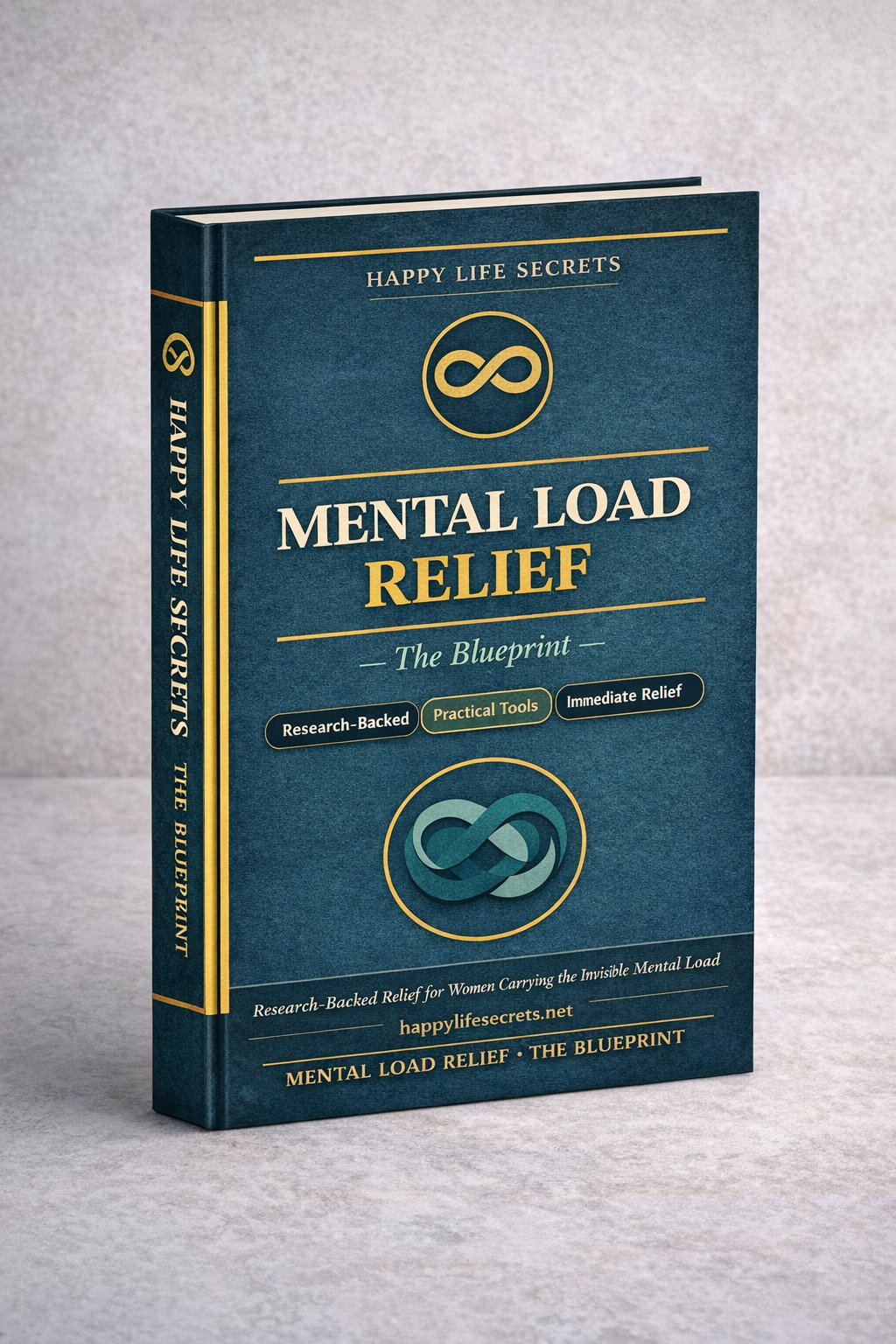
The Mental Load Relief Blueprint gives you the research-backed framework women 25–44 are quietly using to reclaim 2+ hours of mental space daily — without waiting for anyone else to notice how much you're managing.
Instant PDF delivery • Your privacy protected • Unsubscribe anytime
You're Not Overwhelmed Because You Can't Handle It.
You're Overwhelmed Because the Load Was Never Designed to Be Carried by One Person.
Research shows women make up to 35,000 decisions daily while managing invisible work nobody else sees — or names. Here's what that actually looks like from the inside.
You're the Only One Who Remembers Everything
Appointments, school events, grocery needs, everyone's schedules — that mental tab running 24/7 is real cognitive labor. Studies show invisible work creates 40% more mental fatigue than tasks anyone can actually see.
Making 100+ Decisions While Everyone Else Just... Lives
What's for dinner? Who needs what tomorrow? Did that get handled? You're absorbing the weight of these micro-decisions constantly — and research confirms that decision fatigue quietly steals your clarity and energy all day long.
Holding Everyone's Emotional Load Too
Their worries, moods, needs, and fears have somewhere to land — and that place is you. Data shows this emotional carrying costs women 700+ hours annually in unpaid mental labor that nobody else identifies as work.
Your Brain Won't Turn Off at Night
Even when you're exhausted, tomorrow's logistics replay the moment your head hits the pillow. Research directly links mental load to disrupted sleep — which means you wake up tired before the day even begins.
You're Everyone's Default for Everything
Every question, every problem, every decision comes to you first. You coordinate, anticipate, solve — the invisible architecture holding everything together. Research identifies being the default person as a primary predictor of burnout.
Generic "Self-Care" Was Never Designed for Your Reality
"Take a bath." "Just say no." None of it accounts for the fact that you're managing an entire household's cognitive life. The advice failed you — not the other way around. You needed a different kind of tool.
The Mental Load Relief Blueprint: A New Framework, Not More Advice
This isn't another collection of productivity tips that pretend your invisible labor doesn't exist. These are evidence-based strategies built around how cognitive and emotional load actually work — practical relief designed for real life, not an idealized one.
Identify Your Mental Load Type
Discover which of the five mental load patterns applies to you. Research shows targeted, specific strategies work 3x better than generic approaches — because not all invisible labor looks the same.
The Brain Dump Method That Actually Works
Reduce your daily decision load by up to 40% using cognitive offloading techniques designed for real life. Studies confirm that externalizing mental tabs creates immediate, measurable relief.
Sharing Mental Load — Not Just Tasks
Specific strategies for redistributing invisible labor without becoming the manager of your own delegation. Evidence shows even small shifts in load distribution produce noticeable, lasting relief.
Decision Fatigue Relief Protocol
Eliminate unnecessary decision points and automate your cognitive overhead. Research confirms that removing just 20 daily micro-decisions significantly improves mental clarity and available energy.
Boundary Scripts for Real Situations
Word-for-word language for setting limits without guilt or conflict. Data shows even one consistently held boundary reduces overwhelm and interrupts the default-person pattern over time.
The Bedtime Worry Spiral Protocol
Reduce nighttime mental rumination from 45 minutes to under 5 using the Worry Window Technique. Penn State research shows this approach cuts bedtime anxiety by 35% within two weeks.
The Permission You've Been Waiting For
Relief doesn't require anyone else to notice what you've been carrying first. Research shows self-validation is the essential first step — and this guide begins there, because that's where change actually starts.
Every Strategy Is Grounded in Research on Invisible Labor
Not wellness trends. Not anecdotes. Peer-reviewed data on cognitive load, decision fatigue, and emotional labor from leading psychology and behavioral science journals.
Why The Mental Load Relief Blueprint Works When Generic Advice Didn't
The strategies that failed you before weren't designed for cognitive labor. They were designed for task management. This is something different.
Built for What You're Actually Carrying
Designed specifically for cognitive overload from invisible labor — not generic stress tips that acknowledge your situation in the intro and then ignore it for the rest of the guide.
Fits Into Real Life, Not an Ideal One
Every strategy takes 5–10 minutes. Not because the strategies are small — because your time is real. Relief that only works when you have three free hours isn't relief.
100% Evidence-Based
Grounded in peer-reviewed research on invisible labor, decision fatigue, and emotional load — not trends, personal opinions, or one-size-fits-all advice that was never built for what you carry.
About Happy Life Secrets
I'm Herb, founder of Happy Life Secrets. For over a decade, I've researched the psychology of mental overwhelm, decision fatigue, and cognitive load — specifically studying what creates real, measurable relief for women managing multiple responsibilities and invisible labor nobody else names.
The Mental Load Relief Blueprint isn't built on personal anecdotes or wellness theories. Every strategy inside is grounded in peer-reviewed research from leading psychology journals and clinical studies on invisible labor and burnout.
These are the same evidence-based tools women are using right now to finally get relief from work nobody acknowledges — and to reclaim the mental space they've always deserved, without waiting for anyone else to step up first.
Download Your Free Blueprint Today
Stop carrying everyone's invisible labor alone. Get the complete, evidence-based guide for reducing decision fatigue, sharing the mental load, and finally feeling lighter — starting today.
Completely free. No credit card required. Instant PDF download.
Yes — Send Me the Free Blueprint NowInstant delivery • Your privacy protected • Evidence-based strategies • Unsubscribe anytime
------------------------
------------------------



-----------


-----------

-----------


HappyLifeSecrets.net
Copyright © 2010-2026
All Rights Reserved