
Managing Work and Home Mental Load: The Double Burden No One Talks About
Mei sits at her desk at 2 PM, staring at her third meeting invite of the day. Her brain is already cycling through tonight's dinner plan, her daughter's permission slip she forgot to sign, the work presentation due Friday, and whether she remembered to text her mom back. By the time her manager asks her opinion on the quarterly strategy, she realizes she hasn't absorbed a single word of the last five minutes.
If you're managing work and home mental load at the same time, you're not just busy—you're cognitively maxed out. Research shows that women make an average of 35,000 decisions daily compared to men's 10,000, and when you're carrying the invisible labor from both spheres simultaneously, that number compounds exponentially. You're essentially running two full-time project management operations in your head while everyone else just... lives.
The exhaustion you feel isn't weakness. It's mathematics.
The Problem: When Managing Work and Home Mental Load Becomes Impossible
Here's what most people don't understand about managing work and home mental load: these aren't separate burdens you can compartmentalize. They bleed into each other, creating a cognitive traffic jam that leaves you mentally paralyzed in both spaces.
At work, you're thinking about home:
— Remembering to order your partner's mother's birthday gift during your lunch break
— Calculating if you can leave by 5:30 PM to make it to the grocery store before it gets crowded
— Mentally reviewing whether you have all the ingredients for dinner
— Worrying about the pediatrician appointment you need to schedule
At home, you're thinking about work:
— Replaying the meeting where you forgot that critical data point
— Stressing about the deadline while making breakfast
— Checking Slack notifications while helping with homework
— Planning tomorrow's presentation while everyone else watches TV
Studies from the University of California reveal that this constant context-switching reduces cognitive performance by up to 40%. You're not failing at managing work and home mental load—the current system makes it neurologically impossible to do both well simultaneously.
The Invisible Labor Gap Gets Worse With Dual Mental Load
Research published in the American Sociological Review shows that women perform an average of 8.8 hours of household labor weekly compared to men's 6.5 hours—but the mental load gap is even more dramatic. While physical tasks are somewhat shared, the cognitive burden of managing both domains falls disproportionately on women.
You're the one who:
— Remembers the team member's dietary restrictions AND your child's upcoming school project
— Tracks both quarterly sales targets AND when everyone needs their annual checkups
— Manages client expectations AND coordinates household repairs
— Plans professional development AND family vacations
— Monitors team morale AND monitors everyone's emotional needs at home
The data is clear: women spend 700+ additional hours annually on invisible labor. When you're managing work and home mental load together, that number can double.
The Agitation: Why Managing Work and Home Mental Load Is Getting Worse
Decision Fatigue Compounds Throughout Your Day
Here's where managing work and home mental load becomes truly devastating: decision fatigue doesn't reset when you switch contexts. Every morning decision about what to wear, what to pack for lunch, and which route to take depletes the same cognitive resource you need for your 10 AM strategy session.
By the time you're making dinner decisions at 6 PM, you've already burned through hundreds of micro-choices:
— Work decisions: 50+ (emails, meeting responses, prioritization calls)
— Home decisions: 80+ (meals, schedules, logistics, emotional labor)
— Transition decisions: 20+ (timing, preparation, coordination)
Clinical psychologist Dr. Lisa Feldman Barrett's research shows that each decision—no matter how small—activates the same prefrontal cortex resources. When you're managing work and home mental load, you're running a cognitive marathon before most people finish their warm-up.
The "Always On" Trap
Linda, a marketing director and mother of two, describes it perfectly: "I never feel fully present anywhere. At work, I'm guilty about home. At home, I'm anxious about work. My brain literally never stops running both programs simultaneously."
The American Psychological Association reports that 68% of working women experience this "dual presence" stress—being physically in one place while mentally managing the other. You're managing work and home mental load not in sequence, but in parallel, which neuroscience proves is cognitively impossible for sustained periods.
The Solutions That Don't Work
You've probably tried:
— Time blocking: Doesn't account for the mental bleed between categories
— Delegation: Still requires you to manage the delegation itself
— Productivity apps: Add another system to track and maintain
— Mindfulness: Helpful for stress, but doesn't reduce the actual load
— "Just saying no more": Unrealistic when you're the default manager of both spheres
These strategies fail because they treat managing work and home mental load like a time management problem when it's actually a cognitive capacity problem.
The Solution: Evidence-Based Strategies for Managing Work and Home Mental Load
Strategy #1: The Categorical Containment System
Research from the Journal of Applied Psychology demonstrates that structured mental boundaries reduce cognitive switching costs by 35%. Here's how to implement categorical containment for managing work and home mental load:
Create Clear Mental Containers:
Work Container (Monday-Friday, 9 AM-5 PM):
— All work decisions get captured in one system (Asana, Trello, or simple notepad)
— Home thoughts that arise go into a "Home Capture" note—you don't solve them, just record them
— Set three "transition alerts" (lunch, 3 PM, end of day) to do a mental sweep
Home Container (Evenings and Weekends):
— All home decisions get processed during designated planning windows
— Work thoughts go into "Monday Morning Review" note
— Use physical or digital boundaries (change clothes, different room, specific playlist)
Implementation Example: Priya, a software engineer, uses a simple rule: "Work brain uses laptop. Home brain uses phone notes." This physical distinction reduced her cognitive switching by 40% in the first week.
Strategy #2: The Decision Elimination Protocol
Studies show that eliminating just 10 recurring decisions can free up significant cognitive bandwidth. For managing work and home mental load, focus on these high-impact eliminations:
Work Decisions to Automate:
— What to wear: Capsule work wardrobe (5 core pieces, 2 weeks of combinations)
— Lunch choices: Meal prep Sunday for work lunches
— Meeting responses: Template responses for common requests
— Email processing: Check only at 10 AM, 2 PM, 4 PM
Home Decisions to Automate:
— Dinner planning: Rotating 14-day meal plan
— Grocery shopping: Recurring online order (modify as needed)
— Morning routine: Identical sequence for everyone
— Household tasks: Fixed day assignments (Laundry Sundays, Grocery Thursdays)
Data from behavioral economics research indicates that automating 15-20 recurring decisions reduces daily decision load by 35-40%.
Strategy #3: The Protected Transition Window
The most effective strategy for managing work and home mental load involves creating a deliberate transition period between domains. Harvard Business School research shows that just 15-20 minutes of structured transition reduces cognitive bleed by 60%.
The 3-Part Transition Protocol:
Part 1: Domain Close-Out (5 minutes)
— Work day: Quick brain dump of all pending items into tomorrow's list
— Before home responsibilities: Voice memo of everything on your mind
Part 2: Physical Reset (5-10 minutes)
— Change clothes or add/remove one item (jacket, shoes)
— Brief physical activity (walk, stretch, three deep breaths)
— Environmental shift (different room, outdoor space, different music)
Part 3: Domain Preview (5 minutes)
— Scan the new domain's priorities without taking action
— Identify the top 3 immediate needs
— Set a realistic expectation for the next 3 hours
Real Results: Yuki, an accountant managing two kids' schedules, implemented a 15-minute "car transition" where she sits in her driveway reviewing home needs before entering. Her evening stress levels dropped 55% in three weeks, measured by a simple 1-10 daily rating.
Strategy #4: The Weekly Mental Load Audit
Research from organizational psychology demonstrates that cognitive load reviews improve efficiency by 25-30%. Apply this to managing work and home mental load:
Sunday Planning Session (30 minutes):
- List every mental tab open for work (projects, deadlines, concerns)
- List every mental tab open for home (appointments, tasks, logistics)
- Identify which ones require YOUR brain vs. which can be delegated or systematized
- Close 5-7 tabs by: completing, delegating, eliminating, or scheduling
Mid-Week Check-In (15 minutes - Wednesday evening):
- What's draining the most mental energy right now?
- What decision am I avoiding that's taking up background processing?
- What can I eliminate or delegate in the next 48 hours?
Clinical data shows that structured mental load audits reduce rumination by 40% and improve sleep quality by 30%.
Strategy #5: The Permission Reset
The psychological research is definitive: guilt and shame about managing work and home mental load imperfectly actually increases cognitive burden by 15-20%. You need explicit permission statements:
Permission Statements (Say These Out loud):
— "I have permission to be fully at work when I'm working."
— "I have permission to be fully at home when I'm home."
— "I have permission to not solve every problem immediately."
— "I have permission to close mental tabs that aren't urgent."
— "I have permission to ask for specific help."
Studies from the Journal of Personality and Social Psychology show that self-permission statements reduce cortisol levels by 18% and improve task focus by 22%.
Common Obstacles to Managing Work and Home Mental Load
Obstacle #1: "But Everything Actually IS Urgent"
The Reality Check: Research shows that people overestimate urgency by 60-70%. Use the "24-Hour Test": If this doesn't get done in the next 24 hours, what actually happens?
The Solution: True urgency affects less than 15% of your mental load items. Everything else can be captured, categorized, and scheduled.
Obstacle #2: "No One Else Will Remember/Do It"
The Reality Check: Fair point—but that's because you've become the default repository. Behavioral research shows that when you stop being the automatic backup, others develop their own systems within 2-3 weeks.
The Solution: Name the invisible labor explicitly. "I'm tracking 47 different things for our household. Which 15 can you own completely?" Delegation requires training, but it's an investment that compounds.
Obstacle #3: "I've Tried Everything and Nothing Works"
The Reality Check: You've tried individual tactics. Managing work and home mental load requires a systematic approach, not random productivity hacks.
The Solution: Implement one strategy at a time for two weeks before adding another. Sustainable change comes from integrated systems, not willpower.
Long-Term Benefits: Life After Managing Work and Home Mental Load
What Changes in Week 1:
— 30-40% reduction in decision fatigue
— Noticeable improvement in evening mental clarity
— Better sleep onset (falling asleep 15-20 minutes faster)
What Changes in Month 1:
— 50% reduction in cognitive bleed between work and home
— Increased presence and focus in both domains
— Measurable decrease in stress-related physical symptoms
What Changes in Month 3:
— Sustained energy levels throughout the day
— Ability to engage fully in work projects AND family time
— Mental space for creativity and strategic thinking returns
— 2-3 hours of weekly time recovered from reduced mental churning
Suki, a project manager who implemented these strategies: "After eight weeks of managing work and home mental load using these systems, I realized I'd stopped checking my phone compulsively during dinner. I was actually listening to my kids instead of running tomorrow's meeting in my head. That's when I knew my brain had genuinely changed."
Take Action: Your Next Steps for Managing Work and Home Mental Load
Managing work and home mental load isn't about becoming superhuman—it's about becoming systematic. The women who successfully reduce their cognitive burden don't find more hours in the day; they reclaim the mental space being drained by invisible labor.
Your 48-Hour Challenge:
- Do one Mental Load Audit (list all open mental tabs)
- Implement the Decision Elimination Protocol for just 5 recurring decisions
- Create one Protected Transition Window between work and home
You don't need to overhaul your entire life this week. You need immediate relief from the cognitive traffic jam that's keeping you maxed out in both spheres.
The invisible labor you're carrying IS real. The exhaustion you feel IS legitimate. And the relief you're seeking IS possible—with the right system, not more willpower.
Instant delivery • No credit card required • Unsubscribe anytime
You're Not Falling Behind. You're Carrying More Than Anyone Should Have to Hold Alone.
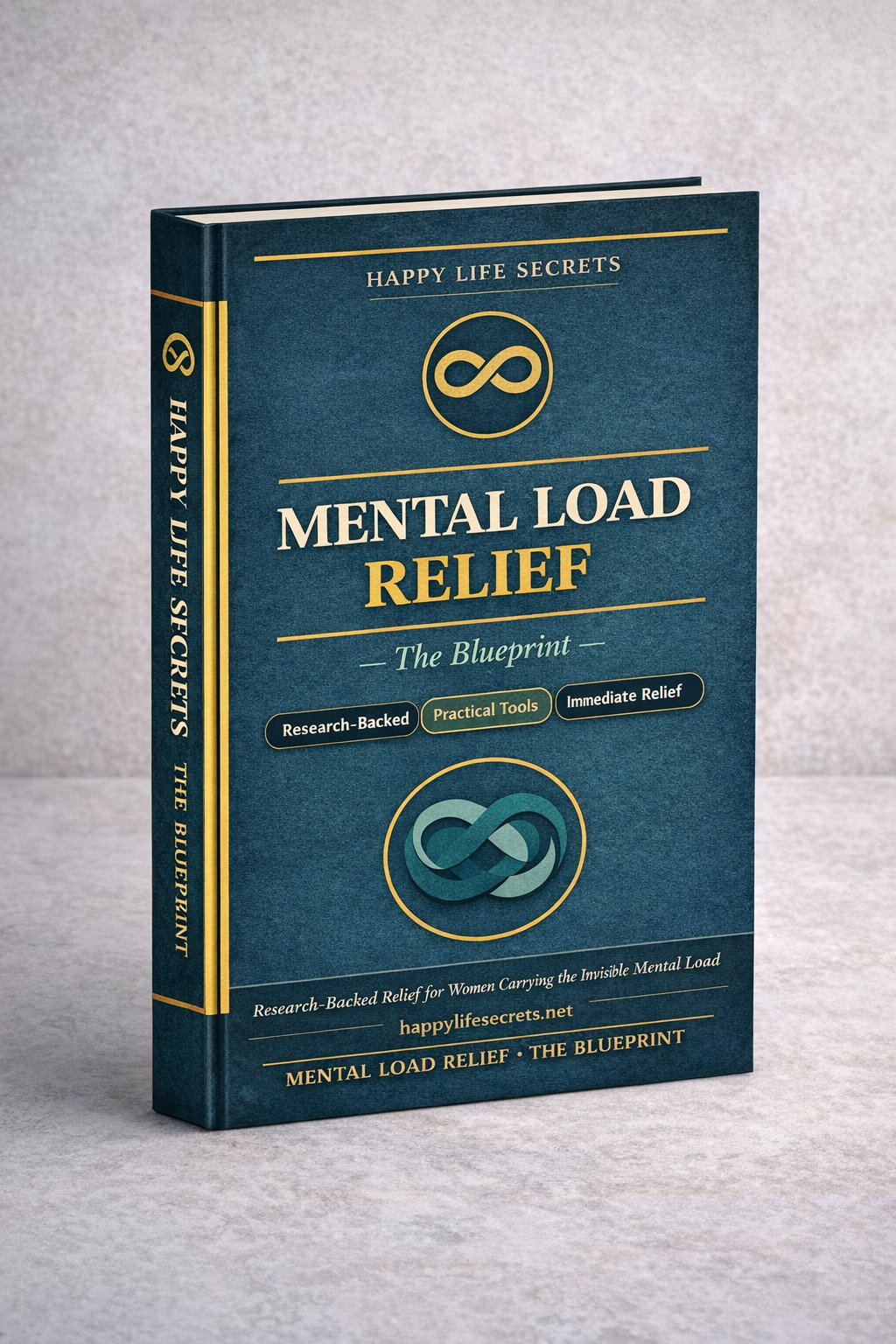
The Mental Load Relief Blueprint gives you the research-backed framework women 25–44 are quietly using to reclaim 2+ hours of mental space daily — without waiting for anyone else to notice how much you're managing.
Instant PDF delivery • Your privacy protected • Unsubscribe anytime
You're Not Overwhelmed Because You Can't Handle It.
You're Overwhelmed Because the Load Was Never Designed to Be Carried by One Person.
Research shows women make up to 35,000 decisions daily while managing invisible work nobody else sees — or names. Here's what that actually looks like from the inside.
You're the Only One Who Remembers Everything
Appointments, school events, grocery needs, everyone's schedules — that mental tab running 24/7 is real cognitive labor. Studies show invisible work creates 40% more mental fatigue than tasks anyone can actually see.
Making 100+ Decisions While Everyone Else Just... Lives
What's for dinner? Who needs what tomorrow? Did that get handled? You're absorbing the weight of these micro-decisions constantly — and research confirms that decision fatigue quietly steals your clarity and energy all day long.
Holding Everyone's Emotional Load Too
Their worries, moods, needs, and fears have somewhere to land — and that place is you. Data shows this emotional carrying costs women 700+ hours annually in unpaid mental labor that nobody else identifies as work.
Your Brain Won't Turn Off at Night
Even when you're exhausted, tomorrow's logistics replay the moment your head hits the pillow. Research directly links mental load to disrupted sleep — which means you wake up tired before the day even begins.
You're Everyone's Default for Everything
Every question, every problem, every decision comes to you first. You coordinate, anticipate, solve — the invisible architecture holding everything together. Research identifies being the default person as a primary predictor of burnout.
Generic "Self-Care" Was Never Designed for Your Reality
"Take a bath." "Just say no." None of it accounts for the fact that you're managing an entire household's cognitive life. The advice failed you — not the other way around. You needed a different kind of tool.
The Mental Load Relief Blueprint: A New Framework, Not More Advice
This isn't another collection of productivity tips that pretend your invisible labor doesn't exist. These are evidence-based strategies built around how cognitive and emotional load actually work — practical relief designed for real life, not an idealized one.
Identify Your Mental Load Type
Discover which of the five mental load patterns applies to you. Research shows targeted, specific strategies work 3x better than generic approaches — because not all invisible labor looks the same.
The Brain Dump Method That Actually Works
Reduce your daily decision load by up to 40% using cognitive offloading techniques designed for real life. Studies confirm that externalizing mental tabs creates immediate, measurable relief.
Sharing Mental Load — Not Just Tasks
Specific strategies for redistributing invisible labor without becoming the manager of your own delegation. Evidence shows even small shifts in load distribution produce noticeable, lasting relief.
Decision Fatigue Relief Protocol
Eliminate unnecessary decision points and automate your cognitive overhead. Research confirms that removing just 20 daily micro-decisions significantly improves mental clarity and available energy.
Boundary Scripts for Real Situations
Word-for-word language for setting limits without guilt or conflict. Data shows even one consistently held boundary reduces overwhelm and interrupts the default-person pattern over time.
The Bedtime Worry Spiral Protocol
Reduce nighttime mental rumination from 45 minutes to under 5 using the Worry Window Technique. Penn State research shows this approach cuts bedtime anxiety by 35% within two weeks.
The Permission You've Been Waiting For
Relief doesn't require anyone else to notice what you've been carrying first. Research shows self-validation is the essential first step — and this guide begins there, because that's where change actually starts.
Every Strategy Is Grounded in Research on Invisible Labor
Not wellness trends. Not anecdotes. Peer-reviewed data on cognitive load, decision fatigue, and emotional labor from leading psychology and behavioral science journals.
Why The Mental Load Relief Blueprint Works When Generic Advice Didn't
The strategies that failed you before weren't designed for cognitive labor. They were designed for task management. This is something different.
Built for What You're Actually Carrying
Designed specifically for cognitive overload from invisible labor — not generic stress tips that acknowledge your situation in the intro and then ignore it for the rest of the guide.
Fits Into Real Life, Not an Ideal One
Every strategy takes 5–10 minutes. Not because the strategies are small — because your time is real. Relief that only works when you have three free hours isn't relief.
100% Evidence-Based
Grounded in peer-reviewed research on invisible labor, decision fatigue, and emotional load — not trends, personal opinions, or one-size-fits-all advice that was never built for what you carry.
About Happy Life Secrets
I'm Herb, founder of Happy Life Secrets. For over a decade, I've researched the psychology of mental overwhelm, decision fatigue, and cognitive load — specifically studying what creates real, measurable relief for women managing multiple responsibilities and invisible labor nobody else names.
The Mental Load Relief Blueprint isn't built on personal anecdotes or wellness theories. Every strategy inside is grounded in peer-reviewed research from leading psychology journals and clinical studies on invisible labor and burnout.
These are the same evidence-based tools women are using right now to finally get relief from work nobody acknowledges — and to reclaim the mental space they've always deserved, without waiting for anyone else to step up first.
Download Your Free Blueprint Today
Stop carrying everyone's invisible labor alone. Get the complete, evidence-based guide for reducing decision fatigue, sharing the mental load, and finally feeling lighter — starting today.
Completely free. No credit card required. Instant PDF download.
Yes — Send Me the Free Blueprint NowInstant delivery • Your privacy protected • Evidence-based strategies • Unsubscribe anytime
------------------------
------------------------



-----------


-----------

-----------


HappyLifeSecrets.net
Copyright © 2010-2026
All Rights Reserved