Love Yourself First Without Being Selfish: 7 Myths Busted
If you've ever felt guilty about taking time for yourself, you're not alone. Many women wrestle with the nagging feeling that prioritizing their own needs makes them selfish. Anna Rose, a 35-year-old marketing director and mother of two, recently confided: "Every time I schedule a workout or say no to an extra project, I feel like I'm letting someone down."
The truth is, learning to love yourself first without being selfish isn't just possible—it's essential for maintaining healthy relationships and avoiding burnout. The challenge lies in dispelling the deeply ingrained myths that keep us trapped in cycles of self-neglect and guilt. Let's unpack and debunk seven pervasive myths that prevent us from embracing authentic self-love.
Myth #1: Loving Yourself First Means Putting Everyone Else Last
The Reality: This is perhaps the most damaging misconception about self-care. When you love yourself first without being selfish, you're actually creating a foundation that enables you to show up more fully for others.
Research consistently shows that self-care provides an essential foundation for healthy, mature relationships. When we care for ourselves, we can soothe ourselves when things don't go our way and respond to others from a more centered place. As highlighted in recent psychological research, self-care helps you offer love freely, without resentment, pressure, or depletion.
Think of it this way: flight attendants don't tell you to put on your oxygen mask first because they want you to be selfish. They know that you can't help anyone if you've passed out from lack of oxygen. The same principle applies to emotional and mental well-being.
Myth #2: Self-Care Is a Luxury You Can't Afford
The Reality: Many busy professionals convince themselves they simply don't have time for self-care. Between work demands, family obligations, and maintaining relationships, self-love feels like an indulgent extra.
However, when you love yourself first without being selfish, you're engaging in essential maintenance, not luxury. Studies on self-care demonstrate that adequate self-care is linked to increases in self-awareness, mental and physical well-being, life satisfaction, and the ability to connect more deeply with others.
Jessica, a 39-year-old accountant, discovered this truth after experiencing burnout. "I used to think taking 20 minutes to journal was wasteful," she explains. "Now I realize those 20 minutes make me more productive, patient, and present during the other 23 hours and 40 minutes of my day."
Recent research from The Gottman Institute emphasizes that self-care is one of the most critical tools in maintaining healthy relationships, noting that proper rest and stress management directly impact relationship satisfaction and conflict resolution.
Myth #3: Setting Boundaries Makes You Difficult
The Reality: This myth particularly affects women who've been socialized to be accommodating at all costs. The fear of being labeled "difficult" or "high-maintenance" prevents many from establishing necessary boundaries.
But to love yourself first without being selfish requires clear, healthy boundaries. Boundaries aren't walls that push people away—they're guidelines that define what you need to thrive in relationships. They actually create respect and safety within connections.
Maria, a 32-year-old teacher, struggled with this concept for years. She would regularly work through lunch, take on extra responsibilities, and answer work emails at all hours. "I thought I was being a team player," she shares. "But I was actually modeling dysfunction and burning myself out in the process."
When Maria finally established boundaries—like not checking emails after 7 PM and protecting her lunch break—something surprising happened. Her colleagues respected her more, not less. Her work quality improved because she wasn't exhausted. And her relationships deepened because she had energy to be truly present.
Myth #4: Your Needs Don't Matter as Much as Others'
The Reality: This belief system often stems from childhood messages about being "good" by putting others first. While caring for others is admirable, consistently sacrificing your own needs creates resentment and relationship dysfunction.
The reality is that to love yourself first without being selfish means recognizing that your needs matter equally to others' needs—not more, not less. This balanced perspective is what differentiates healthy self-love from narcissism.
Recent research published in 2025 confirms that cultivating good self-care habits enhances emotional regulation and stress management, which in turn improves your capacity to care for others effectively. As one psychologist noted, "If you don't have any gas in the emotional tank left, you are not going to be able to show up and give back."
Consider Rachel, a 41-year-old executive who always volunteered for the most challenging projects while neglecting her health. After a health scare forced her to reassess, she realized: "I wasn't being selfless—I was using busyness to avoid addressing my own needs. Now I schedule my needs like appointments because they're just as important."
Myth #5: Self-Love Means Being Self-Absorbed
The Reality: There's a critical distinction between healthy self-love and narcissistic self-absorption. Narcissism involves an inflated sense of importance, lack of empathy for others, and constant need for admiration. Self-love, conversely, involves accepting yourself with compassion while remaining considerate of others.
When you practice how to love yourself first without being selfish, you develop self-awareness and self-compassion that actually increase your capacity for empathy. You become better at recognizing when you're depleted and need to recharge, which prevents the bitterness that comes from martyrdom.
Studies show that self-compassion—a core component of self-love—is actually associated with greater concern for others' well-being, not less. People who treat themselves kindly are more resilient, better equipped to handle stress, and more available for genuine connection.
Emma, a 36-year-old therapist, puts it beautifully: "Before I learned to love myself first without being selfish, I was the friend who said yes to everything but showed up resentful. Now I sometimes say no, but when I say yes, I'm genuinely happy to be there. My friendships have never been stronger."
Myth #6: You Don't Deserve Rest Until Everything Is Done
The Reality: This productivity-obsessed myth keeps countless women trapped in cycles of exhaustion and guilt. The truth? In modern life, there will always be more tasks, more emails, more obligations. If you wait until everything is done to rest, you'll never rest.
Learning to love yourself first without being selfish includes giving yourself permission to rest, even when your to-do list isn't complete. Rest isn't earned through productivity—it's a fundamental human need that enables productivity.
Cognitive science confirms that rest and recovery are essential for optimal performance, creativity, and decision-making. Chronic exhaustion doesn't make you more productive; it makes you less effective while damaging your health and relationships.
Lisa, a 38-year-old entrepreneur, shared her transformation: "I used to wear my exhaustion like a badge of honor. Now I protect my sleep like it's sacred, and my business has actually grown. I'm sharper, more creative, and ironically, I get more done in less time."
Myth #7: If You're Happy with Yourself, You Won't Grow
The Reality: Some people worry that if they learn to love themselves first without being selfish, they'll become complacent and stop striving for improvement. This reflects a fundamental misunderstanding of how healthy self-love operates.
Authentic self-love doesn't mean accepting mediocrity or refusing to grow. Instead, it means approaching growth from a foundation of self-acceptance rather than self-criticism. Research consistently shows that self-compassion—a key component of self-love—actually increases motivation for personal growth because it removes the paralyzing fear of failure.
When you berate yourself for mistakes, you're more likely to avoid challenges to protect your fragile ego. But when you love yourself first without being selfish, you can take healthy risks because your self-worth isn't contingent on perfection.
Studies in positive psychology demonstrate that people with high self-compassion show greater psychological resilience, persistence in the face of failure, and willingness to try new approaches when old ones aren't working.
Jennifer, a 40-year-old software engineer, experienced this shift: "I used to think harsh self-criticism motivated me. But it actually kept me playing small because I was terrified of failing. Now that I've learned to be kind to myself, I take on bigger challenges because I know failure won't destroy me."
The Real Question: How Do You Love Yourself First Without Being Selfish?
Now that we've busted these myths, let's talk about practical implementation. Loving yourself first without being selfish requires three key components:
1. Self-Awareness: Regularly check in with your physical, emotional, and mental state. What do you need right now? This week? This month?
2. Clear Communication: Express your needs and boundaries clearly and respectfully. People can't support your self-care if they don't understand what you need.
3. Consistent Action: Take regular, small actions that honor your needs. Don't wait for permission or for the "perfect" time.
Moving Forward: Your Action Plan
To truly love yourself first without being selfish, start with these concrete steps:
This Week:
- Identify one area where you consistently neglect your needs
- Set one small, achievable boundary
- Schedule one non-negotiable self-care activity
This Month:
- Have honest conversations with key people about your boundaries
- Notice and challenge guilty thoughts about self-care
- Celebrate moments when you prioritized yourself without negative consequences
This Year:
- Build a sustainable self-care routine that fits your life
- Cultivate relationships with people who respect your boundaries
- Model healthy self-love for the people in your life, especially children
The Transformation Is Real
The journey to love yourself first without being selfish isn't always comfortable. You might face resistance from people who benefited from your boundary-less existence. You might battle internal guilt that's been programmed over decades. But the transformation is worth it.
When you consistently practice self-love, you'll notice:
- Increased energy and enthusiasm for life
- Deeper, more authentic relationships
- Greater resilience during challenges
- Reduced resentment and burnout
- Improved physical and mental health
- A sense of living in alignment with your values
Remember: choosing to love yourself first without being selfish isn't just about you. It's about becoming the healthiest, most authentic version of yourself so you can genuinely contribute to the people and causes you care about. It's about breaking cycles of dysfunction and modeling healthy boundaries for future generations.
The world doesn't need more exhausted, resentful people sacrificing themselves on the altar of others' expectations. It needs whole, healthy individuals who understand that self-care and care for others aren't mutually exclusive—they're intrinsically connected.
Your journey to loving yourself first without being selfish starts with the simple, revolutionary act of believing you deserve care just as much as everyone else you've been caring for. Because you do.
Instant delivery • No credit card required • Unsubscribe anytime
You're Not Falling Behind. You're Carrying More Than Anyone Should Have to Hold Alone.
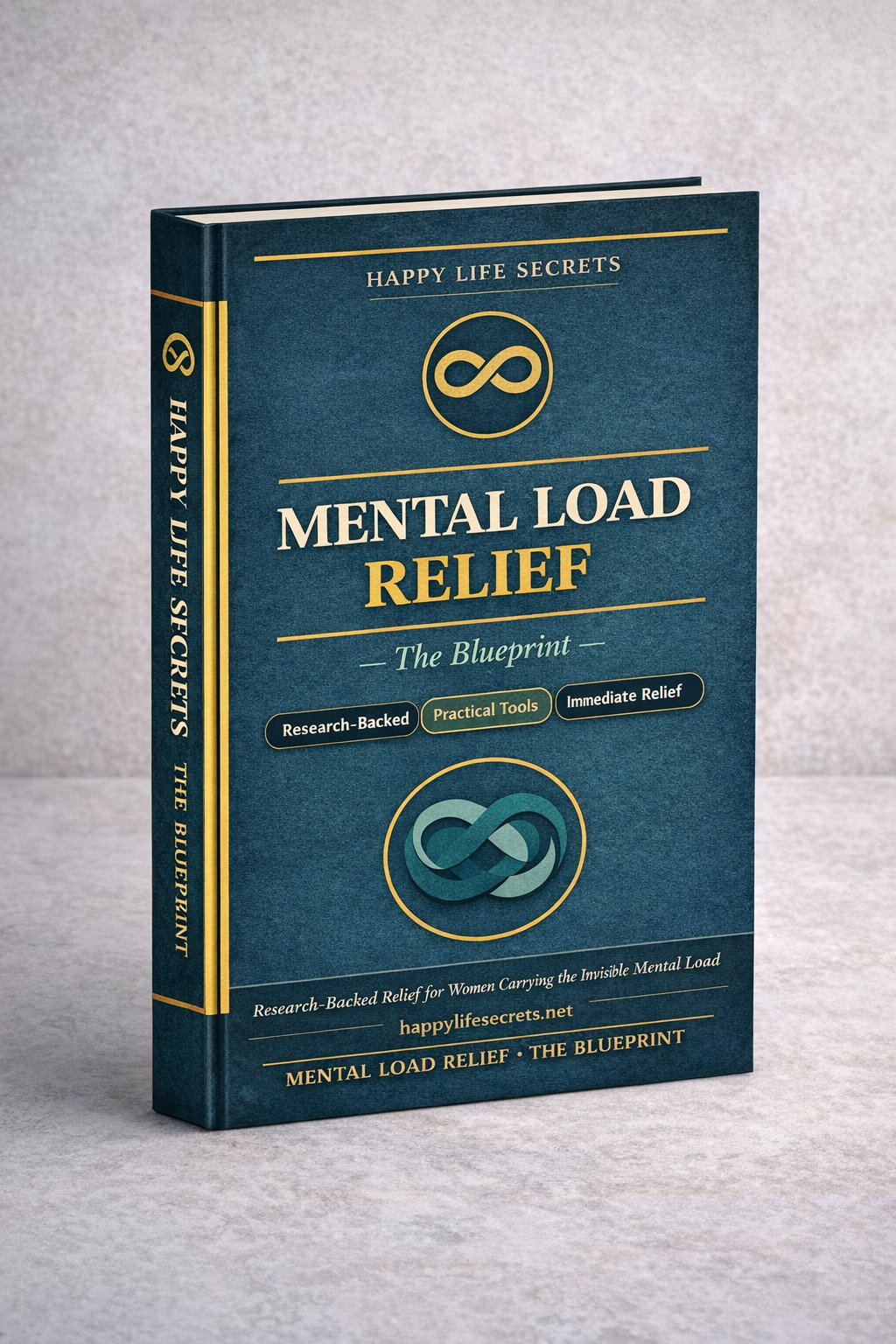
The Mental Load Relief Blueprint gives you the research-backed framework women 25–44 are quietly using to reclaim 2+ hours of mental space daily — without waiting for anyone else to notice how much you're managing.
Instant PDF delivery • Your privacy protected • Unsubscribe anytime
You're Not Overwhelmed Because You Can't Handle It.
You're Overwhelmed Because the Load Was Never Designed to Be Carried by One Person.
Research shows women make up to 35,000 decisions daily while managing invisible work nobody else sees — or names. Here's what that actually looks like from the inside.
You're the Only One Who Remembers Everything
Appointments, school events, grocery needs, everyone's schedules — that mental tab running 24/7 is real cognitive labor. Studies show invisible work creates 40% more mental fatigue than tasks anyone can actually see.
Making 100+ Decisions While Everyone Else Just... Lives
What's for dinner? Who needs what tomorrow? Did that get handled? You're absorbing the weight of these micro-decisions constantly — and research confirms that decision fatigue quietly steals your clarity and energy all day long.
Holding Everyone's Emotional Load Too
Their worries, moods, needs, and fears have somewhere to land — and that place is you. Data shows this emotional carrying costs women 700+ hours annually in unpaid mental labor that nobody else identifies as work.
Your Brain Won't Turn Off at Night
Even when you're exhausted, tomorrow's logistics replay the moment your head hits the pillow. Research directly links mental load to disrupted sleep — which means you wake up tired before the day even begins.
You're Everyone's Default for Everything
Every question, every problem, every decision comes to you first. You coordinate, anticipate, solve — the invisible architecture holding everything together. Research identifies being the default person as a primary predictor of burnout.
Generic "Self-Care" Was Never Designed for Your Reality
"Take a bath." "Just say no." None of it accounts for the fact that you're managing an entire household's cognitive life. The advice failed you — not the other way around. You needed a different kind of tool.
The Mental Load Relief Blueprint: A New Framework, Not More Advice
This isn't another collection of productivity tips that pretend your invisible labor doesn't exist. These are evidence-based strategies built around how cognitive and emotional load actually work — practical relief designed for real life, not an idealized one.
Identify Your Mental Load Type
Discover which of the five mental load patterns applies to you. Research shows targeted, specific strategies work 3x better than generic approaches — because not all invisible labor looks the same.
The Brain Dump Method That Actually Works
Reduce your daily decision load by up to 40% using cognitive offloading techniques designed for real life. Studies confirm that externalizing mental tabs creates immediate, measurable relief.
Sharing Mental Load — Not Just Tasks
Specific strategies for redistributing invisible labor without becoming the manager of your own delegation. Evidence shows even small shifts in load distribution produce noticeable, lasting relief.
Decision Fatigue Relief Protocol
Eliminate unnecessary decision points and automate your cognitive overhead. Research confirms that removing just 20 daily micro-decisions significantly improves mental clarity and available energy.
Boundary Scripts for Real Situations
Word-for-word language for setting limits without guilt or conflict. Data shows even one consistently held boundary reduces overwhelm and interrupts the default-person pattern over time.
The Bedtime Worry Spiral Protocol
Reduce nighttime mental rumination from 45 minutes to under 5 using the Worry Window Technique. Penn State research shows this approach cuts bedtime anxiety by 35% within two weeks.
The Permission You've Been Waiting For
Relief doesn't require anyone else to notice what you've been carrying first. Research shows self-validation is the essential first step — and this guide begins there, because that's where change actually starts.
Every Strategy Is Grounded in Research on Invisible Labor
Not wellness trends. Not anecdotes. Peer-reviewed data on cognitive load, decision fatigue, and emotional labor from leading psychology and behavioral science journals.
Why The Mental Load Relief Blueprint Works When Generic Advice Didn't
The strategies that failed you before weren't designed for cognitive labor. They were designed for task management. This is something different.
Built for What You're Actually Carrying
Designed specifically for cognitive overload from invisible labor — not generic stress tips that acknowledge your situation in the intro and then ignore it for the rest of the guide.
Fits Into Real Life, Not an Ideal One
Every strategy takes 5–10 minutes. Not because the strategies are small — because your time is real. Relief that only works when you have three free hours isn't relief.
100% Evidence-Based
Grounded in peer-reviewed research on invisible labor, decision fatigue, and emotional load — not trends, personal opinions, or one-size-fits-all advice that was never built for what you carry.
About Happy Life Secrets
I'm Herb, founder of Happy Life Secrets. For over a decade, I've researched the psychology of mental overwhelm, decision fatigue, and cognitive load — specifically studying what creates real, measurable relief for women managing multiple responsibilities and invisible labor nobody else names.
The Mental Load Relief Blueprint isn't built on personal anecdotes or wellness theories. Every strategy inside is grounded in peer-reviewed research from leading psychology journals and clinical studies on invisible labor and burnout.
These are the same evidence-based tools women are using right now to finally get relief from work nobody acknowledges — and to reclaim the mental space they've always deserved, without waiting for anyone else to step up first.
Download Your Free Blueprint Today
Stop carrying everyone's invisible labor alone. Get the complete, evidence-based guide for reducing decision fatigue, sharing the mental load, and finally feeling lighter — starting today.
Completely free. No credit card required. Instant PDF download.
Yes — Send Me the Free Blueprint NowInstant delivery • Your privacy protected • Evidence-based strategies • Unsubscribe anytime
------------------------
------------------------


-----------


-----------

-----------


HappyLifeSecrets.net
Copyright © 2010-2026
All Rights Reserved