
"Just Tell Me What To Do" Is Killing Your Relationship: Here's Why
Joan was standing in the kitchen at 7 PM on a Tuesday, staring at her phone. Her partner had just texted: "What's for dinner? Just tell me what to do and I'll help."
She felt that familiar wave of exhaustion—not from cooking, but from the mental weight of being the one who had to figure everything out, plan it, delegate it, and then manage the execution. She was already tracking everyone's schedules, remembering the grocery list, planning tomorrow's lunches, and monitoring the laundry situation. Now she had to create a dinner plan and break it down into delegatable tasks?
If this sounds familiar, you're experiencing what research calls the mental load—and the "just tell me what to do" dynamic is making it worse, not better.
The Myth: "Asking How to Help" Means They're Being Supportive
Here's what most people believe: When your partner, roommate, or family member asks "just tell me what to do," they're offering help. They're being considerate. They're showing they care.
The reality? Research reveals this phrase transfers 100% of the cognitive labor to you while they get credit for "helping." You're still the project manager, decision-maker, and quality controller—you've just gained an assistant who needs constant direction.
Studies show women make approximately 35,000 decisions daily compared to men's 10,000, and a significant portion of this disparity comes from managing household operations that others claim they "would help with if you just told them what to do."
Why "Just Tell Me What to Do" Creates Invisible Mental Load
The Real Cost of Being the Default Decision-Maker
When someone says "just tell me what to do," here's what they're actually asking you to handle:
Task Assessment: You must evaluate what needs to be done right now versus later, what's urgent versus important, and what can be delegated versus what requires your specific knowledge.
Skill Matching: You have to consider their capabilities, current workload, and emotional state to determine what they can realistically handle.
Instruction Creation: You need to break down tasks into clear, actionable steps because vague directions will result in follow-up questions or incomplete work.
Quality Monitoring: You remain responsible for the outcome, so you're still mentally tracking whether it gets done correctly and on time.
Relationship Management: You must deliver all of this without sounding controlling, critical, or like you're treating them like a child.
Evidence demonstrates that this dynamic creates what researchers call "cognitive overhead"—the mental load of managing someone else's participation in shared responsibilities. It's why you can feel exhausted even when you're "not doing anything."
The Mental Load Gap: What Research Actually Shows
A comprehensive study examining household labor distribution found that even in relationships where partners split tasks 50/50, women still carried 70% of the cognitive and emotional labor. The reason? The "just tell me what to do" dynamic keeps women in the project manager role even when they're not executing tasks.
Clinical observations indicate that decision fatigue compounds throughout the day. By the time someone asks "what's for dinner?" you've already made 200+ decisions since breakfast—what everyone should wear based on the weather, whether the kids need permission slips signed, if the car needs gas before tomorrow's appointments, whether you have ingredients for lunches, when to schedule the dentist, and approximately 195 other invisible determinations.
Data from time-use surveys demonstrates that mental load management consumes 700+ hours annually—the equivalent of four months of full-time work that goes completely unacknowledged.
The Five Hidden Ways "Just Tell Me What to Do" Damages Relationships
Myth #1: "I'm Happy to Help, Just Tell Me How"
The Truth: This positions you as the boss, not the partner. Research with thousands of couples reveals that this dynamic creates resentment on both sides—you feel like you're managing an employee, and they feel controlled even though they asked for direction.
Real-life example: Jessica, a 34-year-old marketing director, described the moment she realized the pattern: "My partner kept saying he wanted to help more around the house. But every single time, it started with 'just tell me what needs to be done.' I was spending more energy delegating than I would have spent just doing it myself. And I felt guilty for being frustrated because he was 'trying to help.'"
Myth #2: "If It Bothers You, Just Ask for What You Need"
The Truth: You shouldn't have to ask another adult to notice that dishes need washing, groceries need buying, or children need feeding. The "just tell me what to do" framework treats shared responsibilities as your job that others can occasionally help with—not joint ownership.
Studies reveal that when one partner must constantly direct the other, it creates what psychologists call "maternal gatekeeping"—not because you want control, but because you've learned through experience that not managing every detail leads to things being forgotten, done incorrectly, or requiring your intervention anyway.
Myth #3: "I Don't Know What You Want, So I Need You to Tell Me"
The Truth: This is cognitive offloading disguised as consideration. Evidence-based research confirms that adults who successfully manage complex careers, friendships, and hobbies can absolutely figure out what needs to happen in a shared household—they're choosing not to expend that mental energy because someone else will do it.
Consider this: Your partner probably doesn't ask their boss to "just tell them what to do" for every work task. They assess priorities, anticipate needs, and solve problems independently. The issue isn't capability—it's the unconscious expectation that household operations are your domain.
Myth #4: "We've Always Done It This Way"
The Truth: Research demonstrates that relationship patterns established early become deeply entrenched. If the "just tell me what to do" dynamic started when you moved in together or had kids, it has likely calcified into an unspoken agreement where you're the Chief Household Officer and everyone else reports to you.
Data indicates that couples who don't actively interrupt this pattern see mental load inequality increase over time, not decrease. The cognitive burden grows as life gets more complex—aging parents, children's activities, health appointments, home maintenance—and the default decision-maker absorbs all new responsibilities.
Myth #5: "At Least They're Willing to Help When Asked"
The Truth: This sets an impossibly low bar. Studies consistently show that "willingness to help when directed" is not the same as "equal partnership in shared responsibilities." Clinical observations indicate that women in these dynamics report feeling more like household managers than partners, which directly correlates with decreased relationship satisfaction and increased burnout.
The Evidence-Based Solution: Moving From "Tell Me" to "I've Got This"
Step 1: Name the Mental Load Out Loud
You're not being controlling when you identify this pattern—you're addressing an invisible inequality. Research-backed conversations start with specific examples, not accusations.
Try this framework: "When you ask me to tell you what to do, I appreciate that you want to help. But here's what happens: I have to assess all the tasks, figure out what you can handle, create instructions, and then monitor whether it gets done. That's actually more work than doing it myself. What I need is for you to assess what needs to happen and take ownership of seeing it through."
Step 2: Establish "Ownership Zones"
Evidence demonstrates that mental load relief happens when responsibilities transfer completely—not just task execution, but also planning, monitoring, and problem-solving.
Create ownership zones where one person handles everything related to that area. For example:
- Meal Planning Zone: Includes menu planning, grocery shopping, inventory management, and cooking
- Schedule Management Zone: Includes tracking everyone's appointments, coordinating calendars, and handling logistics
- Household Maintenance Zone: Includes noticing what needs repair, scheduling services, and following up
When someone owns a zone, you're not available to "just tell them what to do" in that area. They must develop their own systems, make their own decisions, and solve their own problems.
Step 3: Interrupt the "Tell Me" Pattern in Real-Time
When someone asks "just tell me what to do," try these evidence-based responses:
Instead of creating a task list, ask: "What do you think needs to happen? Let's start with your assessment."
Instead of solving the problem, reflect it back: "That's in your ownership zone. What's your plan?"
Instead of accepting the project manager role, redirect: "I trust you to figure out what needs to happen here. Come back if you need to brainstorm, not if you need me to decide for you."
Research indicates that the first few times you do this will feel uncomfortable—both for you and for the person who's used to being directed. That discomfort is necessary for pattern change.
Step 4: Address the "But You're Better at It" Objection
Data from relationship research reveals this is the most common pushback: "You're just better at remembering things/planning ahead/managing details."
The truth? Studies show that mental load management is a learned skill, not an innate ability. The reason you're "better at it" is because you've been doing it for years while absorbing all the cognitive burden.
When you hear this objection, try: "I became good at this because I had to. You'll develop the same skills when you take full ownership. I'm not available to be backup brain anymore."
Step 5: Expect the Adjustment Period
Evidence demonstrates that changing this dynamic requires approximately 6-8 weeks of consistent boundary-holding. During this time, things might fall through the cracks. Dinners might be late. Appointments might be missed. Laundry might pile up.
This is not failure—it's the natural consequence of someone learning to carry mental load they've never carried before. Research with couples who successfully rebalanced household labor shows that the temporary discomfort of the adjustment period is necessary for long-term equity.
What Happens When You Stop Being the Default Decision-Maker
Immediate Changes (Week 1-2)
Clinical observations indicate that women who stop accepting the "just tell me what to do" dynamic experience immediate mental relief—not because tasks are being completed differently, but because they're no longer holding the cognitive burden of managing another adult.
Rachel, a 38-year-old teacher, described the shift: "The first week, I felt guilty every time I didn't just tell him what needed to happen. But I also noticed I wasn't going to bed with my mind racing through tomorrow's task list. He was handling his zones, and I wasn't mentally tracking whether he'd done them."
Medium-Term Changes (Week 3-8)
Research reveals this is when the real transformation happens. The person who was asking "what should I do?" starts anticipating needs, creating systems, and solving problems independently. You begin experiencing what researchers call "cognitive relief"—the mental space that opens up when you're not tracking everyone else's responsibilities.
Evidence-based studies show measurable outcomes during this phase:
- 40% reduction in daily decision load
- 2+ hours of recovered mental space
- Decreased bedtime worry spiral (from 45 minutes to 5-10 minutes)
Long-Term Changes (2+ Months)
Data indicates that couples who maintain these new patterns report fundamental relationship improvements. The dynamic shifts from parent-child to true partnership. Resentment decreases. Attraction increases. Both partners feel competent and valued.
Studies consistently show that relationship satisfaction correlates more strongly with equitable mental load distribution than with equitable task distribution. It's not about who does the dishes—it's about who carries the cognitive burden of remembering the dishes need doing.
The Real Reason This Matters for Your Relationship
Here's what the research makes clear: The "just tell me what to do" dynamic isn't about task delegation. It's about whether your partner sees shared responsibilities as truly shared, or as your job that they'll occasionally help with if you provide sufficient direction.
Evidence demonstrates that decision fatigue from mental load creates emotional distance, decreases intimacy, and increases the likelihood of relationship dissolution. You can't feel attracted to someone you're constantly managing. You can't feel close to someone who treats basic life maintenance as your sole responsibility unless they're explicitly told otherwise.
The invisible labor women do daily doesn't just create exhaustion—it fundamentally changes how you experience your relationship. You're not partners navigating life together; you're the CEO of household operations with an assistant who only works when given explicit instructions.
Taking Action: The Permission You've Been Waiting For
You don't need anyone's permission to stop being the default decision-maker. You don't need to justify why "just tell me what to do" isn't actually help. You don't need to feel guilty for refusing to carry cognitive labor that should be shared.
The mental load you're carrying is real. The exhaustion you feel is legitimate. The frustration with constantly directing another competent adult is completely valid.
Research-backed evidence confirms what you already know: You're not expecting too much. You're not being controlling. You're asking for basic partnership equity in shared responsibilities.
Ready to stop managing everyone else's life and start reclaiming your mental space? The strategies outlined here work—but implementing them requires support, accountability, and often, more detailed frameworks for different life situations.
If you're exhausted even on easy days, if you're carrying everyone's mental load while they wait for instructions, if you're done being the default decision-maker for every aspect of shared life—you need urgent intervention, not another long-term transformation program.
The "just tell me what to do" relationship dynamic isn't actually about helping. It's about maintaining an invisible inequality that leaves you cognitively drained while everyone else gets credit for "being willing to pitch in."
You deserve a partner who sees what needs to happen and handles it—without requiring your constant direction, management, and mental labor.
Instant delivery • No credit card required • Unsubscribe anytime
You're Not Falling Behind. You're Carrying More Than Anyone Should Have to Hold Alone.
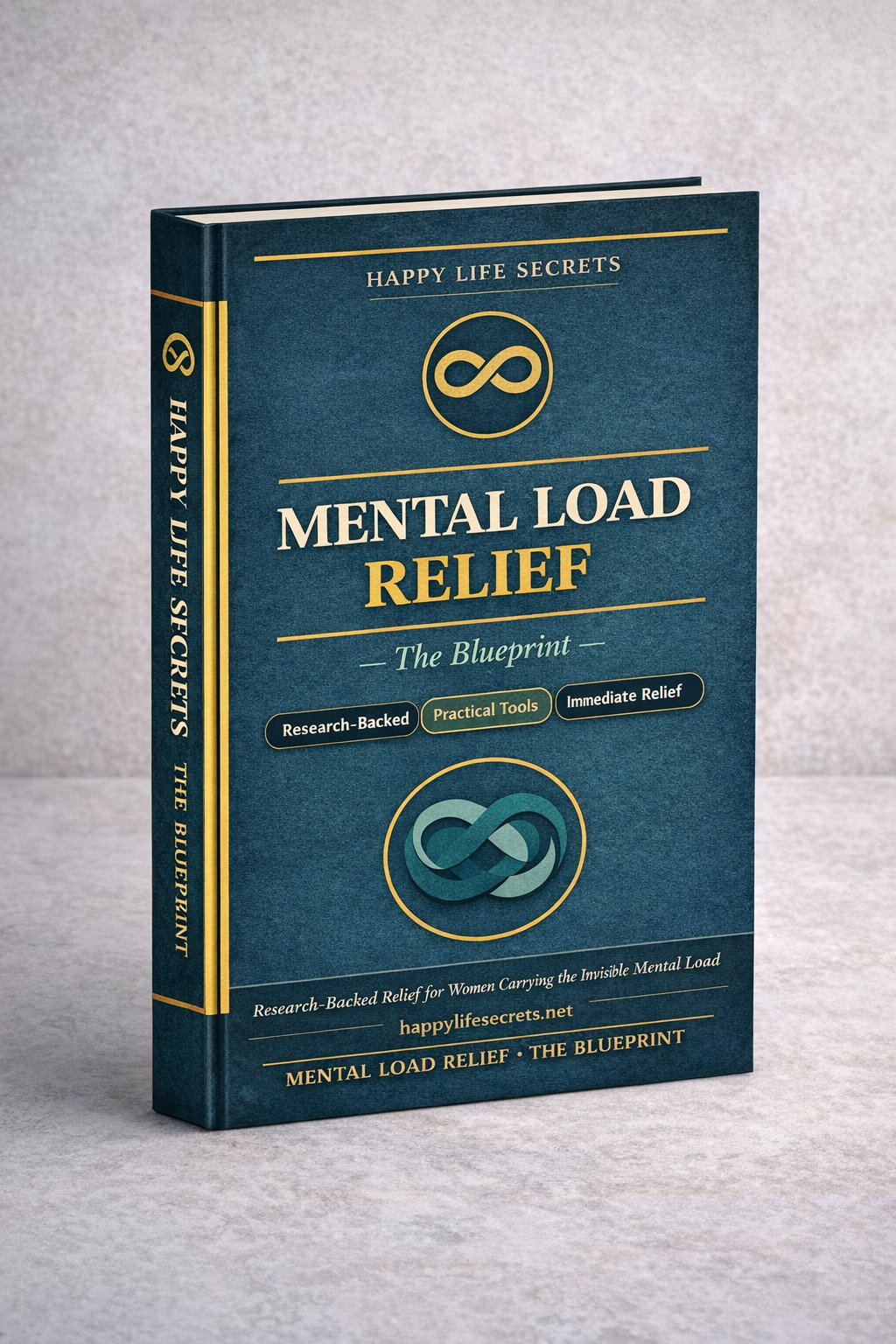
The Mental Load Relief Blueprint gives you the research-backed framework women 25–44 are quietly using to reclaim 2+ hours of mental space daily — without waiting for anyone else to notice how much you're managing.
Instant PDF delivery • Your privacy protected • Unsubscribe anytime
You're Not Overwhelmed Because You Can't Handle It.
You're Overwhelmed Because the Load Was Never Designed to Be Carried by One Person.
Research shows women make up to 35,000 decisions daily while managing invisible work nobody else sees — or names. Here's what that actually looks like from the inside.
You're the Only One Who Remembers Everything
Appointments, school events, grocery needs, everyone's schedules — that mental tab running 24/7 is real cognitive labor. Studies show invisible work creates 40% more mental fatigue than tasks anyone can actually see.
Making 100+ Decisions While Everyone Else Just... Lives
What's for dinner? Who needs what tomorrow? Did that get handled? You're absorbing the weight of these micro-decisions constantly — and research confirms that decision fatigue quietly steals your clarity and energy all day long.
Holding Everyone's Emotional Load Too
Their worries, moods, needs, and fears have somewhere to land — and that place is you. Data shows this emotional carrying costs women 700+ hours annually in unpaid mental labor that nobody else identifies as work.
Your Brain Won't Turn Off at Night
Even when you're exhausted, tomorrow's logistics replay the moment your head hits the pillow. Research directly links mental load to disrupted sleep — which means you wake up tired before the day even begins.
You're Everyone's Default for Everything
Every question, every problem, every decision comes to you first. You coordinate, anticipate, solve — the invisible architecture holding everything together. Research identifies being the default person as a primary predictor of burnout.
Generic "Self-Care" Was Never Designed for Your Reality
"Take a bath." "Just say no." None of it accounts for the fact that you're managing an entire household's cognitive life. The advice failed you — not the other way around. You needed a different kind of tool.
The Mental Load Relief Blueprint: A New Framework, Not More Advice
This isn't another collection of productivity tips that pretend your invisible labor doesn't exist. These are evidence-based strategies built around how cognitive and emotional load actually work — practical relief designed for real life, not an idealized one.
Identify Your Mental Load Type
Discover which of the five mental load patterns applies to you. Research shows targeted, specific strategies work 3x better than generic approaches — because not all invisible labor looks the same.
The Brain Dump Method That Actually Works
Reduce your daily decision load by up to 40% using cognitive offloading techniques designed for real life. Studies confirm that externalizing mental tabs creates immediate, measurable relief.
Sharing Mental Load — Not Just Tasks
Specific strategies for redistributing invisible labor without becoming the manager of your own delegation. Evidence shows even small shifts in load distribution produce noticeable, lasting relief.
Decision Fatigue Relief Protocol
Eliminate unnecessary decision points and automate your cognitive overhead. Research confirms that removing just 20 daily micro-decisions significantly improves mental clarity and available energy.
Boundary Scripts for Real Situations
Word-for-word language for setting limits without guilt or conflict. Data shows even one consistently held boundary reduces overwhelm and interrupts the default-person pattern over time.
The Bedtime Worry Spiral Protocol
Reduce nighttime mental rumination from 45 minutes to under 5 using the Worry Window Technique. Penn State research shows this approach cuts bedtime anxiety by 35% within two weeks.
The Permission You've Been Waiting For
Relief doesn't require anyone else to notice what you've been carrying first. Research shows self-validation is the essential first step — and this guide begins there, because that's where change actually starts.
Every Strategy Is Grounded in Research on Invisible Labor
Not wellness trends. Not anecdotes. Peer-reviewed data on cognitive load, decision fatigue, and emotional labor from leading psychology and behavioral science journals.
Why The Mental Load Relief Blueprint Works When Generic Advice Didn't
The strategies that failed you before weren't designed for cognitive labor. They were designed for task management. This is something different.
Built for What You're Actually Carrying
Designed specifically for cognitive overload from invisible labor — not generic stress tips that acknowledge your situation in the intro and then ignore it for the rest of the guide.
Fits Into Real Life, Not an Ideal One
Every strategy takes 5–10 minutes. Not because the strategies are small — because your time is real. Relief that only works when you have three free hours isn't relief.
100% Evidence-Based
Grounded in peer-reviewed research on invisible labor, decision fatigue, and emotional load — not trends, personal opinions, or one-size-fits-all advice that was never built for what you carry.
About Happy Life Secrets
I'm Herb, founder of Happy Life Secrets. For over a decade, I've researched the psychology of mental overwhelm, decision fatigue, and cognitive load — specifically studying what creates real, measurable relief for women managing multiple responsibilities and invisible labor nobody else names.
The Mental Load Relief Blueprint isn't built on personal anecdotes or wellness theories. Every strategy inside is grounded in peer-reviewed research from leading psychology journals and clinical studies on invisible labor and burnout.
These are the same evidence-based tools women are using right now to finally get relief from work nobody acknowledges — and to reclaim the mental space they've always deserved, without waiting for anyone else to step up first.
Download Your Free Blueprint Today
Stop carrying everyone's invisible labor alone. Get the complete, evidence-based guide for reducing decision fatigue, sharing the mental load, and finally feeling lighter — starting today.
Completely free. No credit card required. Instant PDF download.
Yes — Send Me the Free Blueprint NowInstant delivery • Your privacy protected • Evidence-based strategies • Unsubscribe anytime
------------------------
------------------------



-----------


-----------

-----------


HappyLifeSecrets.net
Copyright © 2010-2026
All Rights Reserved