
Journaling
Prompts for Mental Clarity in Women
For many women, mental clarity can feel elusive. Life demands attention from all directions—work, relationships, family, and self-care. In the midst of this busy world, it becomes all too easy to lose sight of personal needs and emotional well-being. That’s where journaling prompts for mental clarity in women come in.
Journaling is more than just putting thoughts on paper—it’s a powerful tool for reflection, emotional healing, and personal growth. When combined with the daily habits of happy people, journaling can transform overwhelming thoughts into peaceful clarity.
Why
Journaling Prompts for Mental Clarity in Women Work
Women often carry emotional and mental loads that go unspoken. Journaling provides a private space to release, reflect, and reorganize those thoughts. Journaling prompts for mental clarity in women offer focused questions that guide the mind toward understanding and resolution.
These prompts aren't random; they align closely with the daily habits of happy people, such as gratitude, mindfulness, goal-setting, and self-compassion. By answering guided questions each day, women can create structure in their thoughts and improve their emotional resilience.
The
Link Between Journaling and the Daily Habits of Happy People
Happy people don’t just stumble upon joy—they cultivate it through consistent daily habits. These may include expressing gratitude, setting intentions, managing emotions, and engaging in meaningful reflection.
Journaling prompts for mental clarity in women mirror these habits. Writing down feelings, tracking emotions, and exploring inner truths can become a foundational ritual that fosters both mental clarity and a happier mindset.
10
Journaling Prompts for Mental Clarity in Women (Inspired by Daily
Habits of Happy People)
Incorporating
the following prompts into a journaling practice can offer clarity,
peace, and emotional balance. These can be used daily or rotated
throughout the week:
1. What am I grateful for today?
Practicing gratitude daily rewires the brain for positivity and abundance.
2. What thoughts are cluttering my mind right now?
Identifying mental noise helps begin the process of letting go.
3. What small action would bring me peace today?
Encourages intentional living and self-awareness.
4. What limiting beliefs do I need to release?
Supports mental freedom and self-growth.
5. How can I be kind to myself today?
Reinforces self-compassion, a core trait of happy people.
6. What are my priorities for this week?
Brings focus and reduces mental overwhelm.
7. When do I feel most mentally clear and focused?
Helps identify patterns that support mental well-being.
8. What three things did I do well today?
Strengthens confidence and acknowledges progress.
9. Who or what is inspiring me lately?
Connects with external sources of motivation.
10. What do I most need to hear right now?
Offers emotional validation and reassurance.
These journaling prompts for mental clarity in women are not just writing exercises—they are tools for transformation and emotional strength.
Real-Life
Impact of Journaling on Women’s Mental Clarity
Across the globe, women of all ages have found solace in journaling. From managing postpartum anxiety to overcoming career burnout, this simple daily habit has empowered many to process emotions and make better decisions.
Whether a woman is navigating the challenges of motherhood, building a career, or rediscovering her identity, journaling prompts for mental clarity in women offer support and structure. When paired with the daily habits of happy people, journaling becomes a foundation for a peaceful, more joyful life.
How
to Create a Simple Daily Journaling Habit
Getting started with journaling doesn't require fancy tools or hours of free time. Here are a few easy steps to make journaling a sustainable habit:
- Choose a consistent time of day: Morning or evening works best for uninterrupted reflection.
- Keep it simple: 5–10 minutes is enough to clear the mind and reset intentions.
- Use the same prompts daily or rotate them weekly: Consistency helps track growth.
- Create a calming environment: A quiet space, warm drink, or candle can enhance the practice.
- Write freely: Grammar and spelling don't matter. The focus is emotional release and reflection.
These practices reflect the daily habits of happy people, making journaling a key step toward emotional balance and mental wellness.
Journaling
Prompts as a Self-Care Ritual
More than a productivity tool, journaling is an act of self-care. In the whirlwind of responsibilities, taking a few moments each day to reflect and reconnect can create powerful shifts in mental clarity and emotional energy.
Women who adopt journaling prompts for mental clarity often find that they become more in tune with their emotions, better at setting boundaries, and more intentional in their daily lives. These are the very traits that define the daily habits of happy people.
Final
Thoughts: Building Clarity and Joy Through Daily Reflection
Clarity doesn’t come from external validation—it grows from intentional self-connection. The use of journaling prompts for mental clarity in women, combined with the daily habits of happy people, offers a path to emotional freedom, focus, and joy.
When practiced regularly, journaling becomes more than a habit—it becomes a ritual of returning to self. For women seeking more peace, purpose, and power in their daily lives, this simple tool holds transformative potential.
Instant delivery • No credit card required • Unsubscribe anytime
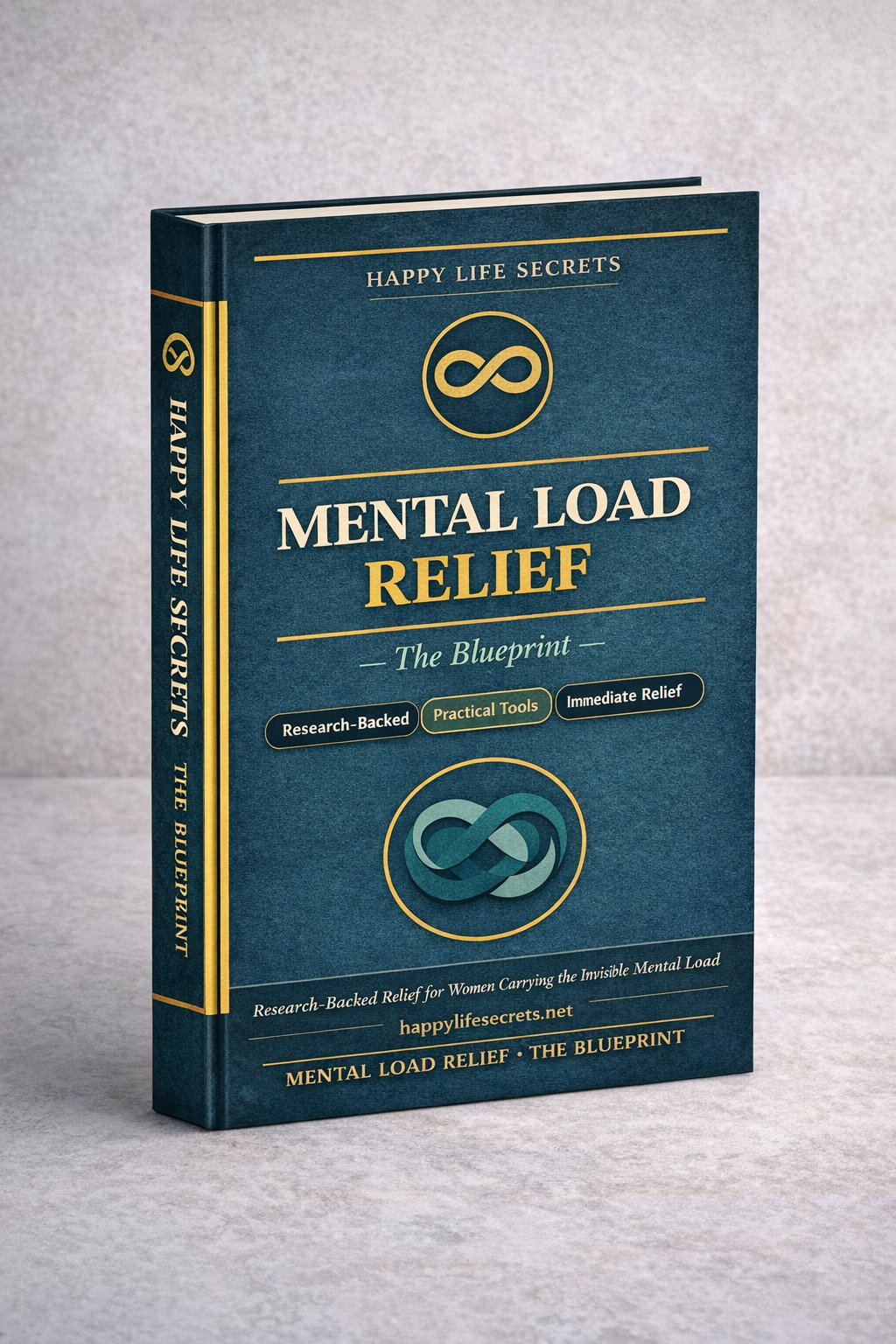
You're Not Falling Behind. You're Carrying More Than Anyone Should Have to Hold Alone.
The Mental Load Relief Blueprint gives you the research-backed framework women 25–44 are quietly using to reclaim 2+ hours of mental space daily — without waiting for anyone else to notice how much you're managing.
Instant PDF delivery • Your privacy protected • Unsubscribe anytime
You're Not Overwhelmed Because You Can't Handle It.
You're Overwhelmed Because the Load Was Never Designed to Be Carried by One Person.
Research shows women make up to 35,000 decisions daily while managing invisible work nobody else sees — or names. Here's what that actually looks like from the inside.
You're the Only One Who Remembers Everything
Appointments, school events, grocery needs, everyone's schedules — that mental tab running 24/7 is real cognitive labor. Studies show invisible work creates 40% more mental fatigue than tasks anyone can actually see.
Making 100+ Decisions While Everyone Else Just... Lives
What's for dinner? Who needs what tomorrow? Did that get handled? You're absorbing the weight of these micro-decisions constantly — and research confirms that decision fatigue quietly steals your clarity and energy all day long.
Holding Everyone's Emotional Load Too
Their worries, moods, needs, and fears have somewhere to land — and that place is you. Data shows this emotional carrying costs women 700+ hours annually in unpaid mental labor that nobody else identifies as work.
Your Brain Won't Turn Off at Night
Even when you're exhausted, tomorrow's logistics replay the moment your head hits the pillow. Research directly links mental load to disrupted sleep — which means you wake up tired before the day even begins.
You're Everyone's Default for Everything
Every question, every problem, every decision comes to you first. You coordinate, anticipate, solve — the invisible architecture holding everything together. Research identifies being the default person as a primary predictor of burnout.
Generic "Self-Care" Was Never Designed for Your Reality
"Take a bath." "Just say no." None of it accounts for the fact that you're managing an entire household's cognitive life. The advice failed you — not the other way around. You needed a different kind of tool.
The Mental Load Relief Blueprint: A New Framework, Not More Advice
This isn't another collection of productivity tips that pretend your invisible labor doesn't exist. These are evidence-based strategies built around how cognitive and emotional load actually work — practical relief designed for real life, not an idealized one.
Identify Your Mental Load Type
Discover which of the five mental load patterns applies to you. Research shows targeted, specific strategies work 3x better than generic approaches — because not all invisible labor looks the same.
The Brain Dump Method That Actually Works
Reduce your daily decision load by up to 40% using cognitive offloading techniques designed for real life. Studies confirm that externalizing mental tabs creates immediate, measurable relief.
Sharing Mental Load — Not Just Tasks
Specific strategies for redistributing invisible labor without becoming the manager of your own delegation. Evidence shows even small shifts in load distribution produce noticeable, lasting relief.
Decision Fatigue Relief Protocol
Eliminate unnecessary decision points and automate your cognitive overhead. Research confirms that removing just 20 daily micro-decisions significantly improves mental clarity and available energy.
Boundary Scripts for Real Situations
Word-for-word language for setting limits without guilt or conflict. Data shows even one consistently held boundary reduces overwhelm and interrupts the default-person pattern over time.
The Bedtime Worry Spiral Protocol
Reduce nighttime mental rumination from 45 minutes to under 5 using the Worry Window Technique. Penn State research shows this approach cuts bedtime anxiety by 35% within two weeks.
The Permission You've Been Waiting For
Relief doesn't require anyone else to notice what you've been carrying first. Research shows self-validation is the essential first step — and this guide begins there, because that's where change actually starts.
Every Strategy Is Grounded in Research on Invisible Labor
Not wellness trends. Not anecdotes. Peer-reviewed data on cognitive load, decision fatigue, and emotional labor from leading psychology and behavioral science journals.
Why The Mental Load Relief Blueprint Works When Generic Advice Didn't
The strategies that failed you before weren't designed for cognitive labor. They were designed for task management. This is something different.
Built for What You're Actually Carrying
Designed specifically for cognitive overload from invisible labor — not generic stress tips that acknowledge your situation in the intro and then ignore it for the rest of the guide.
Fits Into Real Life, Not an Ideal One
Every strategy takes 5–10 minutes. Not because the strategies are small — because your time is real. Relief that only works when you have three free hours isn't relief.
100% Evidence-Based
Grounded in peer-reviewed research on invisible labor, decision fatigue, and emotional load — not trends, personal opinions, or one-size-fits-all advice that was never built for what you carry.
About Happy Life Secrets
I'm Herb, founder of Happy Life Secrets. For over a decade, I've researched the psychology of mental overwhelm, decision fatigue, and cognitive load — specifically studying what creates real, measurable relief for women managing multiple responsibilities and invisible labor nobody else names.
The Mental Load Relief Blueprint isn't built on personal anecdotes or wellness theories. Every strategy inside is grounded in peer-reviewed research from leading psychology journals and clinical studies on invisible labor and burnout.
These are the same evidence-based tools women are using right now to finally get relief from work nobody acknowledges — and to reclaim the mental space they've always deserved, without waiting for anyone else to step up first.
Download Your Free Blueprint Today
Stop carrying everyone's invisible labor alone. Get the complete, evidence-based guide for reducing decision fatigue, sharing the mental load, and finally feeling lighter — starting today.
Completely free. No credit card required. Instant PDF download.
Yes — Send Me the Free Blueprint NowInstant delivery • Your privacy protected • Evidence-based strategies • Unsubscribe anytime
------------------------
------------------------



-----------


-----------

-----------


HappyLifeSecrets.net
Copyright © 2010-2026
All Rights Reserved