
How
to Set Boundaries & Protect Your Energy – Practical
Assertiveness Training
Have you ever said “yes” when you desperately wanted to say “no”? Or found yourself drained after spending time with someone who constantly crosses the line? You’re not alone. For many women, learning how to set boundaries & protect your energy – practical assertiveness training – isn’t just about saying no. It’s about reclaiming your worth, preserving your peace, and choosing self-respect over people-pleasing.
Why
Women Struggle to Set Boundaries & Protect Their Energy
The journey of learning how to set boundaries & protect your energy – practical assertiveness training – often begins in childhood. Many women are taught to be agreeable, to avoid confrontation, and to put others' needs first. Over time, this conditioning can erode confidence and foster guilt when trying to stand up for oneself.
Rachel’s Story:
Rachel, a 33-year-old marketing executive and mother of two, spent years being the “go-to” person. “I thought being helpful made me a good person,” she recalls. “But slowly, I lost myself. I was tired all the time, anxious, and resentful.”
Rachel’s turning point came after a panic attack. Therapy introduced her to assertiveness training and the importance of energy protection. “Setting boundaries didn’t make me mean,” she says. “It saved me.”
How
to Set Boundaries & Protect Your Energy – Practical
Assertiveness Training Tips
Let’s dive into how to set boundaries & protect your energy – practical assertiveness training that’s actionable and empowering.
1. Understand What Boundaries Are (and Are Not)
Boundaries are the limits you set to protect your emotional, mental, and physical space. They are not punishments or ultimatums—they’re guidelines for healthy relationships.
Examples of boundaries:
“I won’t answer work emails after 7 PM.”
“I’m not available for emotional support 24/7.”
“I need 15 minutes of alone time after I get home.”
Knowing how to set boundaries & protect your energy – practical assertiveness training begins with clarity.
2.
Recognize the Signs You Need Boundaries
If you're constantly exhausted, feel taken for granted, or notice resentment building up, it's time. These are emotional alarm bells signaling that your boundaries are being ignored or nonexistent.
Key signs:
- Feeling overwhelmed after social interactions
- Avoiding certain people or situations
- Experiencing burnout or emotional fatigue
- When you ignore your need for boundaries, your energy is the first casualty.
3.
Communicate with Confidence
Assertiveness isn’t aggression. It’s calm, respectful, and clear communication. This is where practical assertiveness training truly shines.
Try these scripts:
“I’m not comfortable discussing that.”
“I can’t commit to this right now.”
“I value our friendship, but I need some space.”
Remember, “No” is a full sentence. Practice helps strengthen this assertive muscle.
4. Set Consequences Without Guilt
The next step in how to set boundaries & protect your energy – practical assertiveness training is learning to enforce them. A boundary without a consequence is just a suggestion.
Example: “If you continue to speak to me disrespectfully, I will end this conversation.” And then, follow through.
This isn’t about punishing the other person—it’s about protecting yourself.
5. Make Self-Care Non-Negotiable
Self-care isn’t selfish; it’s survival. Prioritize time for rest, hobbies, solitude, and mindfulness practices like journaling or guided meditation.
Helpful resource: [This article on the power of guided meditation for women's happiness](https://www.mindbodygreen.com/articles/guided-meditation-benefits-women) explains how carving out just 10 minutes a day can help women realign and recharge.
When your cup is full, you’re more equipped to protect your energy and uphold boundaries.
6. Address Guilt and People-Pleasing
Many women feel guilty when they start setting boundaries. That’s normal—but it’s also something to work through. You’re not being rude or difficult. You’re choosing authenticity and well-being over burnout and bitterness.
Affirm to yourself:
“I am allowed to protect my energy.”
“My needs are valid.”
“Saying no is an act of self-love.”
7. Surround Yourself with Supportive People
People who respect your boundaries will celebrate your growth. Those who don’t? They’ll push back—and that’s a reflection of them, not you.
Consider joining a women’s empowerment group or participating in online forums. Find safe spaces where boundary-setting is encouraged and modeled.
Recommended read: [This recent guide on emotional energy management](https://psychcentral.com/health/emotional-energy-management) offers additional tools for protecting your peace.
8. Reevaluate and Recalibrate Often
Boundaries evolve. What worked for you a year ago may not work today. Life changes, and so do your needs.
Use monthly self-check-ins:
"Am I feeling resentful?"
"Am I overcommitted?"
"Is someone consistently draining my energy?"
If the answer is yes, adjust accordingly.
Real
Women, Real Results: What Happens When You Set Boundaries
Jess, 39:
“I stopped saying yes to every school committee and started saying yes to myself. I now journal daily and feel like I’m finally living my life.”
Tasha, 28:
“After I ended a toxic friendship, I had space for people who actually uplift me. My anxiety dropped overnight.”
Melissa, 41:
“Learning how to set boundaries & protect your energy – practical assertiveness training – helped me reconnect with my children and myself.”
These are just a few voices in a growing movement of women reclaiming their energy, worth, and well-being.
Final
Thoughts: How to Set Boundaries & Protect Your Energy Is a
Journey
Setting boundaries isn’t a one-time act—it’s an ongoing process. The more you practice, the stronger your voice becomes. You deserve relationships where your needs are heard, your energy is honored, and your presence is respected.
If no one has told you today: You are worthy of peace. You are allowed to take up space. You are not responsible for other people’s comfort at the expense of your own well-being.
Instant delivery • No credit card required • Unsubscribe anytime
You're Not Falling Behind. You're Carrying More Than Anyone Should Have to Hold Alone.
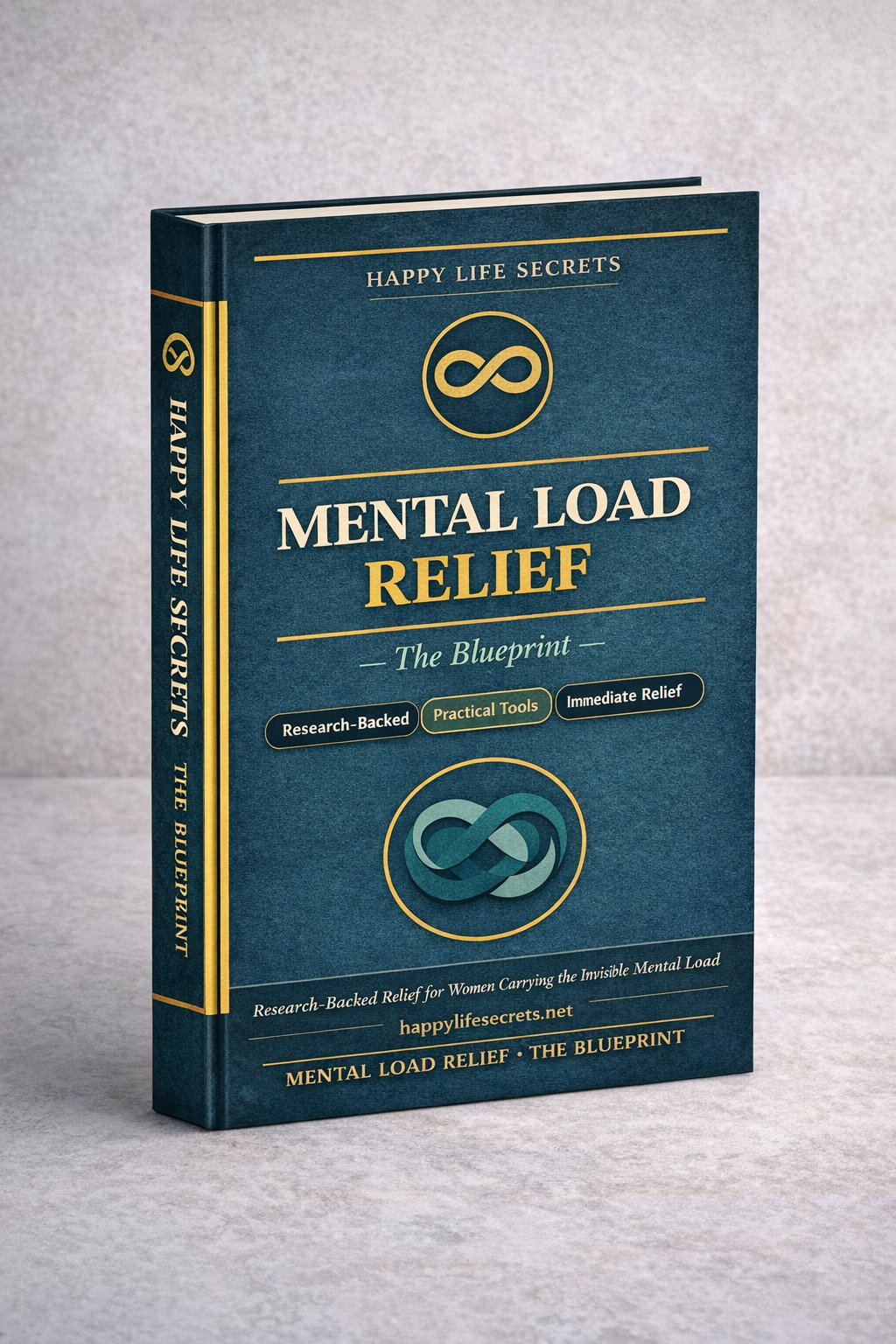
The Mental Load Relief Blueprint gives you the research-backed framework women 25–44 are quietly using to reclaim 2+ hours of mental space daily — without waiting for anyone else to notice how much you're managing.
Instant PDF delivery • Your privacy protected • Unsubscribe anytime
You're Not Overwhelmed Because You Can't Handle It.
You're Overwhelmed Because the Load Was Never Designed to Be Carried by One Person.
Research shows women make up to 35,000 decisions daily while managing invisible work nobody else sees — or names. Here's what that actually looks like from the inside.
You're the Only One Who Remembers Everything
Appointments, school events, grocery needs, everyone's schedules — that mental tab running 24/7 is real cognitive labor. Studies show invisible work creates 40% more mental fatigue than tasks anyone can actually see.
Making 100+ Decisions While Everyone Else Just... Lives
What's for dinner? Who needs what tomorrow? Did that get handled? You're absorbing the weight of these micro-decisions constantly — and research confirms that decision fatigue quietly steals your clarity and energy all day long.
Holding Everyone's Emotional Load Too
Their worries, moods, needs, and fears have somewhere to land — and that place is you. Data shows this emotional carrying costs women 700+ hours annually in unpaid mental labor that nobody else identifies as work.
Your Brain Won't Turn Off at Night
Even when you're exhausted, tomorrow's logistics replay the moment your head hits the pillow. Research directly links mental load to disrupted sleep — which means you wake up tired before the day even begins.
You're Everyone's Default for Everything
Every question, every problem, every decision comes to you first. You coordinate, anticipate, solve — the invisible architecture holding everything together. Research identifies being the default person as a primary predictor of burnout.
Generic "Self-Care" Was Never Designed for Your Reality
"Take a bath." "Just say no." None of it accounts for the fact that you're managing an entire household's cognitive life. The advice failed you — not the other way around. You needed a different kind of tool.
The Mental Load Relief Blueprint: A New Framework, Not More Advice
This isn't another collection of productivity tips that pretend your invisible labor doesn't exist. These are evidence-based strategies built around how cognitive and emotional load actually work — practical relief designed for real life, not an idealized one.
Identify Your Mental Load Type
Discover which of the five mental load patterns applies to you. Research shows targeted, specific strategies work 3x better than generic approaches — because not all invisible labor looks the same.
The Brain Dump Method That Actually Works
Reduce your daily decision load by up to 40% using cognitive offloading techniques designed for real life. Studies confirm that externalizing mental tabs creates immediate, measurable relief.
Sharing Mental Load — Not Just Tasks
Specific strategies for redistributing invisible labor without becoming the manager of your own delegation. Evidence shows even small shifts in load distribution produce noticeable, lasting relief.
Decision Fatigue Relief Protocol
Eliminate unnecessary decision points and automate your cognitive overhead. Research confirms that removing just 20 daily micro-decisions significantly improves mental clarity and available energy.
Boundary Scripts for Real Situations
Word-for-word language for setting limits without guilt or conflict. Data shows even one consistently held boundary reduces overwhelm and interrupts the default-person pattern over time.
The Bedtime Worry Spiral Protocol
Reduce nighttime mental rumination from 45 minutes to under 5 using the Worry Window Technique. Penn State research shows this approach cuts bedtime anxiety by 35% within two weeks.
The Permission You've Been Waiting For
Relief doesn't require anyone else to notice what you've been carrying first. Research shows self-validation is the essential first step — and this guide begins there, because that's where change actually starts.
Every Strategy Is Grounded in Research on Invisible Labor
Not wellness trends. Not anecdotes. Peer-reviewed data on cognitive load, decision fatigue, and emotional labor from leading psychology and behavioral science journals.
Why The Mental Load Relief Blueprint Works When Generic Advice Didn't
The strategies that failed you before weren't designed for cognitive labor. They were designed for task management. This is something different.
Built for What You're Actually Carrying
Designed specifically for cognitive overload from invisible labor — not generic stress tips that acknowledge your situation in the intro and then ignore it for the rest of the guide.
Fits Into Real Life, Not an Ideal One
Every strategy takes 5–10 minutes. Not because the strategies are small — because your time is real. Relief that only works when you have three free hours isn't relief.
100% Evidence-Based
Grounded in peer-reviewed research on invisible labor, decision fatigue, and emotional load — not trends, personal opinions, or one-size-fits-all advice that was never built for what you carry.
About Happy Life Secrets
I'm Herb, founder of Happy Life Secrets. For over a decade, I've researched the psychology of mental overwhelm, decision fatigue, and cognitive load — specifically studying what creates real, measurable relief for women managing multiple responsibilities and invisible labor nobody else names.
The Mental Load Relief Blueprint isn't built on personal anecdotes or wellness theories. Every strategy inside is grounded in peer-reviewed research from leading psychology journals and clinical studies on invisible labor and burnout.
These are the same evidence-based tools women are using right now to finally get relief from work nobody acknowledges — and to reclaim the mental space they've always deserved, without waiting for anyone else to step up first.
Download Your Free Blueprint Today
Stop carrying everyone's invisible labor alone. Get the complete, evidence-based guide for reducing decision fatigue, sharing the mental load, and finally feeling lighter — starting today.
Completely free. No credit card required. Instant PDF download.
Yes — Send Me the Free Blueprint NowInstant delivery • Your privacy protected • Evidence-based strategies • Unsubscribe anytime
------------------------
------------------------


-----------


-----------
-----------


HappyLifeSecrets.net
Copyright © 2010-2026
All Rights Reserved