
How
to Manage Personal Finances for Happiness and Stability
How
to Manage Personal Finances for a Happier You
Managing personal finances is about more than crunching numbers; it’s about creating a life where happiness and money coexist harmoniously. For many women, achieving this balance can feel overwhelming, especially while juggling work, family, and personal aspirations. But with the right strategies, managing personal finances becomes a tool for empowerment, stability, and joy.
The
Connection Between Happiness and Money
It’s often said that money can’t buy happiness, but financial stability can provide peace of mind and reduce stress—a crucial foundation for joy. By understanding the emotional aspects of spending and saving, you can align your financial habits with your values.
Personal Story: Meet Sarah, a 34-year-old teacher who struggled with debt after college. Through budgeting and prioritizing expenses, she not only paid off her loans but also saved for a dream trip to Italy. Sarah’s journey shows how managing personal finances can transform dreams into reality.
Practical
Tips to Manage Personal Finances
1. Start With a Financial Self-Assessment
- Why It Matters: Knowing where you stand financially is the first step to improvement.
- Actionable Step: List your income, expenses, debts, and savings. Tools like Mint or YNAB can simplify this process.
2. Create a Budget That Reflects Your Goals
- Key Elements:
- Fixed Expenses: Rent, utilities, loans.
- Variable Expenses: Groceries, entertainment.
- Savings: Aim for at least 20% of your income.
- Example: Use the 50/30/20 rule (50% needs, 30% wants, 20% savings).
3. Build an Emergency Fund
- Importance: An emergency fund can reduce financial anxiety and prepare you for unexpected expenses.
- Goal: Save 3-6 months’ worth of living expenses.
Happiness
and Money: Making Values-Based Decisions
One of the most empowering aspects of financial management is aligning your spending with your values. Ask yourself:
- Does this expense bring me joy?
- Is it necessary for my goals?
Personal Story: Emily’s Experience
Emily, a busy marketing manager, realized she was spending hundreds on subscriptions she rarely used. Redirecting those funds to a yoga retreat improved her well-being and deepened her self-care routine.
Strategies
for Long-Term Financial Growth
1. Invest Wisely
- Options: Stocks, mutual funds, and retirement accounts.
- Advice: Start small and consult a financial advisor if needed.
2. Tackle Debt Strategically
- Methods:
- Snowball Method: Pay off the smallest debt first.
- Avalanche Method: Focus on high-interest debts.
3. Increase Your Financial Literacy
- Resources:
- Books like *"Women & Money"* by Suze Orman.
- Online courses on platforms like Coursera.
Building
Confidence Through Financial Independence
Financial independence is a cornerstone of confidence. Whether it’s negotiating a raise, starting a side hustle, or cutting unnecessary expenses, each step toward independence builds self-esteem.
Inspirational Quote:
“A budget is telling your money where to go instead of wondering where it went.” – Dave Ramsey
Conclusion:
The Path to Financial Happiness
Learning how to manage personal finances is an ongoing journey, not a destination. By prioritizing happiness and money harmony, you can create a life that’s financially stable and emotionally fulfilling. Remember, every small step—whether it’s creating a budget or saving for an emergency—brings you closer to a future of confidence and joy.
Instant delivery • No credit card required • Unsubscribe anytime
You're Not Falling Behind. You're Carrying More Than Anyone Should Have to Hold Alone.
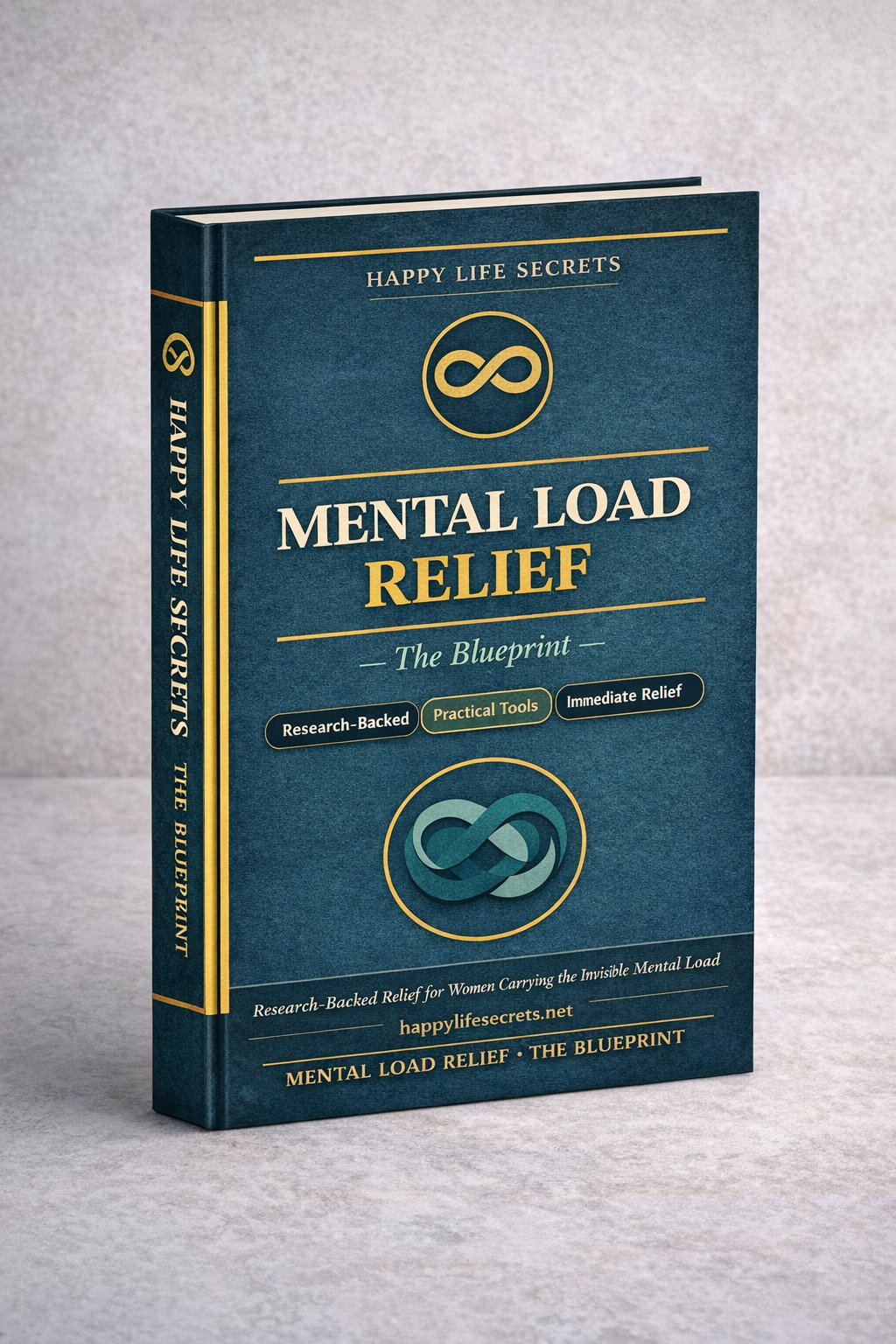
The Mental Load Relief Blueprint gives you the research-backed framework women 25–44 are quietly using to reclaim 2+ hours of mental space daily — without waiting for anyone else to notice how much you're managing.
Instant PDF delivery • Your privacy protected • Unsubscribe anytime
You're Not Overwhelmed Because You Can't Handle It.
You're Overwhelmed Because the Load Was Never Designed to Be Carried by One Person.
Research shows women make up to 35,000 decisions daily while managing invisible work nobody else sees — or names. Here's what that actually looks like from the inside.
You're the Only One Who Remembers Everything
Appointments, school events, grocery needs, everyone's schedules — that mental tab running 24/7 is real cognitive labor. Studies show invisible work creates 40% more mental fatigue than tasks anyone can actually see.
Making 100+ Decisions While Everyone Else Just... Lives
What's for dinner? Who needs what tomorrow? Did that get handled? You're absorbing the weight of these micro-decisions constantly — and research confirms that decision fatigue quietly steals your clarity and energy all day long.
Holding Everyone's Emotional Load Too
Their worries, moods, needs, and fears have somewhere to land — and that place is you. Data shows this emotional carrying costs women 700+ hours annually in unpaid mental labor that nobody else identifies as work.
Your Brain Won't Turn Off at Night
Even when you're exhausted, tomorrow's logistics replay the moment your head hits the pillow. Research directly links mental load to disrupted sleep — which means you wake up tired before the day even begins.
You're Everyone's Default for Everything
Every question, every problem, every decision comes to you first. You coordinate, anticipate, solve — the invisible architecture holding everything together. Research identifies being the default person as a primary predictor of burnout.
Generic "Self-Care" Was Never Designed for Your Reality
"Take a bath." "Just say no." None of it accounts for the fact that you're managing an entire household's cognitive life. The advice failed you — not the other way around. You needed a different kind of tool.
The Mental Load Relief Blueprint: A New Framework, Not More Advice
This isn't another collection of productivity tips that pretend your invisible labor doesn't exist. These are evidence-based strategies built around how cognitive and emotional load actually work — practical relief designed for real life, not an idealized one.
Identify Your Mental Load Type
Discover which of the five mental load patterns applies to you. Research shows targeted, specific strategies work 3x better than generic approaches — because not all invisible labor looks the same.
The Brain Dump Method That Actually Works
Reduce your daily decision load by up to 40% using cognitive offloading techniques designed for real life. Studies confirm that externalizing mental tabs creates immediate, measurable relief.
Sharing Mental Load — Not Just Tasks
Specific strategies for redistributing invisible labor without becoming the manager of your own delegation. Evidence shows even small shifts in load distribution produce noticeable, lasting relief.
Decision Fatigue Relief Protocol
Eliminate unnecessary decision points and automate your cognitive overhead. Research confirms that removing just 20 daily micro-decisions significantly improves mental clarity and available energy.
Boundary Scripts for Real Situations
Word-for-word language for setting limits without guilt or conflict. Data shows even one consistently held boundary reduces overwhelm and interrupts the default-person pattern over time.
The Bedtime Worry Spiral Protocol
Reduce nighttime mental rumination from 45 minutes to under 5 using the Worry Window Technique. Penn State research shows this approach cuts bedtime anxiety by 35% within two weeks.
The Permission You've Been Waiting For
Relief doesn't require anyone else to notice what you've been carrying first. Research shows self-validation is the essential first step — and this guide begins there, because that's where change actually starts.
Every Strategy Is Grounded in Research on Invisible Labor
Not wellness trends. Not anecdotes. Peer-reviewed data on cognitive load, decision fatigue, and emotional labor from leading psychology and behavioral science journals.
Why The Mental Load Relief Blueprint Works When Generic Advice Didn't
The strategies that failed you before weren't designed for cognitive labor. They were designed for task management. This is something different.
Built for What You're Actually Carrying
Designed specifically for cognitive overload from invisible labor — not generic stress tips that acknowledge your situation in the intro and then ignore it for the rest of the guide.
Fits Into Real Life, Not an Ideal One
Every strategy takes 5–10 minutes. Not because the strategies are small — because your time is real. Relief that only works when you have three free hours isn't relief.
100% Evidence-Based
Grounded in peer-reviewed research on invisible labor, decision fatigue, and emotional load — not trends, personal opinions, or one-size-fits-all advice that was never built for what you carry.
About Happy Life Secrets
I'm Herb, founder of Happy Life Secrets. For over a decade, I've researched the psychology of mental overwhelm, decision fatigue, and cognitive load — specifically studying what creates real, measurable relief for women managing multiple responsibilities and invisible labor nobody else names.
The Mental Load Relief Blueprint isn't built on personal anecdotes or wellness theories. Every strategy inside is grounded in peer-reviewed research from leading psychology journals and clinical studies on invisible labor and burnout.
These are the same evidence-based tools women are using right now to finally get relief from work nobody acknowledges — and to reclaim the mental space they've always deserved, without waiting for anyone else to step up first.
Download Your Free Blueprint Today
Stop carrying everyone's invisible labor alone. Get the complete, evidence-based guide for reducing decision fatigue, sharing the mental load, and finally feeling lighter — starting today.
Completely free. No credit card required. Instant PDF download.
Yes — Send Me the Free Blueprint NowInstant delivery • Your privacy protected • Evidence-based strategies • Unsubscribe anytime
------------------------
------------------------



-----------


-----------

-----------


HappyLifeSecrets.net
Copyright © 2010-2026
All Rights Reserved