
Healing Poetry Words Mend Broken Hearts: Your Path to Emotional Recovery
Dawn sat on her bedroom floor at 2 AM, tears streaming down her face after a devastating breakup. In her hands was a worn poetry collection her grandmother had given her years ago. As she read the verses aloud, something shifted. The words seemed to wrap around her pain like a warm blanket, acknowledging her hurt while gently guiding her toward hope. This is the moment
Dawn discovered that healing poetry words mend broken hearts—not through magic, but through the profound therapeutic power of carefully chosen language that speaks directly to our deepest wounds.
If you're navigating heartbreak, grief, or emotional trauma, you're not alone in seeking solace through written words. Poetry has served as emotional medicine for thousands of years, and modern research now confirms what poets have always known: the right words, arranged with intention and artistry, possess genuine healing properties that can accelerate emotional recovery and foster resilience.
Why Healing Poetry Words Mend Broken Hearts: The Science Behind the Verses
The therapeutic effects of poetry aren't just anecdotal—they're backed by neuroscience and psychology research. When we read or write poetry that resonates with our emotional state, several powerful processes occur in our brains.
According to recent research on expressive writing and emotional processing, engaging with emotionally resonant language activates the same neural pathways involved in processing traumatic memories, but in a safe, controlled environment. This allows us to reexamine painful experiences without becoming overwhelmed.
Dr. James Pennebaker's groundbreaking studies on expressive writing have shown that individuals who engage with therapeutic writing exercises experience reduced stress hormones, improved immune function, and decreased symptoms of depression and anxiety. Poetry takes this one step further by adding rhythm, metaphor, and imagery—elements that engage both hemispheres of the brain simultaneously.
When healing poetry words mend broken hearts, they work on multiple levels:
Emotional Validation: Poetry acknowledges pain without judgment, helping us feel seen and understood.
Cognitive Reframing: Metaphors in poetry help us view our experiences from new perspectives, breaking us free from rumination patterns.
Neurological Integration: The rhythm and sound patterns in poetry activate the brain's reward centers, releasing dopamine even while processing difficult emotions.
Memory Consolidation: Poetry helps us organize fragmented traumatic memories into coherent narratives, which is essential for healing.
The Before and After: Real Transformations Through Healing Poetry
Before: Emily, 34, couldn't move past her mother's death. She felt stuck in grief, unable to work or connect with friends. Sleep was impossible, and she found herself crying at random moments throughout the day.
After: Three months into a daily poetry practice—reading healing verses each morning and writing her own poems twice a week—Emily reported feeling "like myself again, but stronger." She returned to work, reconnected with her support network, and while she still missed her mother deeply, the grief no longer paralyzed her daily functioning.
Before: Marcus, 29, experienced crippling anxiety after a traumatic accident. He couldn't talk about what happened without panic attacks, and traditional talk therapy wasn't providing breakthrough results.
After: His therapist introduced poetry therapy as a complement to their sessions. Studies on poetry therapy for trauma recovery show significant improvements in PTSD symptoms. Marcus found he could write about his experience metaphorically, which eventually allowed him to process the trauma directly. Within six months, his panic attacks decreased by 80%.
How Healing Poetry Words Mend Broken Hearts: A Step-by-Step Guide
Step 1: Create Your Poetry Sanctuary (Week 1)
Set aside 15-20 minutes daily in a comfortable, quiet space. This isn't about perfection—it's about consistency. Keep a dedicated journal or notebook for this practice.
Action items:
- Choose a specific time each day (morning often works best)
- Gather materials: journal, favorite pen, comfortable seating
- Eliminate distractions: phone on silent, door closed
- Optional: soft background music or nature sounds
Step 2: Begin with Receptive Poetry Practice (Weeks 1-2)
Start by reading poetry written by others. This allows you to receive healing words before creating your own.
Recommended collections for heartbreak:
- "The Sun and Her Flowers" by Rupi Kaur
- "The Carrying" by Ada Limón
- "Citizen" by Claudia Rankine
- Classical poets: Rumi, Mary Oliver, Pablo Neruda
How to read therapeutically:
- Read slowly, aloud when possible
- Notice which lines make you feel something
- Reread passages that resonate
- Don't analyze—just experience
Step 3: Engage in Reflective Writing (Weeks 2-4)
After reading, spend 10 minutes writing whatever comes to mind. Don't worry about creating "good" poetry—this is emotional processing, not performance.
Prompts to explore:
- "My heart feels like..."
- "If my pain had a color, it would be..."
- "I am learning that..."
- "What I need right now is..."
Step 4: Transform Pain into Metaphor (Weeks 3-6)
According to research on metaphorical thinking and emotional regulation, converting literal pain into metaphorical language creates psychological distance, making overwhelming emotions more manageable.
Exercise: Take a painful feeling and find three metaphors for it.
- Example: Heartbreak as a shattered mirror, a winter storm, an empty room
Step 5: Incorporate Rhythm and Sound (Weeks 4-8)
The musicality of poetry activates the brain's limbic system, which processes emotions. You don't need to write in perfect meter—just notice the sound patterns.
Try this:
- Read your writing aloud
- Notice which words sound good together
- Experiment with repetition (repeating key phrases)
- Play with line breaks to create rhythm
Step 6: Share Selectively (Weeks 8+)
Healing poetry words mend broken hearts even more powerfully when shared with safe, supportive individuals. This doesn't mean publishing—it means letting trusted people witness your journey.
Safe sharing options:
- Poetry therapy groups (online or in-person)
- One trusted friend or family member
- Online poetry communities with anonymity options
- Therapist or counselor
Common Obstacles and How to Overcome Them
"I'm not a writer—I can't do this"
Healing poetry isn't about literary achievement. You don't need formal training or natural talent. If you can feel emotions and write words, you can engage with therapeutic poetry. Remember: healing poetry words mend broken hearts through authenticity, not artistry.
Solution: Start with "bad" poetry on purpose. Write the worst poem you can imagine. This removes pressure and often produces surprisingly honest, powerful work.
"I don't have time"
As busy professionals juggling careers, relationships, and family obligations, finding even 15 minutes feels impossible. Yet this is precisely why healing poetry works so well—it's highly efficient emotional processing.
Solution: Replace one daily scroll through social media with poetry time. Set a recurring phone reminder. Start with just 5 minutes if 15 feels overwhelming.
"It makes me feel worse at first"
When healing poetry words mend broken hearts, the initial stages can feel like reopening wounds. This is normal and temporary—you're bringing suppressed emotions to the surface where they can be processed and released.
Solution: Always end each session with a grounding exercise. Write one sentence about something you're grateful for, take five deep breaths, or read an uplifting poem. Create an emotional "landing pad" for after your practice.
"I don't know where to start"
The blank page is intimidating. Without structure, many people abandon poetry practice before it can help.
Solution: Use the prompts provided above. Buy a poetry prompt book. Copy a line from a poem you love and use it as your first line. Start with lists: "10 things my broken heart taught me."
The Long-Term Benefits: Beyond Initial Healing
While healing poetry words mend broken hearts in the immediate aftermath of pain, the benefits extend far beyond initial recovery.
Rebecca's Story: After using poetry to heal from divorce, Rebecca continued her practice for two years. "I started for heartbreak," she explains, "but I stayed because it made me a better human. I'm more patient with my kids, more present with friends, more creative at work. Poetry gave me a tool for processing any difficult emotion, not just romantic loss."
Research-Backed Long-Term Benefits:
- Enhanced Emotional Intelligence: Regular poetry practice improves ability to identify and articulate complex emotions
- Increased Resilience: Learning to transform pain into art builds psychological flexibility
- Deeper Relationships: The vulnerability practiced in poetry transfers to interpersonal connections
- Creative Problem-Solving: Metaphorical thinking enhances cognitive flexibility in all areas of life
- Sustained Mental Health Improvements: Studies show benefits persist years after initial intervention
Creating Your Personalized Healing Poetry Practice
Not everyone heals the same way. Customize your approach based on your personality and preferences:
For the Busy Professional:
- 10-minute morning sessions
- Commute poetry podcasts
- Lunch break haiku writing
- Weekend longer sessions for deeper work
For the Social Healer:
- Join a poetry therapy group
- Attend open mic nights (listening only at first)
- Partner with an accountability friend
- Share progress in supportive online communities
For the Private Processor:
- Solo journaling practice
- Private Instagram account for poetry
- Anonymous online platforms
- Therapist as sole witness
For the Creative Soul:
- Combine poetry with visual art
- Create illustrated poetry journals
- Experiment with different forms (haikus, sonnets, free verse)
- Attend poetry workshops
When to Seek Additional Support
While healing poetry words mend broken hearts for many people, poetry therapy works best as part of a comprehensive approach to emotional wellness. Seek professional help if you experience:
- Suicidal thoughts or self-harm urges
- Inability to function in daily life for extended periods
- Substance abuse as a coping mechanism
- Symptoms that worsen or don't improve after 8-12 weeks
- Trauma that feels too overwhelming to approach even metaphorically
Poetry therapy can complement—but shouldn't replace—professional mental health care for serious conditions.
Your Next Steps: Beginning Your Healing Journey Today
You don't need to wait until you feel "ready" to begin. Healing poetry words mend broken hearts most effectively when we start exactly where we are, in the midst of our pain.
Today:
- Find one poem online that speaks to your current emotional state
- Read it aloud three times
- Write three sentences about how it made you feel
This Week:
- Acquire a dedicated poetry journal
- Set a daily 15-minute appointment with yourself
- Read poetry for 10 minutes, write for 5 minutes
- Use the prompts provided earlier in this article
This Month:
- Establish a consistent routine
- Explore different poets and styles
- Write at least 10 poems (quality doesn't matter)
- Notice any shifts in your emotional state
Long-Term:
- Continue daily or weekly practice
- Consider joining a poetry community
- Share your work with safe people
- Use poetry as a lifelong tool for emotional processing
The Transformation Awaits
Healing poetry words mend broken hearts not by erasing pain, but by helping us metabolize it, integrate it, and ultimately transform it into wisdom and strength. Your broken heart isn't something to "fix" quickly—it's something to honor, understand, and gradually mend through the patient, powerful practice of therapeutic poetry.
The words you need already exist within you. Poetry simply provides the structure and permission to let them emerge. Your healing journey begins with a single word, a single line, a single moment of courage to face your pain with the companionship of language that understands.
Start today. Your future self—healed, resilient, and transformed—is waiting on the other side of this practice.
Instant delivery • No credit card required • Unsubscribe anytime
You're Not Falling Behind. You're Carrying More Than Anyone Should Have to Hold Alone.
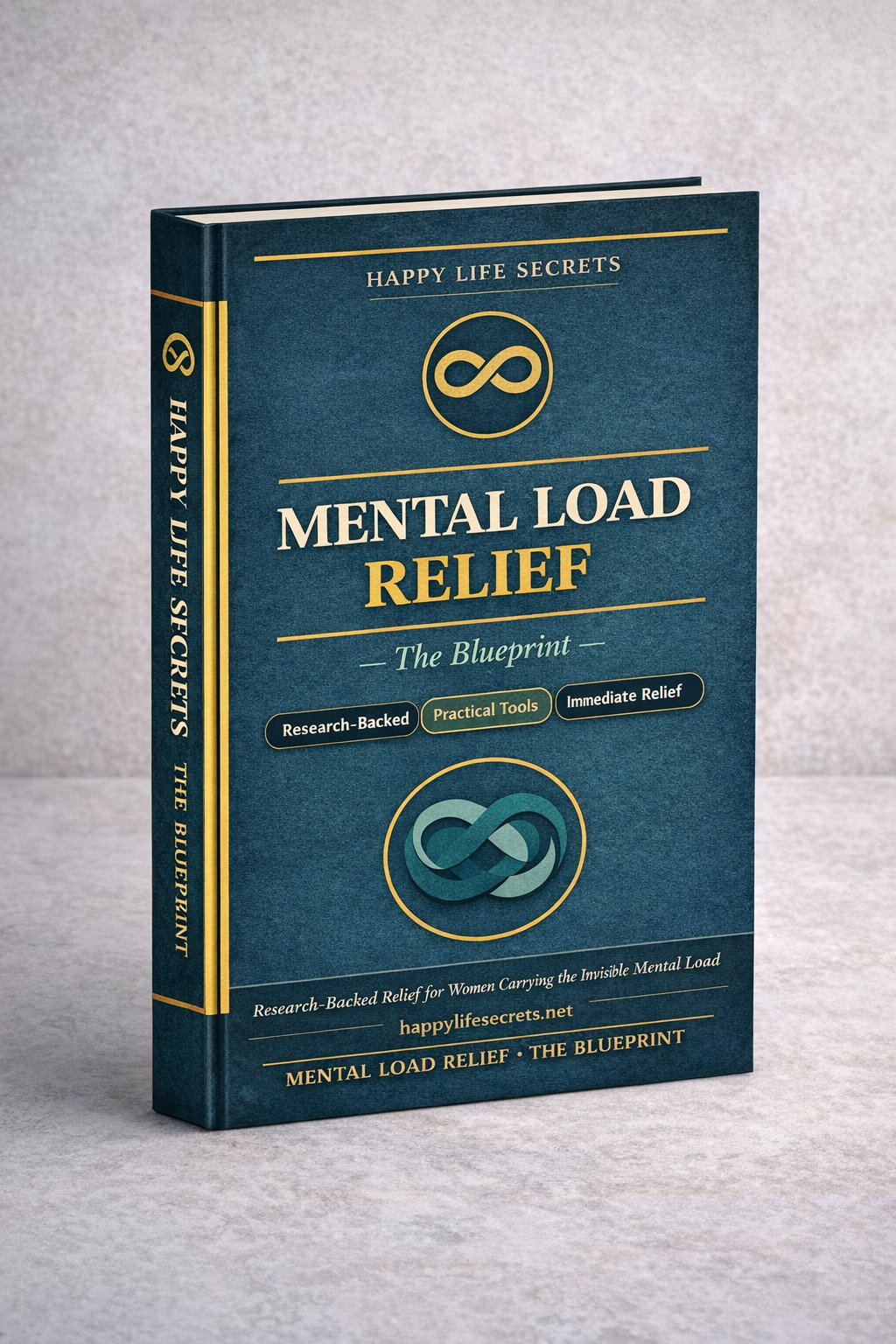
The Mental Load Relief Blueprint gives you the research-backed framework women 25–44 are quietly using to reclaim 2+ hours of mental space daily — without waiting for anyone else to notice how much you're managing.
Instant PDF delivery • Your privacy protected • Unsubscribe anytime
You're Not Overwhelmed Because You Can't Handle It.
You're Overwhelmed Because the Load Was Never Designed to Be Carried by One Person.
Research shows women make up to 35,000 decisions daily while managing invisible work nobody else sees — or names. Here's what that actually looks like from the inside.
You're the Only One Who Remembers Everything
Appointments, school events, grocery needs, everyone's schedules — that mental tab running 24/7 is real cognitive labor. Studies show invisible work creates 40% more mental fatigue than tasks anyone can actually see.
Making 100+ Decisions While Everyone Else Just... Lives
What's for dinner? Who needs what tomorrow? Did that get handled? You're absorbing the weight of these micro-decisions constantly — and research confirms that decision fatigue quietly steals your clarity and energy all day long.
Holding Everyone's Emotional Load Too
Their worries, moods, needs, and fears have somewhere to land — and that place is you. Data shows this emotional carrying costs women 700+ hours annually in unpaid mental labor that nobody else identifies as work.
Your Brain Won't Turn Off at Night
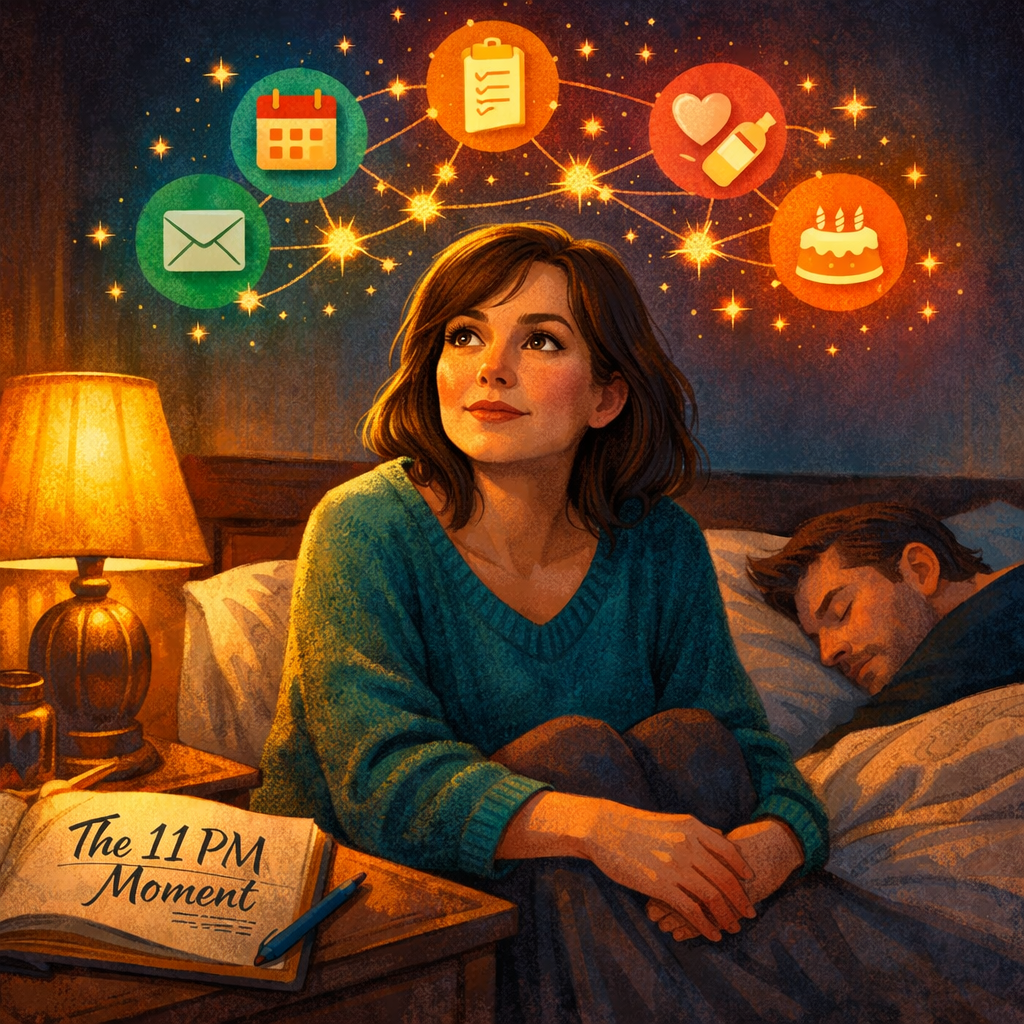
Even when you're exhausted, tomorrow's logistics replay the moment your head hits the pillow. Research directly links mental load to disrupted sleep — which means you wake up tired before the day even begins.
You're Everyone's Default for Everything
Every question, every problem, every decision comes to you first. You coordinate, anticipate, solve — the invisible architecture holding everything together. Research identifies being the default person as a primary predictor of burnout.
Generic "Self-Care" Was Never Designed for Your Reality
"Take a bath." "Just say no." None of it accounts for the fact that you're managing an entire household's cognitive life. The advice failed you — not the other way around. You needed a different kind of tool.
The Mental Load Relief Blueprint: A New Framework, Not More Advice
This isn't another collection of productivity tips that pretend your invisible labor doesn't exist. These are evidence-based strategies built around how cognitive and emotional load actually work — practical relief designed for real life, not an idealized one.
Identify Your Mental Load Type
Discover which of the five mental load patterns applies to you. Research shows targeted, specific strategies work 3x better than generic approaches — because not all invisible labor looks the same.
The Brain Dump Method That Actually Works
Reduce your daily decision load by up to 40% using cognitive offloading techniques designed for real life. Studies confirm that externalizing mental tabs creates immediate, measurable relief.
Sharing Mental Load — Not Just Tasks
Specific strategies for redistributing invisible labor without becoming the manager of your own delegation. Evidence shows even small shifts in load distribution produce noticeable, lasting relief.
Decision Fatigue Relief Protocol
Eliminate unnecessary decision points and automate your cognitive overhead. Research confirms that removing just 20 daily micro-decisions significantly improves mental clarity and available energy.
Boundary Scripts for Real Situations
Word-for-word language for setting limits without guilt or conflict. Data shows even one consistently held boundary reduces overwhelm and interrupts the default-person pattern over time.
The Bedtime Worry Spiral Protocol
Reduce nighttime mental rumination from 45 minutes to under 5 using the Worry Window Technique. Penn State research shows this approach cuts bedtime anxiety by 35% within two weeks.
The Permission You've Been Waiting For
Relief doesn't require anyone else to notice what you've been carrying first. Research shows self-validation is the essential first step — and this guide begins there, because that's where change actually starts.
Every Strategy Is Grounded in Research on Invisible Labor
Not wellness trends. Not anecdotes. Peer-reviewed data on cognitive load, decision fatigue, and emotional labor from leading psychology and behavioral science journals.
Why The Mental Load Relief Blueprint Works When Generic Advice Didn't
The strategies that failed you before weren't designed for cognitive labor. They were designed for task management. This is something different.
Built for What You're Actually Carrying
Designed specifically for cognitive overload from invisible labor — not generic stress tips that acknowledge your situation in the intro and then ignore it for the rest of the guide.
Fits Into Real Life, Not an Ideal One
Every strategy takes 5–10 minutes. Not because the strategies are small — because your time is real. Relief that only works when you have three free hours isn't relief.
100% Evidence-Based
Grounded in peer-reviewed research on invisible labor, decision fatigue, and emotional load — not trends, personal opinions, or one-size-fits-all advice that was never built for what you carry.
About Happy Life Secrets
I'm Herb, founder of Happy Life Secrets. For over a decade, I've researched the psychology of mental overwhelm, decision fatigue, and cognitive load — specifically studying what creates real, measurable relief for women managing multiple responsibilities and invisible labor nobody else names.
The Mental Load Relief Blueprint isn't built on personal anecdotes or wellness theories. Every strategy inside is grounded in peer-reviewed research from leading psychology journals and clinical studies on invisible labor and burnout.
These are the same evidence-based tools women are using right now to finally get relief from work nobody acknowledges — and to reclaim the mental space they've always deserved, without waiting for anyone else to step up first.
Download Your Free Blueprint Today
Stop carrying everyone's invisible labor alone. Get the complete, evidence-based guide for reducing decision fatigue, sharing the mental load, and finally feeling lighter — starting today.
Completely free. No credit card required. Instant PDF download.
Yes — Send Me the Free Blueprint NowInstant delivery • Your privacy protected • Evidence-based strategies • Unsubscribe anytime
------------------------
------------------------

-----------


-----------
-----------


HappyLifeSecrets.net
Copyright © 2010-2026
All Rights Reserved