
Finding Happiness at Work When You Feel Career Stuck at 35
When Career Dreams Feel Like Distant Memories: Sarah's Story of Rediscovering Happiness at Work Career Stuck 35
Sarah stared at her computer screen, the familiar weight of Monday morning dread settling in her chest. At 35, she had everything she thought she wanted—a stable marketing position, decent salary, and respected title. Yet here she was, feeling completely happiness at work career stuck 35, wondering how she'd ended up in this professional limbo.
"I used to be so passionate about my work," Sarah confides during our conversation. "But somewhere between climbing the corporate ladder and managing life's responsibilities, I lost that spark. I felt trapped, like I was just going through the motions every day."
Sarah's story resonates with countless women navigating the complex terrain of mid-career transitions. The period around 35 often brings a unique set of challenges—established in careers yet questioning direction, balancing family responsibilities while craving personal growth, and facing the reality that professional dreams may need recalibration.
The Hidden Struggles of Finding Happiness at Work Career Stuck
Research shows that career satisfaction often dips during the mid-thirties, particularly for women juggling multiple life roles. The phenomenon of feeling happiness at work career stuck 35 isn't just about job dissatisfaction—it's about identity, purpose, and the complex interplay between personal and professional fulfillment.
Dr. Elena Rodriguez, a workplace psychologist specializing in women's career development, explains: "Women at 35 often face what I call the 'achievement paradox.' They've worked hard to establish themselves professionally, but external pressures and internal expectations can create a sense of being stuck, even when they appear successful from the outside."
This stuckness manifests in various ways: feeling undervalued despite achievements, experiencing imposter syndrome, struggling with work-life integration, or simply feeling disconnected from work that once brought joy. The challenge becomes finding happiness at work career stuck 35 while navigating these complex emotions and practical constraints.
Redefining Success on Your Own Terms for Happiness at Work Career Stuck 35
Maria, a former finance executive turned life coach, knows this journey intimately. After feeling happiness at work career stuck 35 for nearly two years, she made a radical decision to redefine what success meant to her.
"I realized I'd been chasing someone else's definition of achievement," Maria reflects. "I was measuring my worth by external markers—salary, title, corner office—but I wasn't measuring joy, impact, or personal fulfillment."
Maria's transformation began with honest self-reflection. She started journaling about what truly energized her at work, identifying tasks that felt meaningful versus those that drained her spirit. This practice helped her recognize that her passion lay in mentoring younger colleagues and developing training programs—activities that weren't part of her official job description.
The key insight from Maria's journey is that overcoming happiness at work career stuck 35 often requires internal work before external changes. This means examining deeply held beliefs about success, career progression, and personal worth.
Micro-Changes That Create Macro Impact for Happiness at Work Career Stuck 35
Not every solution to feeling happiness at work career stuck 35 requires dramatic career pivots. Sometimes, small strategic changes within existing roles can reignite passion and purpose.
Jennifer, a software project manager, discovered this approach when she felt trapped in her role at 35. Instead of leaving her company, she initiated conversations with her manager about incorporating more creative problem-solving into her projects. She volunteered for cross-departmental initiatives and started a monthly innovation lunch series.
"I didn't change jobs, but I changed how I approached my job," Jennifer explains. "I took ownership of creating the experiences I wanted rather than waiting for them to be handed to me."
These micro-changes included:
- Seeking stretch assignments that aligned with her interests
- Building relationships across different departments
- Proposing solutions to problems she observed
- Dedicating time to learning new skills relevant to her field
- Mentoring junior team members
The cumulative effect of these small changes significantly improved her sense of agency and engagement, proving that addressing happiness at work career stuck 35 doesn't always require major upheaval.
The Power of Purpose-Driven Projects for Happiness at Work Career Stuck 35
Research consistently shows that having a sense of purpose significantly impacts job satisfaction and overall well-being. For women feeling happiness at work career stuck 35, identifying or creating purpose-driven elements within their current roles can be transformative.
Amanda, a human resources director, experienced this firsthand when she began feeling disconnected from her work. Rather than leaving, she proposed launching a women's leadership development program within her organization.
"That project gave me something to be passionate about again," Amanda shares. "It connected my work to my values and allowed me to make a meaningful impact on other women's careers."
The program not only revitalized Amanda's engagement but also enhanced her professional reputation and opened new advancement opportunities. Her experience illustrates how addressing happiness at work career stuck 35 can involve creating new purpose within existing structures.
Building Strategic Networks to Combat Happiness at Work Career Stuck 35
Isolation often exacerbates feelings of being happiness at work career stuck 35. Many women in mid-career find themselves caught between entry-level networking groups and senior executive circles, feeling like they don't quite fit anywhere.
Lisa, a marketing director, addressed this challenge by starting an informal meetup group for women in similar career stages. The group met monthly to discuss professional challenges, share opportunities, and provide mutual support.
"Having that community changed everything," Lisa explains. "I realized I wasn't alone in feeling stuck, and hearing how other women navigated similar challenges gave me new perspectives and strategies."
The group became a catalyst for several members' career breakthroughs. Through these connections, Lisa eventually transitioned to a role that better aligned with her values and offered greater growth potential.
Skill Development as a Path Through Happiness at Work Career Stuck 35
Sometimes feeling happiness at work career stuck 35 stems from a skills gap or lack of confidence in emerging areas. The rapidly changing professional landscape can leave mid-career professionals feeling outdated or unprepared for new opportunities.
Rachel, a communications manager, felt this acutely when digital marketing began dominating her field. At 35, she worried she was too behind to catch up and too established to start over.
Instead of accepting this limitation, Rachel created a systematic learning plan. She allocated early morning hours to online courses, joined professional development groups, and sought mentorship from younger colleagues who were digital natives.
"I had to swallow my pride and admit I had learning gaps," Rachel admits. "But once I started actively addressing them, I felt more confident and excited about my career prospects again."
Within 18 months, Rachel had developed significant digital marketing expertise and was promoted to lead her company's integrated marketing efforts. Her story demonstrates how proactive skill development can be a powerful antidote to feeling happiness at work career stuck 35.
The Role of Life Balance in Happiness at Work Career Stuck 35
Mid-career often coincides with peak family responsibilities, making work-life integration particularly challenging. Many women report that feeling happiness at work career stuck 35 is intensified by guilt about prioritizing career advancement when family needs are high.
Dr. Rodriguez notes: "The solution isn't perfect balance—it's integration and intentionality. Women need to give themselves permission to pursue professional fulfillment while honoring their other life roles."
This might involve:
- Negotiating flexible work arrangements that support both career growth and family needs
- Setting clear boundaries around work hours and family time
- Seeking roles that offer growth potential without excessive travel or overtime demands
- Building support systems that enable pursuit of professional opportunities
Creating Your Personal Action Plan for Happiness at Work Career Stuck 35
Moving beyond feeling happiness at work career stuck 35 requires intentional action. Here's a framework for creating your personal breakthrough plan:
Phase 1: Assessment and Clarity
- Identify specific aspects of work that feel unfulfilling
- Clarify personal values and how they align with current role
- Assess skills, strengths, and areas for development
- Evaluate external constraints and opportunities
Phase 2: Strategic Experimentation
- Test micro-changes within current role
- Explore purpose-driven projects or initiatives
- Build relationships with inspiring colleagues and mentors
- Pursue relevant skill development opportunities
Phase 3: Implementation and Growth
- Make concrete changes based on experimentation results
- Advocate for advancement opportunities or role modifications
- Consider strategic career moves if internal changes aren't sufficient
- Maintain momentum through continuous learning and networking
The Ripple Effects of Overcoming Happiness at Work Career Stuck 35
When women successfully navigate mid-career transitions, the impact extends beyond individual satisfaction. They become role models for younger colleagues, contribute more meaningfully to their organizations, and create positive change in their professional communities.
Sarah, whose story opened this article, eventually transitioned to a role that combined her marketing expertise with her passion for social impact. She now leads marketing for a nonprofit organization and reports feeling more energized about work than she has in years.
"I learned that being stuck was actually a signal that I was ready for growth," Sarah reflects. "The discomfort pushed me to make changes I'd been afraid to make before."
Moving Forward: Your Journey Beyond Happiness at Work Career Stuck 35
Feeling happiness at work career stuck 35 is not a permanent condition—it's a temporary state that signals readiness for growth and change. The key is approaching this challenge with curiosity rather than judgment, strategy rather than panic, and patience rather than desperation.
Remember that career fulfillment at this life stage looks different than it did in your twenties. Success might mean impact over income, flexibility over prestige, or purpose over traditional advancement. The goal isn't to recapture past enthusiasm but to create new forms of professional satisfaction that honor who you've become and where you're heading.
Your career is not a sprint with a fixed finish line—it's a marathon with multiple phases, each offering unique opportunities for growth, contribution, and fulfillment. Feeling happiness at work career stuck 35 might actually be the beginning of your most meaningful professional chapter.
The women whose stories illuminate this article all share one common thread: they refused to accept stuckness as permanent. They took ownership of their professional satisfaction and created the changes necessary to thrive. You can do the same.
Your career renaissance awaits. The question isn't whether you can overcome feeling happiness at work career stuck 35—it's what amazing things you'll accomplish once you do.
Instant delivery • No credit card required • Unsubscribe anytime
You're Not Falling Behind. You're Carrying More Than Anyone Should Have to Hold Alone.
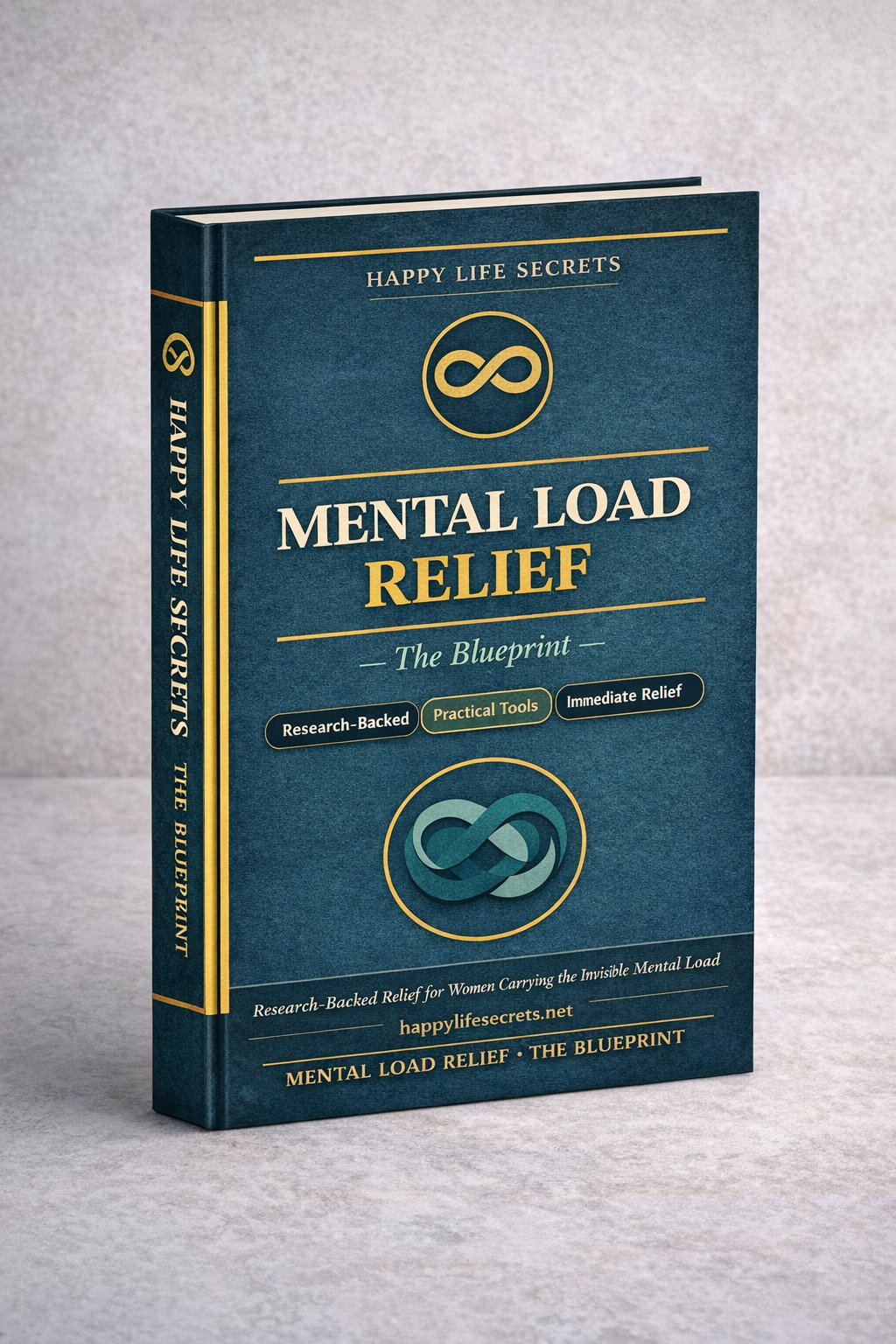
The Mental Load Relief Blueprint gives you the research-backed framework women 25–44 are quietly using to reclaim 2+ hours of mental space daily — without waiting for anyone else to notice how much you're managing.
Instant PDF delivery • Your privacy protected • Unsubscribe anytime
You're Not Overwhelmed Because You Can't Handle It.
You're Overwhelmed Because the Load Was Never Designed to Be Carried by One Person.
Research shows women make up to 35,000 decisions daily while managing invisible work nobody else sees — or names. Here's what that actually looks like from the inside.
You're the Only One Who Remembers Everything
Appointments, school events, grocery needs, everyone's schedules — that mental tab running 24/7 is real cognitive labor. Studies show invisible work creates 40% more mental fatigue than tasks anyone can actually see.
Making 100+ Decisions While Everyone Else Just... Lives
What's for dinner? Who needs what tomorrow? Did that get handled? You're absorbing the weight of these micro-decisions constantly — and research confirms that decision fatigue quietly steals your clarity and energy all day long.
Holding Everyone's Emotional Load Too
Their worries, moods, needs, and fears have somewhere to land — and that place is you. Data shows this emotional carrying costs women 700+ hours annually in unpaid mental labor that nobody else identifies as work.
Your Brain Won't Turn Off at Night
Even when you're exhausted, tomorrow's logistics replay the moment your head hits the pillow. Research directly links mental load to disrupted sleep — which means you wake up tired before the day even begins.
You're Everyone's Default for Everything
Every question, every problem, every decision comes to you first. You coordinate, anticipate, solve — the invisible architecture holding everything together. Research identifies being the default person as a primary predictor of burnout.
Generic "Self-Care" Was Never Designed for Your Reality
"Take a bath." "Just say no." None of it accounts for the fact that you're managing an entire household's cognitive life. The advice failed you — not the other way around. You needed a different kind of tool.
The Mental Load Relief Blueprint: A New Framework, Not More Advice
This isn't another collection of productivity tips that pretend your invisible labor doesn't exist. These are evidence-based strategies built around how cognitive and emotional load actually work — practical relief designed for real life, not an idealized one.
Identify Your Mental Load Type
Discover which of the five mental load patterns applies to you. Research shows targeted, specific strategies work 3x better than generic approaches — because not all invisible labor looks the same.
The Brain Dump Method That Actually Works
Reduce your daily decision load by up to 40% using cognitive offloading techniques designed for real life. Studies confirm that externalizing mental tabs creates immediate, measurable relief.
Sharing Mental Load — Not Just Tasks
Specific strategies for redistributing invisible labor without becoming the manager of your own delegation. Evidence shows even small shifts in load distribution produce noticeable, lasting relief.
Decision Fatigue Relief Protocol
Eliminate unnecessary decision points and automate your cognitive overhead. Research confirms that removing just 20 daily micro-decisions significantly improves mental clarity and available energy.
Boundary Scripts for Real Situations
Word-for-word language for setting limits without guilt or conflict. Data shows even one consistently held boundary reduces overwhelm and interrupts the default-person pattern over time.
The Bedtime Worry Spiral Protocol
Reduce nighttime mental rumination from 45 minutes to under 5 using the Worry Window Technique. Penn State research shows this approach cuts bedtime anxiety by 35% within two weeks.
The Permission You've Been Waiting For
Relief doesn't require anyone else to notice what you've been carrying first. Research shows self-validation is the essential first step — and this guide begins there, because that's where change actually starts.
Every Strategy Is Grounded in Research on Invisible Labor
Not wellness trends. Not anecdotes. Peer-reviewed data on cognitive load, decision fatigue, and emotional labor from leading psychology and behavioral science journals.
Why The Mental Load Relief Blueprint Works When Generic Advice Didn't
The strategies that failed you before weren't designed for cognitive labor. They were designed for task management. This is something different.
Built for What You're Actually Carrying
Designed specifically for cognitive overload from invisible labor — not generic stress tips that acknowledge your situation in the intro and then ignore it for the rest of the guide.
Fits Into Real Life, Not an Ideal One
Every strategy takes 5–10 minutes. Not because the strategies are small — because your time is real. Relief that only works when you have three free hours isn't relief.
100% Evidence-Based
Grounded in peer-reviewed research on invisible labor, decision fatigue, and emotional load — not trends, personal opinions, or one-size-fits-all advice that was never built for what you carry.
About Happy Life Secrets
I'm Herb, founder of Happy Life Secrets. For over a decade, I've researched the psychology of mental overwhelm, decision fatigue, and cognitive load — specifically studying what creates real, measurable relief for women managing multiple responsibilities and invisible labor nobody else names.
The Mental Load Relief Blueprint isn't built on personal anecdotes or wellness theories. Every strategy inside is grounded in peer-reviewed research from leading psychology journals and clinical studies on invisible labor and burnout.
These are the same evidence-based tools women are using right now to finally get relief from work nobody acknowledges — and to reclaim the mental space they've always deserved, without waiting for anyone else to step up first.
Download Your Free Blueprint Today
Stop carrying everyone's invisible labor alone. Get the complete, evidence-based guide for reducing decision fatigue, sharing the mental load, and finally feeling lighter — starting today.
Completely free. No credit card required. Instant PDF download.
Yes — Send Me the Free Blueprint NowInstant delivery • Your privacy protected • Evidence-based strategies • Unsubscribe anytime
------------------------
------------------------



-----------


-----------

-----------


HappyLifeSecrets.net
Copyright © 2010-2026
All Rights Reserved