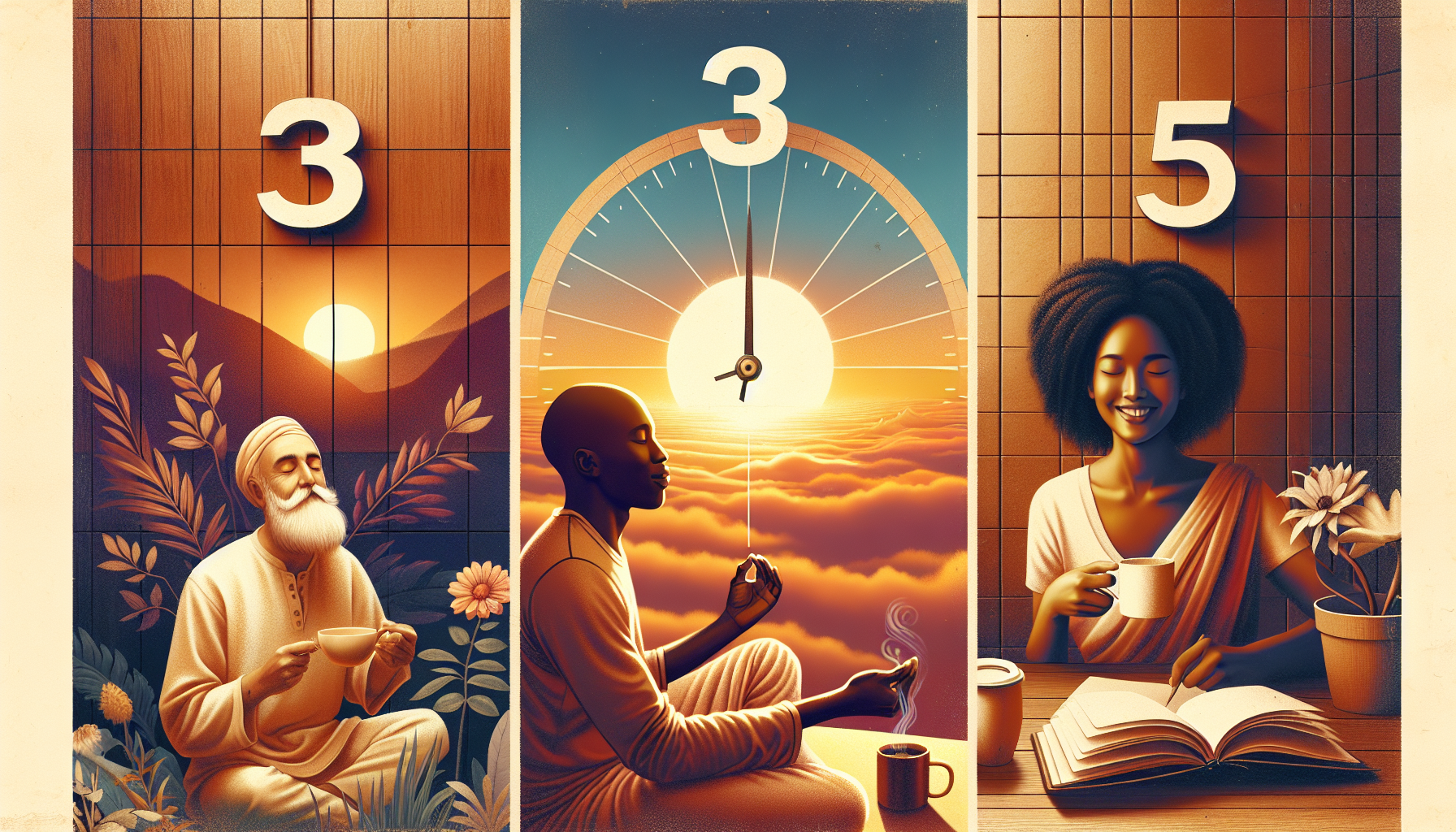
Daily Habits Happy People - 3 Minute Morning That Changes Everything
The Simple Practice That Transformed Sarah's Life
Sarah used to wake up every morning feeling like she was already behind. Between getting her kids ready for school, preparing for work meetings, and managing the endless mental load that comes with being a modern woman, happiness felt like a luxury she couldn't afford. Sound familiar?
That was until she discovered the daily habits happy people 3 minute morning practice that would completely transform her relationship with each new day. This isn't about adding another overwhelming routine to your already packed schedule – it's about discovering how just three minutes can shift your entire perspective and set you up for genuine happiness.
The Science Behind Daily Habits Happy People 3 Minute Morning Routines
Research from Harvard Medical School shows that happy people share specific daily habits that contribute to their overall wellbeing. The most successful of these habits? A consistent morning practice that takes less time than brewing your coffee.
Dr. Shawn Achor's groundbreaking research on positive psychology reveals that our brains are literally rewired when we engage in specific morning activities. The daily habits happy people 3 minute morning practice taps into this neuroplasticity, creating lasting changes in how we perceive and respond to our daily challenges.
What makes this approach particularly powerful for busy women is its simplicity. We're not talking about hour-long meditation sessions or elaborate self-care rituals. This is about three strategic minutes that compound into life-changing results.
Why the Daily Habits Happy People 3 Minute Morning Works for Busy Women
Emma, a working mother of two, was skeptical when she first heard about the daily habits happy people 3 minute morning approach. "I barely have time to brush my teeth some mornings," she laughed. But after implementing this practice for just two weeks, she noticed something remarkable: she felt more centered, more intentional, and surprisingly, more energized throughout her day.
The key lies in understanding that happiness isn't about having more time – it's about using the time we have more intentionally. The daily habits happy people 3 minute morning practice works because it:
- Activates your prefrontal cortex before stress hormones take over
- Creates a sense of accomplishment before the day begins
- Establishes a foundation of gratitude and intention
- Provides a consistent anchor point in chaotic schedules
The Three-Step Daily Habits Happy People 3 Minute Morning Framework
Step 1: The Gratitude Minute (60 seconds)
The first component of the daily habits happy people 3 minute morning practice involves writing down three specific things you're grateful for. But here's the crucial part – they must be different each day, and you must include why you're grateful for them.
Lisa, a marketing executive, shares: "I used to think gratitude was fluffy nonsense. But when I started being specific – like 'grateful for my daughter's laugh because it reminds me what pure joy sounds like' – it actually changed how I saw my entire day."
Research from UC Davis shows that people who practice specific gratitude exercises experience:
- 25% increase in happiness levels
- Better sleep quality
- Stronger immune systems
- Improved relationships
Step 2: The Intention Setting (60 seconds)
The second minute of your daily habits happy people 3 minute morning practice focuses on setting one clear intention for the day. Not a to-do list, not multiple goals – one single intention that will guide your decisions and energy.
Rachel, a busy entrepreneur, explains: "Instead of feeling scattered across fifteen priorities, I choose one intention like 'be present with my team' or 'approach challenges with curiosity.' It's like having a North Star for my day."
Step 3: The Visualization Victory (60 seconds)
The final minute involves visualizing yourself successfully living out your intention. This isn't wishful thinking – it's mental rehearsal that primes your brain for success.
Athletes have used visualization techniques for decades because they work. When you spend one minute seeing yourself handling challenges with grace, being present with your family, or approaching your work with enthusiasm, you're literally programming your brain for those outcomes.
Real Women, Real Results: Daily Habits Happy People 3 Minute Morning Success Stories
Maria's Transformation
Maria, a single mother working two jobs, felt like happiness was a privilege she couldn't afford. "I was surviving, not living," she admits. After just one month of the daily habits happy people 3 minute morning practice, she noticed profound changes.
"I still have the same challenges, but I handle them differently. Yesterday, when my car broke down, instead of spiraling into panic, I felt this calm confidence that I could figure it out. And I did."
Jennifer's Journey
Jennifer, a corporate lawyer, was burned out and considering leaving her career entirely. The daily habits happy people 3 minute morning practice didn't change her workload, but it changed her relationship with it.
"I realized I wasn't unhappy because of my job – I was unhappy because I had lost connection with what mattered to me. Those three minutes every morning remind me of my values and help me find meaning even in difficult days."
Overcoming Common Obstacles to Daily Habits Happy People 3 Minute Morning
"I Don't Have Three Minutes"
This is the most common objection, and it's understandable. But consider this: you probably spend more than three minutes scrolling social media or hitting the snooze button. The daily habits happy people 3 minute morning practice isn't about finding new time – it's about using existing time more intentionally.
Try this: Set your alarm three minutes earlier, or do your practice while your coffee brews. The key is consistency, not perfection.
"It Feels Selfish"
Many women struggle with guilt around taking time for themselves. But here's the truth: the daily habits happy people 3 minute morning practice makes you more available and present for everyone else in your life.
As flight attendants remind us, you must put on your own oxygen mask first. Those three minutes aren't selfish – they're essential.
"I Forget to Do It"
Habit formation requires environmental design. Link your daily habits happy people 3 minute morning practice to something you already do consistently. Keep a journal by your coffee maker, or use your phone's reminder function.
Advanced Daily Habits Happy People 3 Minute Morning Techniques
Once you've mastered the basic framework, you can enhance your daily habits happy people 3 minute morning practice with these advanced techniques:
The Theme Week Approach
Dedicate each week to a specific theme – relationships, career growth, health, creativity. Your gratitude, intention, and visualization all align with that week's focus.
The Seasonal Adaptation
Adjust your daily habits happy people 3 minute morning practice to align with seasonal changes and life phases. Winter might emphasize comfort and rest, while spring focuses on growth and new beginnings.
The Integration Method
As you become more comfortable with the practice, integrate elements throughout your day. Use traffic lights as gratitude reminders, or practice mini-visualizations before important meetings.
The Ripple Effect: How Daily Habits Happy People 3 Minute Morning Changes Everything
The most remarkable aspect of this practice isn't what happens in those three minutes – it's how those minutes influence the other 1,437 minutes of your day.
Women who consistently practice daily habits happy people 3 minute morning routines report:
- Improved decision-making abilities
- Better stress management
- Stronger relationships
- Increased sense of purpose
- Enhanced emotional resilience
- Greater life satisfaction
Dr. Barbara Fredrickson's research on positive emotions shows that small, consistent practices create "upward spirals" of wellbeing. Your daily habits happy people 3 minute morning practice becomes the catalyst for these positive changes.
Making Your Daily Habits Happy People 3 Minute Morning Sustainable
Sustainability is crucial for long-term success. Here are strategies that have worked for thousands of women:
Start Small and Build
Begin with just one minute if three feels overwhelming. The goal is consistency, not perfection. Many women find that once they experience the benefits, they naturally want to extend the practice.
Create Accountability
Share your commitment with a friend or join online communities of women practicing daily habits happy people 3 minute morning routines. Accountability increases success rates by over 60%.
Track Your Progress
Keep a simple log of how you feel after each practice and any positive changes you notice throughout the day. This reinforces the value and motivates continued practice.
The Long-Term Impact of Daily Habits Happy People 3 Minute Morning
Six months after starting her daily habits happy people 3 minute morning practice, Sarah – the woman we met at the beginning – reflects on her transformation: "I'm the same person with the same life, but everything feels different. I wake up with purpose instead of dread. I handle challenges with curiosity instead of panic. Those three minutes gave me my life back."
This isn't about becoming a different person – it's about becoming the best version of yourself. The daily habits happy people 3 minute morning practice doesn't promise to eliminate life's challenges, but it equips you with the mental and emotional tools to navigate them with grace, resilience, and yes, happiness.
The beautiful truth is that happiness isn't a destination – it's a daily choice supported by intentional practices. Your daily habits happy people 3 minute morning routine is your daily vote for the life you want to live.
Your three minutes start tomorrow morning.
Your transformed life starts then too.
Instant delivery • No credit card required • Unsubscribe anytime
You're Not Falling Behind. You're Carrying More Than Anyone Should Have to Hold Alone.
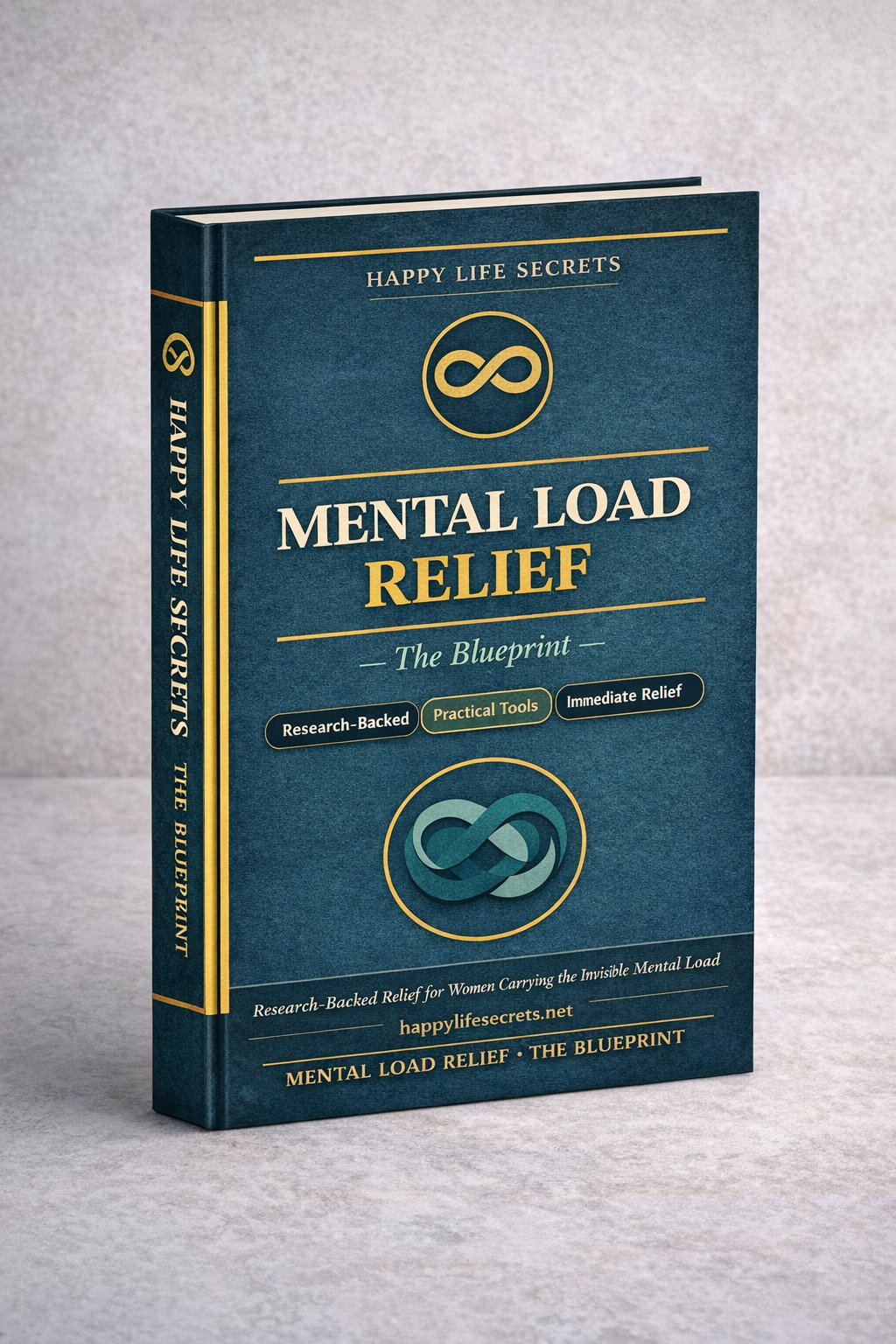
The Mental Load Relief Blueprint gives you the research-backed framework women 25–44 are quietly using to reclaim 2+ hours of mental space daily — without waiting for anyone else to notice how much you're managing.
Instant PDF delivery • Your privacy protected • Unsubscribe anytime
You're Not Overwhelmed Because You Can't Handle It.
You're Overwhelmed Because the Load Was Never Designed to Be Carried by One Person.
Research shows women make up to 35,000 decisions daily while managing invisible work nobody else sees — or names. Here's what that actually looks like from the inside.
You're the Only One Who Remembers Everything
Appointments, school events, grocery needs, everyone's schedules — that mental tab running 24/7 is real cognitive labor. Studies show invisible work creates 40% more mental fatigue than tasks anyone can actually see.
Making 100+ Decisions While Everyone Else Just... Lives
What's for dinner? Who needs what tomorrow? Did that get handled? You're absorbing the weight of these micro-decisions constantly — and research confirms that decision fatigue quietly steals your clarity and energy all day long.
Holding Everyone's Emotional Load Too
Their worries, moods, needs, and fears have somewhere to land — and that place is you. Data shows this emotional carrying costs women 700+ hours annually in unpaid mental labor that nobody else identifies as work.
Your Brain Won't Turn Off at Night
Even when you're exhausted, tomorrow's logistics replay the moment your head hits the pillow. Research directly links mental load to disrupted sleep — which means you wake up tired before the day even begins.
You're Everyone's Default for Everything
Every question, every problem, every decision comes to you first. You coordinate, anticipate, solve — the invisible architecture holding everything together. Research identifies being the default person as a primary predictor of burnout.
Generic "Self-Care" Was Never Designed for Your Reality
"Take a bath." "Just say no." None of it accounts for the fact that you're managing an entire household's cognitive life. The advice failed you — not the other way around. You needed a different kind of tool.
The Mental Load Relief Blueprint: A New Framework, Not More Advice
This isn't another collection of productivity tips that pretend your invisible labor doesn't exist. These are evidence-based strategies built around how cognitive and emotional load actually work — practical relief designed for real life, not an idealized one.
Identify Your Mental Load Type
Discover which of the five mental load patterns applies to you. Research shows targeted, specific strategies work 3x better than generic approaches — because not all invisible labor looks the same.
The Brain Dump Method That Actually Works
Reduce your daily decision load by up to 40% using cognitive offloading techniques designed for real life. Studies confirm that externalizing mental tabs creates immediate, measurable relief.
Sharing Mental Load — Not Just Tasks
Specific strategies for redistributing invisible labor without becoming the manager of your own delegation. Evidence shows even small shifts in load distribution produce noticeable, lasting relief.
Decision Fatigue Relief Protocol
Eliminate unnecessary decision points and automate your cognitive overhead. Research confirms that removing just 20 daily micro-decisions significantly improves mental clarity and available energy.
Boundary Scripts for Real Situations
Word-for-word language for setting limits without guilt or conflict. Data shows even one consistently held boundary reduces overwhelm and interrupts the default-person pattern over time.
The Bedtime Worry Spiral Protocol
Reduce nighttime mental rumination from 45 minutes to under 5 using the Worry Window Technique. Penn State research shows this approach cuts bedtime anxiety by 35% within two weeks.
The Permission You've Been Waiting For
Relief doesn't require anyone else to notice what you've been carrying first. Research shows self-validation is the essential first step — and this guide begins there, because that's where change actually starts.
Every Strategy Is Grounded in Research on Invisible Labor
Not wellness trends. Not anecdotes. Peer-reviewed data on cognitive load, decision fatigue, and emotional labor from leading psychology and behavioral science journals.
Why The Mental Load Relief Blueprint Works When Generic Advice Didn't
The strategies that failed you before weren't designed for cognitive labor. They were designed for task management. This is something different.
Built for What You're Actually Carrying
Designed specifically for cognitive overload from invisible labor — not generic stress tips that acknowledge your situation in the intro and then ignore it for the rest of the guide.
Fits Into Real Life, Not an Ideal One
Every strategy takes 5–10 minutes. Not because the strategies are small — because your time is real. Relief that only works when you have three free hours isn't relief.
100% Evidence-Based
Grounded in peer-reviewed research on invisible labor, decision fatigue, and emotional load — not trends, personal opinions, or one-size-fits-all advice that was never built for what you carry.
About Happy Life Secrets
I'm Herb, founder of Happy Life Secrets. For over a decade, I've researched the psychology of mental overwhelm, decision fatigue, and cognitive load — specifically studying what creates real, measurable relief for women managing multiple responsibilities and invisible labor nobody else names.
The Mental Load Relief Blueprint isn't built on personal anecdotes or wellness theories. Every strategy inside is grounded in peer-reviewed research from leading psychology journals and clinical studies on invisible labor and burnout.
These are the same evidence-based tools women are using right now to finally get relief from work nobody acknowledges — and to reclaim the mental space they've always deserved, without waiting for anyone else to step up first.
Download Your Free Blueprint Today
Stop carrying everyone's invisible labor alone. Get the complete, evidence-based guide for reducing decision fatigue, sharing the mental load, and finally feeling lighter — starting today.
Completely free. No credit card required. Instant PDF download.
Yes — Send Me the Free Blueprint NowInstant delivery • Your privacy protected • Evidence-based strategies • Unsubscribe anytime
------------------------
------------------------


-----------


-----------

-----------


HappyLifeSecrets.net
Copyright © 2010-2026
All Rights Reserved