
Daily Affirmations That Actually Change Your Reality: A Step-by-Step Guide to Transforming Your Life
Introduction: The Morning That Changed Everything
Wanda, a 34-year-old marketing manager, used to roll her eyes at affirmations. "Talking to myself in the mirror? That's not going to pay my bills or fix my relationships," she'd joke. But after six months of consistent practice, something remarkable happened. Her income increased by 40%, she landed her dream client, and her relationships deepened in ways she never imagined. The skeptic became a believer when she discovered that daily affirmations actually change your reality —not through magic, but through measurable shifts in brain function and behavior.
If you're reading this between managing work deadlines, family responsibilities, and the endless mental load of modern life, you might be wondering: "Can a simple practice really create tangible results?" The answer, backed by neuroscience and documented success stories, is yes. But only when done correctly.
Understanding How Daily Affirmations Actually Change Your Reality
The science behind affirmations reveals why they work. When you consistently repeat positive statements, you're not just thinking happy thoughts—you're rewiring neural pathways in your brain. Research published in Social Cognitive and Affective Neuroscience demonstrates that self-affirmation activates the brain's reward centers, the same regions associated with achieving actual goals.
Here's what happens in your brain during affirmation practice:
Neuroplasticity in Action: Your brain creates new neural connections based on repeated thoughts and behaviors. According to a recent study on neuroplasticity and habit formation, consistent mental practices can physically alter brain structure within 8-12 weeks. Each time you repeat an affirmation, you strengthen specific neural pathways that support that belief.
The Reticular Activating System (RAS): This bundle of nerves in your brainstem acts as a filter for incoming information. When you program your RAS through affirmations, you begin noticing opportunities and resources that were always present but invisible to you before. It's not manifestation magic—it's selective attention based on primed awareness.
Reduced Cortisol and Stress Response: Studies show that self-affirmation practices lower cortisol levels and reduce the brain's threat response. When you're less reactive to stress, you make better decisions, communicate more effectively, and take calculated risks that lead to real-world results.
The key difference between affirmations that work and those that don't lies in the implementation. Daily affirmations actually change your reality when they're specific, emotionally resonant, and connected to concrete actions.
The Critical Mistake Most People Make With Affirmations
Jessica, a 29-year-old entrepreneur, spent three months saying "I am wealthy" while checking her declining bank balance. Nothing changed. Her frustration is common because she made the universal affirmation mistake: creating a cognitive dissonance so large her brain rejected the statement entirely.
When your current reality and your affirmation are too far apart, your subconscious creates resistance. Your brain essentially says, "This is clearly false," and dismisses the entire practice.
The solution? Bridge statements that your mind can accept. Instead of "I am wealthy," Jessica shifted to "I am building wealth through consistent, smart financial decisions." This statement felt true because it focused on her actions rather than her current bank balance. Within six months, her revenue tripled—not because she wished for it, but because her affirmation directed her attention and energy toward wealth-building behaviors.
Step-by-Step: How to Make Daily Affirmations Actually Change Your Reality
Step 1: Identify Your Specific Reality Gap (15 minutes)
Grab a notebook and answer these questions:
- What specific aspect of your life do you want to change?
- What does success look like in concrete, measurable terms?
- What beliefs currently block you from that reality?
- What bridge belief could your mind accept right now?
Example: Rachel, 38, wanted to change her relationship reality. Her gap: "I am in a loving, committed relationship" versus "I'm single and haven't dated in two years." Her bridge: "I am becoming someone who attracts and nurtures healthy relationships."
Step 2: Craft Affirmations With Three Essential Elements (10 minutes)
Effective affirmations that create real change include:
- Present-tense process language: "I am becoming," "I am developing," "I am creating"
- Specific behavioral focus: What actions support this reality?
- Emotional resonance: How will you feel when this is true?
Template: "I am [present-tense verb] [specific outcome] through [concrete behavior], and this makes me feel [emotion]."
Example: "I am creating financial security through saving 20% of my income monthly, and this makes me feel empowered and calm."
Step 3: Create Your Morning Affirmation Ritual (5-10 minutes daily)
Research published in the Journal of Personality and Social Psychology shows that morning practices have stronger behavioral impact than evening ones. Your morning mental state sets the tone for daily decision-making.
The 5-Minute Reality-Shift Practice:
Minute 1: Deep breathing to activate your parasympathetic nervous system. This puts your brain in a receptive state.
Minutes 2-3: Speak your affirmations aloud while looking in a mirror. According to psychological research on self-perception, visual feedback strengthens belief formation. Say each affirmation three times with conviction.
Minutes 4-5: Visualization paired with physical sensation. Close your eyes and imagine your affirmed reality in vivid detail. What do you see, hear, and feel? Touch your heart center while visualizing to create embodied memory.
Step 4: Anchor Affirmations to Daily Actions (Throughout the day)
Daily affirmations actually change your reality when they're connected to behavior. This is where transformation accelerates beyond simple positive thinking.
Create "affirmation anchors" by pairing statements with specific actions:
- Morning coffee: "I am creating energy and focus for my priorities today" (while planning your top three tasks)
- Commute time: "I am developing professional confidence through consistent growth" (while listening to an industry podcast)
- Before difficult conversations: "I am communicating clearly and compassionately" (while taking three deep breaths)
Mark, a 41-year-old sales manager, anchored affirmations to every client call. "I am providing genuine value through understanding their needs." His close rate increased 35% in three months because the affirmation directed his attention to listening rather than pushing.
Step 5: Track Evidence of Reality Shifts (Weekly)
Your brain needs proof that change is happening. Every Sunday, spend 10 minutes documenting:
- Opportunities you noticed this week
- Actions you took aligned with your affirmations
- Results that support your new reality (however small)
- Shifts in how others respond to you
This evidence gathering trains your brain to recognize change, creating a positive feedback loop. According to recent research on progress monitoring and goal achievement, people who track evidence of change are 42% more likely to maintain behavioral shifts.
Step 6: Upgrade Your Affirmations Every 30 Days
As your reality shifts, your affirmations must evolve. What felt like a stretch 30 days ago should feel comfortable now. This indicates neural pathway strengthening—exactly what you want.
The 30-Day Upgrade Process:
- Review last month's affirmations
- Identify which feel completely natural now
- Create new bridge statements that stretch you slightly further
- Retire affirmations that no longer create emotional resonance
Real Results: When Daily Affirmations Actually Change Your Reality
Professional Transformation
Lauren, 36, used career affirmations for four months: "I am recognized as an expert in my field through sharing valuable insights." She started posting weekly on LinkedIn (action connected to affirmation), was invited to speak at two conferences, and received a job offer with 60% higher salary. The affirmation didn't magically create opportunities—it directed her attention and energy toward visibility-building behaviors.
Relationship Shifts
Michael, 32, focused on relationship affirmations: "I am creating deep connections through vulnerable, authentic communication." Within three months, his friendship circle expanded, his romantic relationship deepened, and coworkers began confiding in him. The affirmation changed his communication patterns, which changed how people experienced him.
Health and Wellness Changes
Diana, 40, struggled with consistency until she implemented: "I am honoring my body through movement and nourishment." She stopped focusing on weight loss and started noticing how different foods and activities made her feel. Six months later, she'd lost 30 pounds without dieting because her affirmation shifted her relationship with self-care from punishment to respect.
Common Obstacles and Solutions
Obstacle 1: "I Feel Ridiculous Saying These Things"
Solution: Start with written affirmations if speaking feels too vulnerable. Write them in a journal each morning. After two weeks, graduate to whispering them, then speaking at normal volume. Your comfort will increase as neural pathways strengthen.
Obstacle 2: "I Don't Have Time"
Solution: You don't need 30 minutes of meditation.
Daily affirmations actually change your reality in as little as 5 minutes when practiced consistently. Use existing transition moments: while brushing teeth, during your commute, or while making coffee.
Obstacle 3: "Nothing's Changing"
Solution: You're likely looking for dramatic external shifts while missing internal changes. Revisit your weekly evidence tracking. Are you thinking differently? Making different choices? Noticing different opportunities? External reality follows internal shifts, not the other way around.
Obstacle 4: "My Life Actually Got Harder"
Solution: This is actually a positive sign. When you affirm a new reality, your awareness expands. You notice problems that were always present but invisible. This temporary discomfort precedes breakthrough. Stay consistent for at least 90 days before evaluating effectiveness.
The Science of Sustained Change
Understanding why daily affirmations actually change your reality helps maintain motivation during challenging periods.
The 21/90 Rule: It takes 21 days to form a habit and 90 days to make it a lifestyle. Neuroscience research shows that sustained affirmation practice creates measurable brain changes by day 66. Most people quit between days 14-30, right before the neural rewiring accelerates.
Identity-Level Transformation: Psychologist James Clear explains that true change happens at the identity level, not the outcome level. Affirmations work because they shift identity: "I am someone who..." rather than "I want to..." This subtle distinction changes everything.
Environmental Programming: Your brain is constantly scanning for information that confirms your beliefs. When you consistently affirm a new reality, your RAS reprograms to seek confirming evidence. You begin noticing resources, people, and opportunities that support your affirmed identity.
Advanced Techniques for Maximum Impact
Technique 1: Affirmation Stacking
Combine affirmations with proven psychological principles:
- Visualization: See yourself living the affirmation
- Embodiment: Feel the emotions and physical sensations
- Action planning: Identify one concrete behavior that supports it
- Gratitude: Express appreciation for evidence it's already becoming true
Technique 2: Social Proof Integration
Share your affirmations with an accountability partner. Research shows that social commitment increases follow-through by 65%. When someone else knows your affirmed reality, you're more likely to behave consistently with it.
Technique 3: Environment Design
Place visual reminders of your affirmations throughout your environment:
- Phone lock screen
- Bathroom mirror sticky notes
- Computer desktop wallpaper
- Car dashboard reminder
Each visual cue triggers a micro-moment of affirmation practice, multiplying daily repetitions without additional time investment.
Creating Your Personalized Affirmation System
Week 1-2: Foundation Building
- Identify three priority life areas
- Craft one bridge affirmation for each
- Establish morning 5-minute practice
- Begin evidence tracking
Week 3-4: Integration and Anchoring
- Add affirmation anchors to daily activities
- Notice resistance patterns
- Adjust language for better resonance
- Increase to five affirmations total
Week 5-8: Deepening Practice
- Upgrade affirmations as comfort increases
- Add visualization and embodiment elements
- Share with accountability partner
- Document concrete results
Week 9-12: Reality Solidification
- Review and celebrate evidence of change
- Identify next-level affirmations
- Develop maintenance system
- Help others implement their practice
Conclusion: Your Reality Awaits
The question isn't whether daily affirmations actually change your reality—neuroscience and countless success stories confirm they do. The question is whether you'll commit to the consistent practice required for transformation.
Wanda, the skeptical marketing manager from our opening story, now teaches affirmation practice to her team. "I stopped trying to manifest a different life and started becoming a different person," she explains. "The life I wanted showed up when I became someone who could handle it."
Your reality shifts the moment you decide to intentionally direct your thoughts, emotions, and actions toward a specific identity. Affirmations aren't wishful thinking—they're neural reprogramming tools that work when used correctly.
Your next step: Set a timer for 15 minutes right now. Complete Step 1 from this guide. Identify your reality gap and craft your first bridge affirmation. Don't wait for motivation, inspiration, or the perfect moment. Your new reality begins with today's decision.
The life you're affirming is already possible. You're just becoming the person who lives it.
Instant delivery • No credit card required • Unsubscribe anytime
You're Not Falling Behind. You're Carrying More Than Anyone Should Have to Hold Alone.
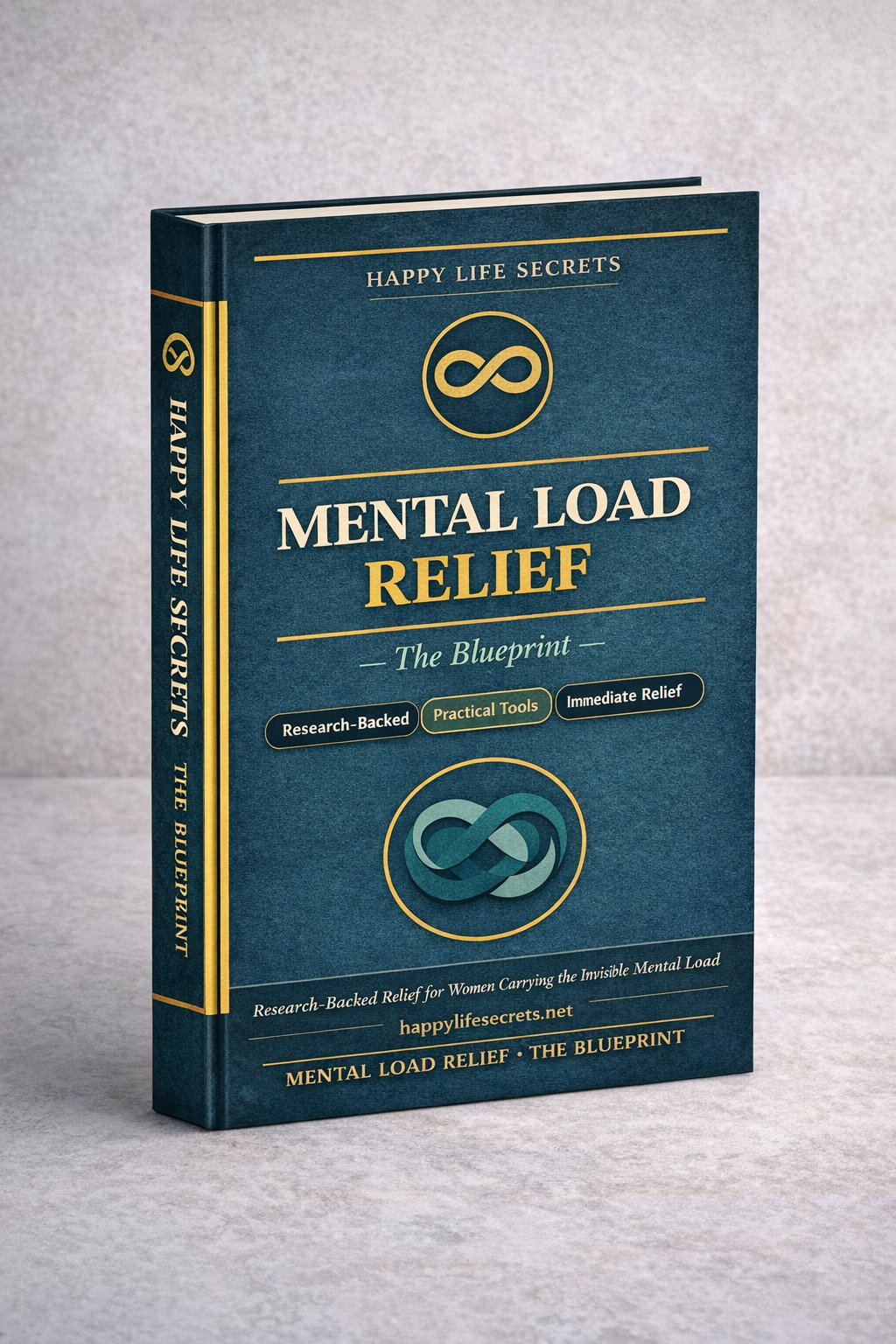
The Mental Load Relief Blueprint gives you the research-backed framework women 25–44 are quietly using to reclaim 2+ hours of mental space daily — without waiting for anyone else to notice how much you're managing.
Instant PDF delivery • Your privacy protected • Unsubscribe anytime
You're Not Overwhelmed Because You Can't Handle It.
You're Overwhelmed Because the Load Was Never Designed to Be Carried by One Person.
Research shows women make up to 35,000 decisions daily while managing invisible work nobody else sees — or names. Here's what that actually looks like from the inside.
You're the Only One Who Remembers Everything
Appointments, school events, grocery needs, everyone's schedules — that mental tab running 24/7 is real cognitive labor. Studies show invisible work creates 40% more mental fatigue than tasks anyone can actually see.
Making 100+ Decisions While Everyone Else Just... Lives
What's for dinner? Who needs what tomorrow? Did that get handled? You're absorbing the weight of these micro-decisions constantly — and research confirms that decision fatigue quietly steals your clarity and energy all day long.
Holding Everyone's Emotional Load Too
Their worries, moods, needs, and fears have somewhere to land — and that place is you. Data shows this emotional carrying costs women 700+ hours annually in unpaid mental labor that nobody else identifies as work.
Your Brain Won't Turn Off at Night
Even when you're exhausted, tomorrow's logistics replay the moment your head hits the pillow. Research directly links mental load to disrupted sleep — which means you wake up tired before the day even begins.
You're Everyone's Default for Everything
Every question, every problem, every decision comes to you first. You coordinate, anticipate, solve — the invisible architecture holding everything together. Research identifies being the default person as a primary predictor of burnout.
Generic "Self-Care" Was Never Designed for Your Reality
"Take a bath." "Just say no." None of it accounts for the fact that you're managing an entire household's cognitive life. The advice failed you — not the other way around. You needed a different kind of tool.
The Mental Load Relief Blueprint: A New Framework, Not More Advice
This isn't another collection of productivity tips that pretend your invisible labor doesn't exist. These are evidence-based strategies built around how cognitive and emotional load actually work — practical relief designed for real life, not an idealized one.
Identify Your Mental Load Type
Discover which of the five mental load patterns applies to you. Research shows targeted, specific strategies work 3x better than generic approaches — because not all invisible labor looks the same.
The Brain Dump Method That Actually Works
Reduce your daily decision load by up to 40% using cognitive offloading techniques designed for real life. Studies confirm that externalizing mental tabs creates immediate, measurable relief.
Sharing Mental Load — Not Just Tasks
Specific strategies for redistributing invisible labor without becoming the manager of your own delegation. Evidence shows even small shifts in load distribution produce noticeable, lasting relief.
Decision Fatigue Relief Protocol
Eliminate unnecessary decision points and automate your cognitive overhead. Research confirms that removing just 20 daily micro-decisions significantly improves mental clarity and available energy.
Boundary Scripts for Real Situations
Word-for-word language for setting limits without guilt or conflict. Data shows even one consistently held boundary reduces overwhelm and interrupts the default-person pattern over time.
The Bedtime Worry Spiral Protocol
Reduce nighttime mental rumination from 45 minutes to under 5 using the Worry Window Technique. Penn State research shows this approach cuts bedtime anxiety by 35% within two weeks.
The Permission You've Been Waiting For
Relief doesn't require anyone else to notice what you've been carrying first. Research shows self-validation is the essential first step — and this guide begins there, because that's where change actually starts.
Every Strategy Is Grounded in Research on Invisible Labor
Not wellness trends. Not anecdotes. Peer-reviewed data on cognitive load, decision fatigue, and emotional labor from leading psychology and behavioral science journals.
Why The Mental Load Relief Blueprint Works When Generic Advice Didn't
The strategies that failed you before weren't designed for cognitive labor. They were designed for task management. This is something different.
Built for What You're Actually Carrying
Designed specifically for cognitive overload from invisible labor — not generic stress tips that acknowledge your situation in the intro and then ignore it for the rest of the guide.
Fits Into Real Life, Not an Ideal One
Every strategy takes 5–10 minutes. Not because the strategies are small — because your time is real. Relief that only works when you have three free hours isn't relief.
100% Evidence-Based
Grounded in peer-reviewed research on invisible labor, decision fatigue, and emotional load — not trends, personal opinions, or one-size-fits-all advice that was never built for what you carry.
About Happy Life Secrets
I'm Herb, founder of Happy Life Secrets. For over a decade, I've researched the psychology of mental overwhelm, decision fatigue, and cognitive load — specifically studying what creates real, measurable relief for women managing multiple responsibilities and invisible labor nobody else names.
The Mental Load Relief Blueprint isn't built on personal anecdotes or wellness theories. Every strategy inside is grounded in peer-reviewed research from leading psychology journals and clinical studies on invisible labor and burnout.
These are the same evidence-based tools women are using right now to finally get relief from work nobody acknowledges — and to reclaim the mental space they've always deserved, without waiting for anyone else to step up first.
Download Your Free Blueprint Today
Stop carrying everyone's invisible labor alone. Get the complete, evidence-based guide for reducing decision fatigue, sharing the mental load, and finally feeling lighter — starting today.
Completely free. No credit card required. Instant PDF download.
Yes — Send Me the Free Blueprint NowInstant delivery • Your privacy protected • Evidence-based strategies • Unsubscribe anytime
------------------------
------------------------


-----------


-----------


-----------


HappyLifeSecrets.net
Copyright © 2010-2026
All Rights Reserved