
Are
Wealthy People Happier? Exploring Happiness and Money
Are Wealthy People Happier? Understanding the Connection Between Happiness and Money
Money and happiness—two forces that seem interconnected yet often elusive. It’s a question that has sparked debates for centuries: Are wealthy people happier? The answer isn’t as straightforward as it may seem. For women juggling careers, families, and personal aspirations, this question takes on a deeply personal tone.
Does financial stability guarantee happiness, or is it just one piece of a larger puzzle? Let’s explore the delicate relationship between wealth and happiness, unpacking insights, personal stories, and actionable advice that can transform how you view both.
Does Money Buy Happiness? A Complex Relationship
The phrase “money doesn’t buy happiness” often rings hollow for those grappling with financial insecurity. Research shows that financial stability can indeed provide a foundation for happiness by alleviating stress and fulfilling basic needs. However, beyond a certain point, the connection weakens.
According to a study published in PNAS (Proceedings of the National Academy of Sciences), happiness increases with income up to approximately $75,000 annually. Beyond that, emotional well-being plateaus, suggesting that wealth isn’t the sole driver of joy.
What Women Really Want: Financial Freedom or Fulfillment?
Women, especially in demanding roles, often value financial independence as a critical component of happiness. For example, Lisa, a 37-year-old entrepreneur, shares how achieving financial stability empowered her to pursue passions like travel and philanthropy.
“I used to think hitting six figures would solve all my problems,” Lisa admits. “But after a while, I realized my real happiness came from how I spent my time and who I shared it with, not the money itself.”
Key Takeaway: While financial freedom offers opportunities, true fulfillment often stems from meaningful relationships and purposeful living.
Happiness and Money: How to Strike a Balance
1. Understand What Happiness Means to You
Happiness is deeply personal. For some, it’s quality time with loved ones; for others, it’s achieving professional milestones or engaging in self-care routines like yoga and meditation.
2. Prioritize Experiences Over Possessions
Research from Cornell University reveals that investing in experiences—such as vacations or fitness retreats—yields greater happiness than buying material goods.
3. Use Wealth to Create Freedom
Wealth is most powerful when used to reclaim time and reduce stress. Outsourcing tasks, pursuing hobbies, or dedicating time to fitness and mental health can greatly enhance life satisfaction.
4. Invest in Self-Care
Self-care isn’t selfish; it’s essential. Products and services like therapy, fitness classes, and yoga not only enhance well-being but also foster resilience during stressful times.
Personal Stories: Women Finding Joy Beyond Wealth
Sophia’s
Story
Sophia,
a 42-year-old corporate executive, found herself burnt out despite
her six-figure salary. A yoga retreat helped her reconnect with
herself. “Money gave me the option to step away, but it was
self-discovery and mindfulness that truly brought me happiness,”
she shares.
Emily’s
Insight
Emily,
a 29-year-old fitness instructor, learned to budget for mental health
services after struggling with anxiety. “I might not be rich, but
prioritizing therapy has made me happier than I ever imagined,” she
says.
Practical Tips to Boost Happiness Without Breaking the Bank
1. Set Boundaries
Say “no” to tasks and expenses that drain your energy. Time is a finite resource, and preserving it is priceless.
2. Embrace Gratitude
Gratitude journaling can shift focus from what you lack to what you have, fostering a happier mindset.
3. Engage in Physical Activities
Fitness and yoga promote endorphin release, which naturally boosts happiness.
4. Seek Professional Help When Needed
Mental health professionals can provide tailored strategies for achieving emotional well-being.
Money, Happiness, and the Bigger Picture
While money can enhance happiness, it’s not a guarantee. For women striving for balance, the key lies in how you utilize your financial resources. Invest in experiences, relationships, and self-care to create a life rich in joy and fulfillment.
Happiness isn’t about the size of your bank account—it’s about the richness of your life.
Instant delivery • No credit card required • Unsubscribe anytime
You're Not Falling Behind. You're Carrying More Than Anyone Should Have to Hold Alone.
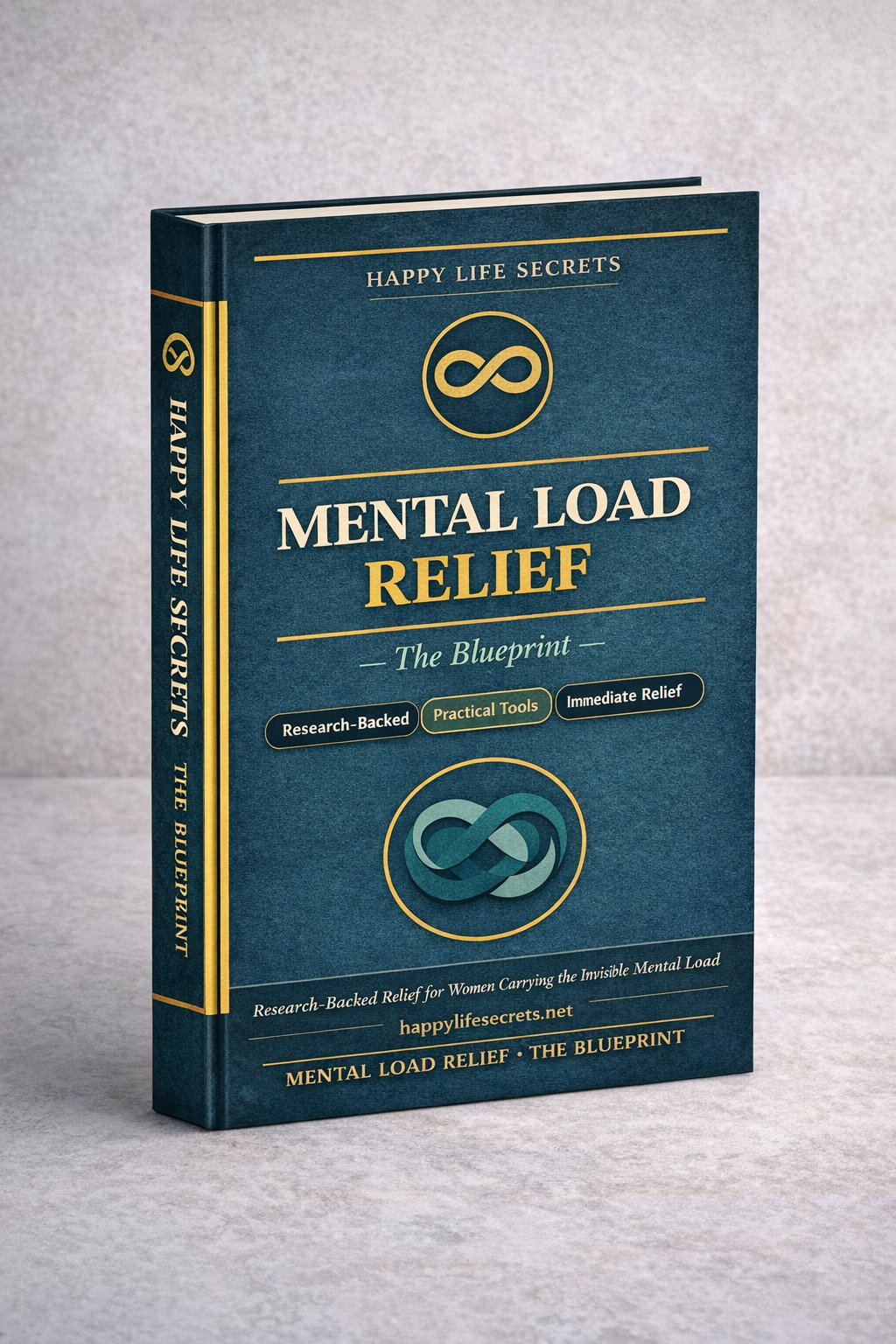
The Mental Load Relief Blueprint gives you the research-backed framework women 25–44 are quietly using to reclaim 2+ hours of mental space daily — without waiting for anyone else to notice how much you're managing.
Instant PDF delivery • Your privacy protected • Unsubscribe anytime
You're Not Overwhelmed Because You Can't Handle It.
You're Overwhelmed Because the Load Was Never Designed to Be Carried by One Person.
Research shows women make up to 35,000 decisions daily while managing invisible work nobody else sees — or names. Here's what that actually looks like from the inside.
You're the Only One Who Remembers Everything
Appointments, school events, grocery needs, everyone's schedules — that mental tab running 24/7 is real cognitive labor. Studies show invisible work creates 40% more mental fatigue than tasks anyone can actually see.
Making 100+ Decisions While Everyone Else Just... Lives
What's for dinner? Who needs what tomorrow? Did that get handled? You're absorbing the weight of these micro-decisions constantly — and research confirms that decision fatigue quietly steals your clarity and energy all day long.
Holding Everyone's Emotional Load Too
Their worries, moods, needs, and fears have somewhere to land — and that place is you. Data shows this emotional carrying costs women 700+ hours annually in unpaid mental labor that nobody else identifies as work.
Your Brain Won't Turn Off at Night
Even when you're exhausted, tomorrow's logistics replay the moment your head hits the pillow. Research directly links mental load to disrupted sleep — which means you wake up tired before the day even begins.
You're Everyone's Default for Everything
Every question, every problem, every decision comes to you first. You coordinate, anticipate, solve — the invisible architecture holding everything together. Research identifies being the default person as a primary predictor of burnout.
Generic "Self-Care" Was Never Designed for Your Reality
"Take a bath." "Just say no." None of it accounts for the fact that you're managing an entire household's cognitive life. The advice failed you — not the other way around. You needed a different kind of tool.
The Mental Load Relief Blueprint: A New Framework, Not More Advice
This isn't another collection of productivity tips that pretend your invisible labor doesn't exist. These are evidence-based strategies built around how cognitive and emotional load actually work — practical relief designed for real life, not an idealized one.
Identify Your Mental Load Type
Discover which of the five mental load patterns applies to you. Research shows targeted, specific strategies work 3x better than generic approaches — because not all invisible labor looks the same.
The Brain Dump Method That Actually Works
Reduce your daily decision load by up to 40% using cognitive offloading techniques designed for real life. Studies confirm that externalizing mental tabs creates immediate, measurable relief.
Sharing Mental Load — Not Just Tasks
Specific strategies for redistributing invisible labor without becoming the manager of your own delegation. Evidence shows even small shifts in load distribution produce noticeable, lasting relief.
Decision Fatigue Relief Protocol
Eliminate unnecessary decision points and automate your cognitive overhead. Research confirms that removing just 20 daily micro-decisions significantly improves mental clarity and available energy.
Boundary Scripts for Real Situations
Word-for-word language for setting limits without guilt or conflict. Data shows even one consistently held boundary reduces overwhelm and interrupts the default-person pattern over time.
The Bedtime Worry Spiral Protocol
Reduce nighttime mental rumination from 45 minutes to under 5 using the Worry Window Technique. Penn State research shows this approach cuts bedtime anxiety by 35% within two weeks.
The Permission You've Been Waiting For
Relief doesn't require anyone else to notice what you've been carrying first. Research shows self-validation is the essential first step — and this guide begins there, because that's where change actually starts.
Every Strategy Is Grounded in Research on Invisible Labor
Not wellness trends. Not anecdotes. Peer-reviewed data on cognitive load, decision fatigue, and emotional labor from leading psychology and behavioral science journals.
Why The Mental Load Relief Blueprint Works When Generic Advice Didn't
The strategies that failed you before weren't designed for cognitive labor. They were designed for task management. This is something different.
Built for What You're Actually Carrying
Designed specifically for cognitive overload from invisible labor — not generic stress tips that acknowledge your situation in the intro and then ignore it for the rest of the guide.
Fits Into Real Life, Not an Ideal One
Every strategy takes 5–10 minutes. Not because the strategies are small — because your time is real. Relief that only works when you have three free hours isn't relief.
100% Evidence-Based
Grounded in peer-reviewed research on invisible labor, decision fatigue, and emotional load — not trends, personal opinions, or one-size-fits-all advice that was never built for what you carry.
About Happy Life Secrets
I'm Herb, founder of Happy Life Secrets. For over a decade, I've researched the psychology of mental overwhelm, decision fatigue, and cognitive load — specifically studying what creates real, measurable relief for women managing multiple responsibilities and invisible labor nobody else names.
The Mental Load Relief Blueprint isn't built on personal anecdotes or wellness theories. Every strategy inside is grounded in peer-reviewed research from leading psychology journals and clinical studies on invisible labor and burnout.
These are the same evidence-based tools women are using right now to finally get relief from work nobody acknowledges — and to reclaim the mental space they've always deserved, without waiting for anyone else to step up first.
Download Your Free Blueprint Today
Stop carrying everyone's invisible labor alone. Get the complete, evidence-based guide for reducing decision fatigue, sharing the mental load, and finally feeling lighter — starting today.
Completely free. No credit card required. Instant PDF download.
Yes — Send Me the Free Blueprint NowInstant delivery • Your privacy protected • Evidence-based strategies • Unsubscribe anytime
------------------------
------------------------



-----------


-----------

-----------


HappyLifeSecrets.net
Copyright © 2010-2026
All Rights Reserved