
Productivity Systems Don't Work: 6 Myths That Are Keeping You Stuck
And why every planner, app, and morning routine has let you down — it was never your fault.
Why Productivity Systems Don't Work for You (Even the Good Ones)
Productivity systems don't work — at least not the way they're sold to you. You've tried the planners, the color-coded calendars, the "get it all done before 7 AM" routines. Some of them helped, briefly. But then life resumed and you were right back to that familiar feeling: overwhelmed, behind, and vaguely convinced that you must be the problem.
Productivity systems don't work — at least not the way they're sold to you. You've tried the planners, the color-coded calendars, the "get it all done before 7 AM" routines. Some of them helped, briefly. But then life resumed and you were right back to that familiar feeling: overwhelmed, behind, and vaguely convinced that you must be the problem.
You're not the problem. The systems are.
More precisely, the systems were designed to manage tasks — but what you're carrying is something different and heavier: mental load. The invisible work of anticipating, remembering, planning, deciding, monitoring, and recovering that runs in the background of your day, every day, without a pause button.
There's a reason the productivity systems don't work for the invisible work you're carrying. For the first time ever, there's language and a framework that actually names what you've been doing — the 6 Types of Mental Load — and that changes everything.
But first, we need to clear out the myths. Because if you're holding onto false beliefs about why you're overwhelmed, no strategy will stick. Let's dismantle six of the most common ones.
MYTH 1
"You just need a better system."
Why it sounds right: Productivity systems are everywhere, and some of them are genuinely thoughtful. It's reasonable to assume that if you found the right one — the right app, the right template, the right routine — things would click into place.
Why it's incomplete: Productivity systems are designed to manage tasks with clear start and end points: write the email, schedule the appointment, buy the groceries. But mental load isn't a task. Remembering Load is the background awareness that the dentist appointment is due, even before you've opened your calendar. Anticipating Load is already mentally prepping for next week's school schedule while you're in the middle of a work call. No to-do app captures that. No planner has a field for "things I have to hold in my head so no one else has to."
THE TRUTH: Productivity systems don't work for mental load because mental load isn't a to-do list. It's a cognitive operating system — and you can't optimize an operating system with a better checklist.
MYTH 2
"If you were more organized, you wouldn't feel this way."
Why it sounds right: Organization is associated with calm, competence, and control. When life feels chaotic, it makes sense to assume that more order would produce more peace.
Why it's incomplete: Most women who carry significant mental load are already highly organized. The problem isn't disorganization — it's that the organizational work itself is part of the mental load. Planning Load is the invisible labor of figuring out how things will happen: who will do what, when, what needs to be prepared in advance. Monitoring Load is checking whether the things that were planned are actually happening. Doing more organizing doesn't reduce these loads. It is these loads.
THE TRUTH: Being organized isn't the solution to mental load — organizing is one of the things that constitutes mental load. Relief comes from understanding what you're carrying, not from carrying it more efficiently.
MYTH 3
"You just need to learn to relax."
Why it sounds right: Stress reduction has documented benefits. Mindfulness, rest, and breathing techniques are real tools. Of course the advice feels logical.
Why it's incomplete: "Just relax" assumes the mental load is voluntary. But the anticipating, monitoring, and tracking that constitute mental load aren't chosen — they're responses to real systems of responsibility. When you're the person responsible for making sure nothing falls through the cracks, your nervous system stays on alert. That's not anxiety. It's appropriate calibration to a genuinely demanding job that happens to be invisible.
THE TRUTH: You're not failing to relax. You're carrying real cognitive work that doesn't turn off because no off switch exists in the system. The solution isn't relaxation — it's understanding what you're actually carrying.
MYTH 4
"Delegating more will fix it."
Why it sounds right: Delegation is a legitimate productivity strategy, and it genuinely reduces certain kinds of work. It sounds like the obvious fix for someone doing too much.
Why it's incomplete: Delegating a task doesn't automatically transfer the mental load that comes with it. If you assign someone else to handle a responsibility but you're still the one monitoring whether it got done, following up, anticipating what will happen if it doesn't, and recovering when something slips — you've delegated the doing but kept the thinking. This is why so many women describe feeling like a "project manager" for their own households. The Monitoring Load and Deciding Load stayed with them even when the tasks moved to someone else.
Productivity systems don't work when they focus on task handoffs without addressing who holds the cognitive weight of each area of responsibility. Small shifts in how responsibility is genuinely transferred — not just task completion — create real change.
THE TRUTH: Delegation without responsibility transfer is just outsourcing while keeping the mental overhead. Real relief requires shifting who holds the awareness, not just who does the work.
MYTH 5
"You're just bad at time management."
Why it sounds right: Time management is a widely taught skill. Books, courses, and coaches are built around it. If someone is consistently behind or overwhelmed, it's easy to conclude they haven't learned to manage their time well.
Why it's incomplete: Time management assumes the problem is scheduling. But mental load isn't primarily a time problem — it's a cognitive load problem. Decision fatigue, which hits after dozens of small invisible choices throughout the day, has nothing to do with how well you've structured your calendar. Recovering Load — the mental and emotional recovery from everything that went wrong, didn't get finished, or created friction — doesn't show up in a time block. Productivity systems don't work for these layers because they weren't built to address them. You can have a perfectly managed schedule and still be exhausted even on easy days.
THE TRUTH: Being exhausted even when your schedule looks manageable isn't a time management failure. It's evidence of invisible cognitive work that no calendar captures. Relief is possible — but it starts with naming what you're actually carrying.
MYTH 6
"This is just what being a responsible adult looks like."
Why it sounds right: Being on top of things, remembering what needs to happen, and making sure life runs smoothly — these are associated with maturity, responsibility, and caring. It seems reasonable to accept the mental load as simply part of being a capable person.
Why it's incomplete: There's a difference between taking responsibility for your life and being the sole cognitive custodian for everyone in it. The invisible work you're carrying — the Remembering Load, the Anticipating Load, the Planning, Deciding, Monitoring, and Recovering — isn't just "being responsible." It's a specific, measurable cognitive burden that research has shown falls disproportionately on women. Accepting it as inevitable keeps the systems that produce it invisible and unchanged. And when systems are invisible, they can't be addressed.
For the first time ever, the 6 Types of Mental Load give this burden a name. That name makes it visible. And what's visible can be understood, shared, and relieved.
THE TRUTH: Carrying the mental load isn't a personality trait or a sign of caring more. It's a role that can be recognized, named, and — with the right framework — redistributed. Relief is possible, and it starts with understanding what you've actually been doing.
The Real Truth About Why Productivity Systems Don't Work
None of these myths are things you invented. You heard them from well-meaning people, from productivity gurus, from your own inner voice trying to make sense of something that felt impossible to explain. It makes complete sense that you believed them.
But here's what changes when you understand the 6 Types of Mental Load — Remembering, Anticipating, Planning, Deciding, Monitoring, and Recovering Load: you stop looking for the system you haven't tried yet. You start understanding the actual weight you've been carrying, and that understanding is the beginning of real relief.
Productivity systems don't work for mental load because they weren't built for it. But a framework that names and addresses the invisible work you're carrying? That's something different. Small shifts create real change — not because you finally found discipline, but because you finally had the right map.
The invisible work you're carrying has a name. And once you know its name, everything shifts.
→ Ready to see what you're actually carrying?
Take the free Mental Load Quiz and discover which of the 6 types of mental load is draining you most. Relief is possible — and it starts with knowing where to look.
Instant delivery • No credit card required • Unsubscribe anytime
You're Not Falling Behind. You're Carrying More Than Anyone Should Have to Hold Alone.
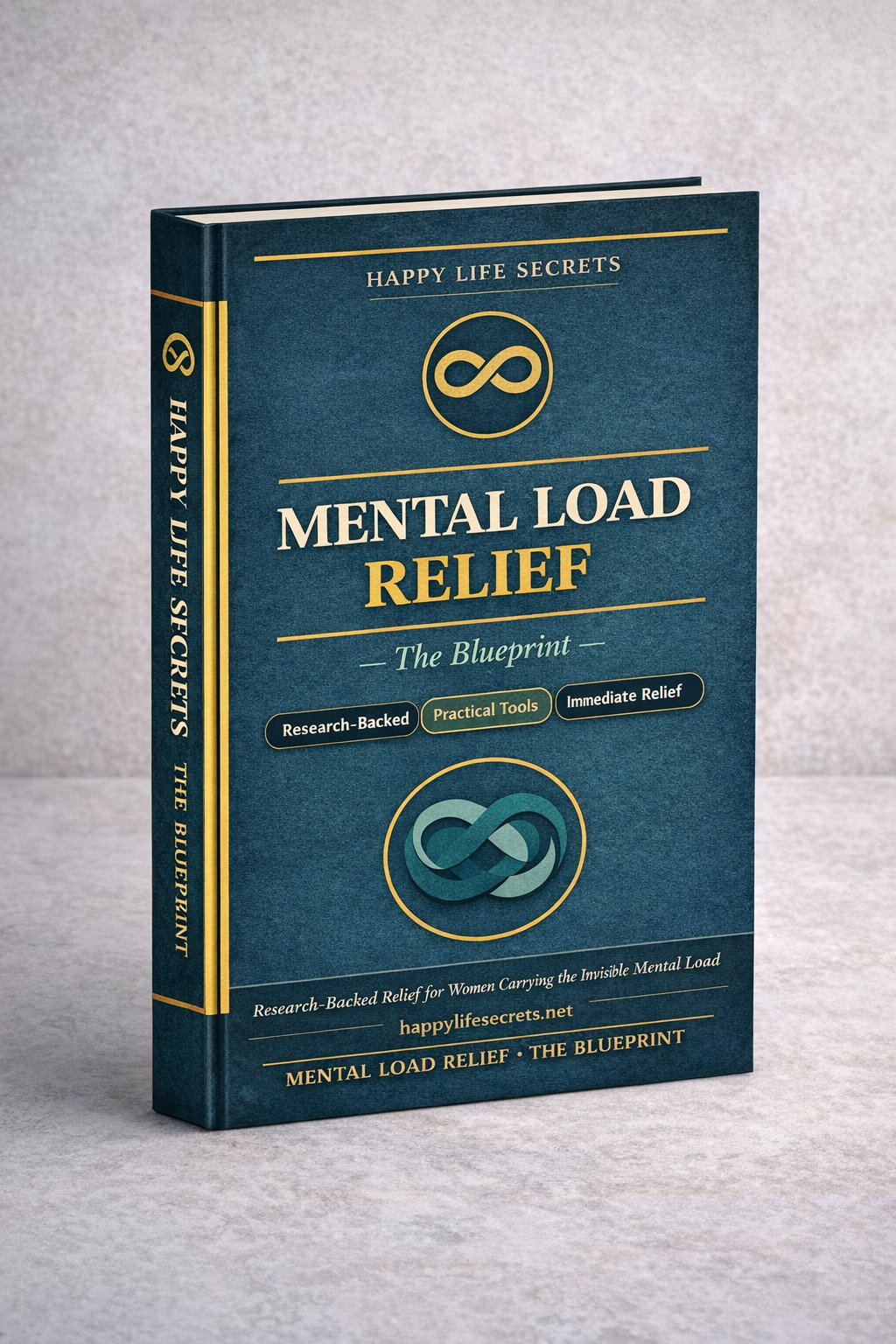
The Mental Load Relief Blueprint gives you the research-backed framework women 25–44 are quietly using to reclaim 2+ hours of mental space daily — without waiting for anyone else to notice how much you're managing.
Instant PDF delivery • Your privacy protected • Unsubscribe anytime
You're Not Overwhelmed Because You Can't Handle It.
You're Overwhelmed Because the Load Was Never Designed to Be Carried by One Person.
Research shows women make up to 35,000 decisions daily while managing invisible work nobody else sees — or names. Here's what that actually looks like from the inside.
You're the Only One Who Remembers Everything
Appointments, school events, grocery needs, everyone's schedules — that mental tab running 24/7 is real cognitive labor. Studies show invisible work creates 40% more mental fatigue than tasks anyone can actually see.
Making 100+ Decisions While Everyone Else Just... Lives
What's for dinner? Who needs what tomorrow? Did that get handled? You're absorbing the weight of these micro-decisions constantly — and research confirms that decision fatigue quietly steals your clarity and energy all day long.
Holding Everyone's Emotional Load Too
Their worries, moods, needs, and fears have somewhere to land — and that place is you. Data shows this emotional carrying costs women 700+ hours annually in unpaid mental labor that nobody else identifies as work.
Your Brain Won't Turn Off at Night
Even when you're exhausted, tomorrow's logistics replay the moment your head hits the pillow. Research directly links mental load to disrupted sleep — which means you wake up tired before the day even begins.
You're Everyone's Default for Everything
Every question, every problem, every decision comes to you first. You coordinate, anticipate, solve — the invisible architecture holding everything together. Research identifies being the default person as a primary predictor of burnout.
Generic "Self-Care" Was Never Designed for Your Reality
"Take a bath." "Just say no." None of it accounts for the fact that you're managing an entire household's cognitive life. The advice failed you — not the other way around. You needed a different kind of tool.
The Mental Load Relief Blueprint: A New Framework, Not More Advice
This isn't another collection of productivity tips that pretend your invisible labor doesn't exist. These are evidence-based strategies built around how cognitive and emotional load actually work — practical relief designed for real life, not an idealized one.
Identify Your Mental Load Type
Discover which of the five mental load patterns applies to you. Research shows targeted, specific strategies work 3x better than generic approaches — because not all invisible labor looks the same.
The Brain Dump Method That Actually Works
Reduce your daily decision load by up to 40% using cognitive offloading techniques designed for real life. Studies confirm that externalizing mental tabs creates immediate, measurable relief.
Sharing Mental Load — Not Just Tasks
Specific strategies for redistributing invisible labor without becoming the manager of your own delegation. Evidence shows even small shifts in load distribution produce noticeable, lasting relief.
Decision Fatigue Relief Protocol
Eliminate unnecessary decision points and automate your cognitive overhead. Research confirms that removing just 20 daily micro-decisions significantly improves mental clarity and available energy.
Boundary Scripts for Real Situations
Word-for-word language for setting limits without guilt or conflict. Data shows even one consistently held boundary reduces overwhelm and interrupts the default-person pattern over time.
The Bedtime Worry Spiral Protocol
Reduce nighttime mental rumination from 45 minutes to under 5 using the Worry Window Technique. Penn State research shows this approach cuts bedtime anxiety by 35% within two weeks.
The Permission You've Been Waiting For
Relief doesn't require anyone else to notice what you've been carrying first. Research shows self-validation is the essential first step — and this guide begins there, because that's where change actually starts.
Every Strategy Is Grounded in Research on Invisible Labor
Not wellness trends. Not anecdotes. Peer-reviewed data on cognitive load, decision fatigue, and emotional labor from leading psychology and behavioral science journals.
Why The Mental Load Relief Blueprint Works When Generic Advice Didn't
The strategies that failed you before weren't designed for cognitive labor. They were designed for task management. This is something different.
Built for What You're Actually Carrying
Designed specifically for cognitive overload from invisible labor — not generic stress tips that acknowledge your situation in the intro and then ignore it for the rest of the guide.
Fits Into Real Life, Not an Ideal One
Every strategy takes 5–10 minutes. Not because the strategies are small — because your time is real. Relief that only works when you have three free hours isn't relief.
100% Evidence-Based
Grounded in peer-reviewed research on invisible labor, decision fatigue, and emotional load — not trends, personal opinions, or one-size-fits-all advice that was never built for what you carry.
About Happy Life Secrets
I'm Herb, founder of Happy Life Secrets. For over a decade, I've researched the psychology of mental overwhelm, decision fatigue, and cognitive load — specifically studying what creates real, measurable relief for women managing multiple responsibilities and invisible labor nobody else names.
The Mental Load Relief Blueprint isn't built on personal anecdotes or wellness theories. Every strategy inside is grounded in peer-reviewed research from leading psychology journals and clinical studies on invisible labor and burnout.
These are the same evidence-based tools women are using right now to finally get relief from work nobody acknowledges — and to reclaim the mental space they've always deserved, without waiting for anyone else to step up first.
Download Your Free Blueprint Today
Stop carrying everyone's invisible labor alone. Get the complete, evidence-based guide for reducing decision fatigue, sharing the mental load, and finally feeling lighter — starting today.
Completely free. No credit card required. Instant PDF download.
Yes — Send Me the Free Blueprint NowInstant delivery • Your privacy protected • Evidence-based strategies • Unsubscribe anytime
------------------------
------------------------



-----------


-----------

-----------


HappyLifeSecrets.net
Copyright © 2010-2026
All Rights Reserved